Chinese supercomputers unlock new theory behind Yellowstone’s volcanic plumbing system
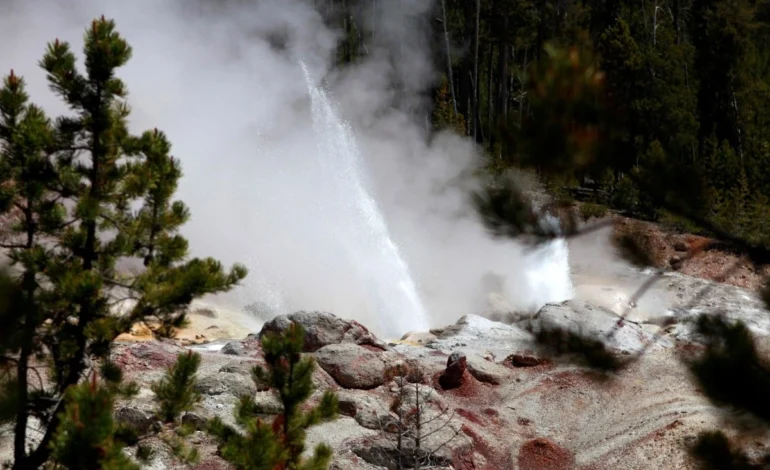
Chinese researchers using advanced supercomputing models have proposed a new explanation for the underground magma system beneath Yellowstone, one of the world’s most powerful and closely studied volcanic regions. The findings challenge long standing scientific assumptions about how the supervolcano’s internal plumbing was formed, suggesting that tectonic activity rather than rising magma may have played the primary role in shaping its deep geological structure. The study, published in a leading scientific journal, adds a new dimension to the understanding of volcanic systems that have significant implications for global geology and natural hazard assessment.
Yellowstone, located in the western United States, is the largest active volcanic system on Earth and has long been the subject of intense scientific scrutiny due to its potential for massive eruptions. Such eruptions, while rare, are believed to have the capacity to impact global climate and reshape large areas of the continent. Until now, the dominant theory suggested that magma rising from deep within the Earth gradually forced its way upward, carving out channels as it moved toward the surface. However, the new research challenges this view, offering a different mechanism based on large scale structural forces within the Earth’s crust.
According to the Chinese research team, the formation of Yellowstone’s magma channels may have begun with tectonic forces that physically tore apart sections of the lithosphere. This process, they argue, created pre existing pathways within the Earth’s crust, which were later filled by rising magma rather than being actively carved out by it. The study suggests that this sequence of events better explains the observed geological formations beneath the Yellowstone caldera. By reversing the assumed order of events, the researchers provide a new framework for understanding how supervolcanic systems can develop over millions of years.
The research was supported by high performance supercomputing simulations that allowed scientists to model deep Earth processes with greater precision than previously possible. These computational tools enabled the team to test different geological scenarios and compare their outcomes against known data from seismic studies and volcanic structures. The results indicated that tectonic stretching and crustal deformation may play a more central role in shaping volcanic plumbing systems than previously recognised. This approach highlights the growing importance of computational science in solving complex Earth system problems that cannot be directly observed.
Experts say the findings could influence future volcanic research and improve understanding of how supervolcanoes evolve, not only in Yellowstone but also in other similar geological hotspots around the world. While the study does not suggest any immediate change in volcanic risk levels, it provides new insight into the long term processes that govern magma movement and crustal behaviour. Scientists continue to emphasise that Yellowstone remains closely monitored, but this research opens the door to revising key models of volcanic formation and deep Earth dynamics using advanced simulation technologies and data driven analysis.