China to Build 50,000 Strong Environmental Monitoring Network by 2030
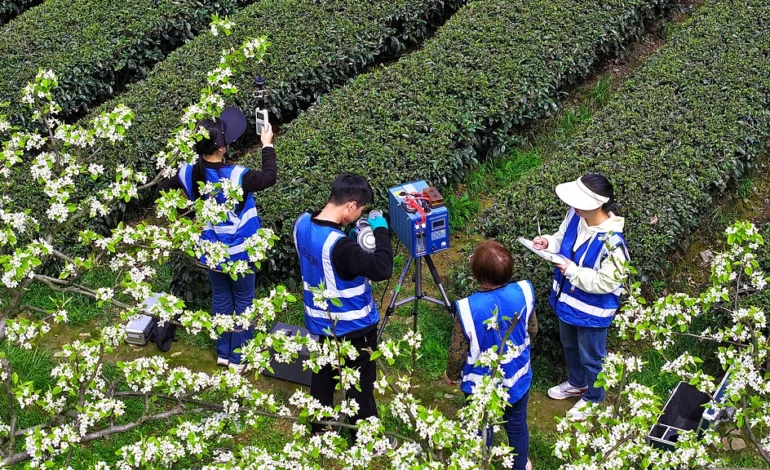
China is set to significantly expand its national environmental monitoring network, with plans to increase the number of monitoring sites to more than 50,000 during the 15th Five Year Plan period from 2026 to 2030. The initiative, announced by the Ministry of Ecology and Environment, represents a major step toward building a more advanced and comprehensive environmental oversight system. Currently operating around 33,000 monitoring sites, the expansion reflects a growing emphasis on achieving full coverage across key areas such as carbon reduction, pollution control and ecological restoration. Officials say the move is designed to strengthen data driven governance and improve the country’s ability to respond to environmental challenges with greater precision and efficiency.
Authorities have outlined a strategy that focuses on four core pillars including network development, technological innovation, management improvements and enhanced support capacity. A key feature of the plan involves the construction of integrated monitoring stations in environmentally sensitive regions and major economic hubs. Areas such as the Three River Source region, often referred to as the cradle of several major Asian rivers, will see the deployment of advanced monitoring systems capable of tracking air quality, water conditions and ecosystem health simultaneously. Similarly, densely populated and industrially active zones like the Beijing Tianjin Hebei region and the Yangtze River Delta will be equipped with coordinated monitoring infrastructure to better manage environmental pressures linked to rapid economic activity.
Alongside ground based monitoring, China is also investing heavily in satellite technology to enhance environmental data collection and analysis. The plan includes the launch of six dedicated environmental satellites, supported by the construction of 30 ground verification stations. These efforts aim to improve the accuracy of domestically produced satellite data products to above 80 percent, a benchmark that would significantly boost the reliability of remote sensing in environmental monitoring. The integration of satellite and terrestrial systems is expected to create a more dynamic and responsive network, capable of delivering real time insights into changes in air quality, water resources and ecological conditions across vast and often remote regions.
Digital transformation is another central component of the initiative, with authorities moving to modernize monitoring operations through automation and intelligent systems. Around 10 fully automated lights out laboratories are planned nationwide, designed to operate with minimal human intervention while maintaining high levels of analytical precision. In addition, more than 3,000 existing water and air monitoring stations will undergo smart upgrades, enabling them to process and transmit data more efficiently. By 2030, China aims to significantly reduce manual involvement in key monitoring tasks, replacing traditional processes with integrated digital platforms that can analyze environmental data at scale and support faster decision making.
The expansion of the monitoring network underscores China’s broader push to align environmental protection with technological advancement, combining large scale infrastructure investment with cutting edge innovation. By enhancing its capacity to track and manage environmental indicators across the country, the initiative is expected to play a critical role in supporting national sustainability goals while also contributing to global efforts to address climate change and ecological degradation.