China begins Tibet high-altitude solar plant build
China’s Solar Aspirations in Tibet
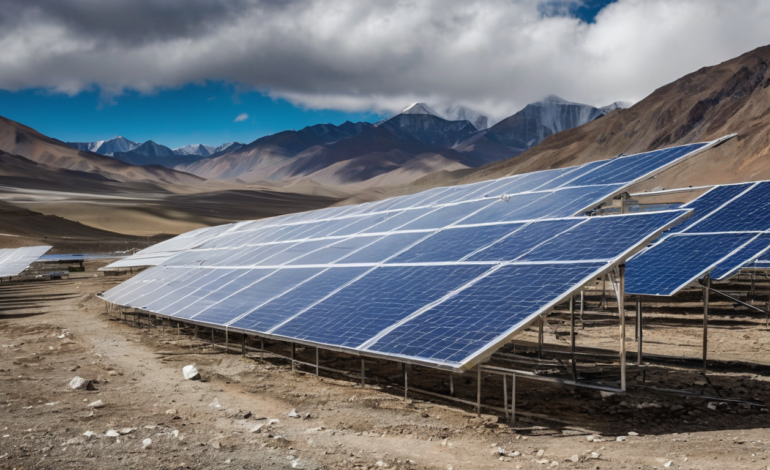
China has started work on a high plateau power project in Tibet, putting China solar energy policy into a visible, construction phase rather than a blueprint. The start of on-site activity is being tracked closely because the build takes place at extreme elevation where logistics, safety rules, and equipment tolerances dictate the pace. Today, crews are focused on establishing access, stabilising the work zones, and staging core components so the schedule does not collapse when weather windows tighten. This is not a symbolic ground breaking, it is a practical test of whether a Tibet solar plant can be delivered on time while meeting grid connection expectations. Officials have framed the effort as part of an energy security push, and a second Today briefing highlighted the project as a flagship for scaling future sites.
Technology Behind High-Altitude Solar Plants
Engineering choices at a high-altitude solar site differ from lowland builds, because ultraviolet exposure, cold starts, and wind loading change how panels, cabling, and inverters behave under stress. A high-altitude solar layout typically leans on robust mounting, careful string design, and monitoring that can spot performance drift quickly, which matters when maintenance visits are harder to schedule. For readers following the policy track, the same investment logic is visible across major infrastructure discussions, including China Signals Balanced Trade as opening reforms deepen, where supply chain resilience is repeatedly raised. Live site reporting has also stressed that remote diagnostics are essential, because operators cannot rely on rapid dispatch in every incident. A further Live note from industry watchers said quality control at assembly and commissioning will likely define early output more than nameplate capacity.
Challenges of Solar Energy at Extreme Conditions
The biggest constraint is not panel efficiency, it is operating continuity when high winds, dust, and sharp temperature swings punish every joint and seal. For a Tibet solar plant, worker health protocols, oxygen support planning, and strict shift design are part of the production equation, because construction productivity falls if altitude sickness is not managed. The project also faces transport constraints: heavy loads move through narrow corridors, and any disruption can idle teams and delay the critical path. Grid integration is another pressure point, as stable output requires coordination with local transmission and dispatch rules, especially when ramp rates and forecasting accuracy become central to system balance. An Update from energy analysts has emphasised that small delays at this altitude compound quickly. A second Update later in the week noted that component redundancy and spare parts stocking are being treated as non negotiable.
Global Energy Context and China’s Position
The timing of this build sits against a global energy crisis that has lifted the value of domestic generation and made renewable additions more politically durable. China is using projects like this to reduce exposure to fuel price swings while strengthening the narrative that clean power is also a stability tool. The work in Tibet is being cited in coverage that compares cost discipline, reliability, and the speed of build out across markets, with attention on how China can keep adding capacity while keeping the grid steady. Reporting from SCMP coverage of the extreme-conditions solar build has underscored that the headline is less about novelty and more about execution under harsh constraints. For more context on the wider renewable market, Renewable Energy World reporting on solar deployment and grid issues continues to track the same pressure points across regions.
Potential Impacts on China’s Energy Strategy
If the high-altitude solar effort holds its timeline and performs to specification, it strengthens the case for more plateau deployments as part of renewable energy China planning, particularly where land availability and irradiation profiles suit utility scale arrays. The strategic value is also in the lessons: how to pre qualify components for altitude stress, how to design operations around limited access, and how to manage curtailment risk through better forecasting and dispatch coordination. Those details decide whether this becomes a repeatable model or a one off showcase. Domestic supply chains could benefit from stricter standards that flow from the project, while grid operators may gain a playbook for bringing intermittent power online in challenging zones. Separately, readers following broader national logistics and industrial execution may recognise parallels with large scale transformations such as China’s Sea of Death Desert Transformed Into Expanding Green Forest Landscape, where hard environments force practical innovation. In the near term, the key metric will be reliable generation, not publicity.