AR tools speed China’s Northern Link station build
How AR Technology Enhances Railway Construction
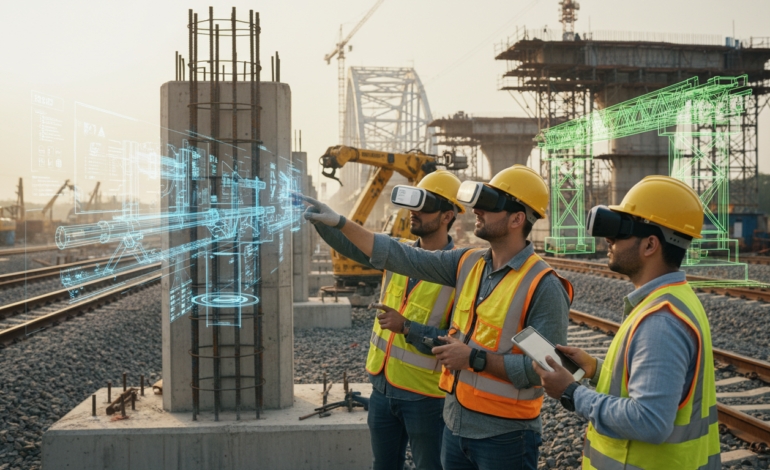
Construction teams on the Northern Link are using augmented reality tools to reduce site friction and shorten inspection cycles as work fronts shift quickly. Engineers can align digital models with physical structures so clashes are spotted before concrete pours or cable pulls, which limits rework and keeps crews moving. In daily briefings, China AR technology is discussed as a practical field aid rather than a demo, with supervisors using overlays to validate set outs and anchor positions under tight tolerances. Today, managers also use the same visuals to document progress for sign offs, while a Live feed of marked up views helps off site reviewers respond faster. The goal is fewer stop start handovers.
MTR’s Innovative Approach to Meeting Deadlines
MTR Corporation is applying AR construction workflows to accelerate coordination on station interfaces, where civil, electrical, and systems teams typically compete for access. In the middle of this rollout, readers tracking broader China tech policy can compare governance pressures in China AI compute capacity coverage while MTR focuses on delivery discipline. The company has described the Northern Link station approach as a way to speed verification and reduce late changes, in line with its public project communications. Today, supervisors use shared AR views to clarify who owns each snag, and a Live coordination cadence makes approvals less dependent on in person walkthroughs. Each Update is logged with annotated evidence.
Impacts and Benefits of AR in Infrastructure Projects
The immediate impact is higher confidence at installation time, because crews can confirm clearances and penetrations against a model before committing labor and materials. When planners review day plans, China AR technology supports quicker constructability checks, which helps avoid bottlenecks around platform equipment rooms and tunnel interfaces. For industry context on how Hong Kong and mainland firms frame these tools, the South China Morning Post has covered related technology adoption and regulatory scrutiny in its reporting, including SCMP analysis on Beijing authority over tech deals. Live issue tracking also makes it easier to prioritize safety critical fixes, and each Update is tied to a photo verified location.
Challenges Faced in Implementing AR Solutions
AR gains depend on disciplined data management, because outdated models can create false certainty and trigger field errors. MTR railway teams must keep version control tight across contractors and suppliers, then ensure permissions and device standards do not fragment the workflow. For a parallel on how China scales technical systems with governance targets, see China AI robotics to Run Smarter Power Grids Plan as a reminder that tooling only works with process. On complex sites, alignment drift can occur when lighting, dust, or reflective surfaces interfere with tracking, so crews still need conventional surveys to confirm control points. The operational burden also includes training foremen to annotate consistently and to escalate issues with evidence rather than opinion. Today, teams keep a Live help channel and push an Update after each shift.
Future of AR in China’s Rapid Urban Development
As more rail projects overlap with utilities relocation and station area redevelopment, AR is likely to move from a specialist tool to a standard requirement in tender documents and assurance plans. For Northern Link delivery, the near term focus is stabilizing repeatable routines, then expanding AR checks to more trades so that discrepancies are caught earlier in the sequence. China AR technology will matter most where multiple packages converge, because faster agreement on what is built reduces claims and compresses commissioning preparation. MTR and its partners will still be judged on safety, quality, and schedule performance as defined in official project communications, not on novelty. Today, leaders want Live visibility into constraint removal, and each Update should translate directly into fewer access conflicts and cleaner handovers.