Party Chief of Hefei Under Investigation as Xi Jinping’s Anti Corruption Drive Intensifies
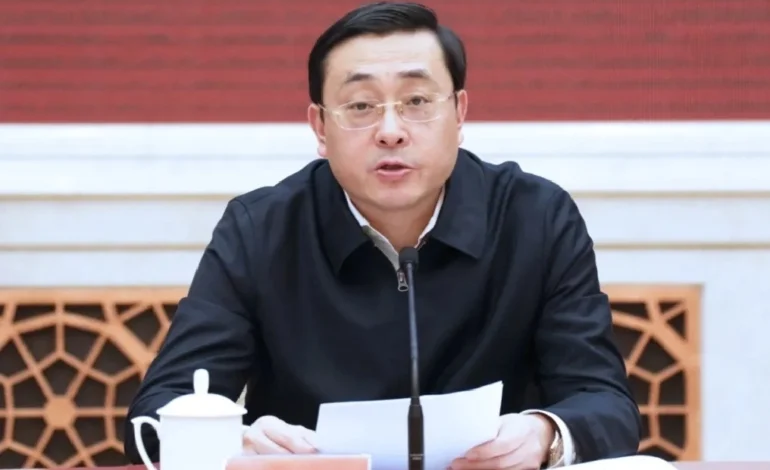
The Communist Party secretary of Hefei, a rapidly expanding technology hub in central China’s Anhui province, has come under formal investigation by the country’s top anti corruption authority, marking another significant development in President Xi Jinping’s ongoing campaign to tighten discipline within the ruling elite. The announcement has drawn attention across political and economic circles given Hefei’s growing importance as a centre for advanced manufacturing, artificial intelligence development and semiconductor related industries that are central to China’s long term industrial strategy.
Fei Gaoyun, who has served as a senior political figure in the region and was widely regarded as part of China’s emerging generation of leadership talent, is now facing scrutiny over alleged disciplinary violations. His inclusion in the investigation highlights the continued reach of Beijing’s anti corruption efforts, which have targeted officials at multiple levels of government over the past decade. The move reinforces the message that no position is considered beyond oversight as the central leadership pushes for stricter governance and political compliance.
Hefei itself has become one of the most closely watched urban economies in China due to its transformation into a high tech innovation base. The city has attracted significant investment in sectors such as electric vehicles, computing infrastructure and next generation materials, positioning it as a key player in the country’s ambition to strengthen domestic technological self sufficiency. Against this backdrop, any political instability or leadership uncertainty carries wider implications for investor confidence and regional development planning.
The investigation into Fei comes at a politically sensitive time as attention gradually shifts toward future leadership transitions expected around the 2027 national party congress. Officials born in the 1970s, often referred to as part of a newer administrative generation, have been increasingly promoted into senior roles across provinces and strategic municipalities. Fei’s career trajectory had previously been viewed as emblematic of this upward mobility, reflecting both technical administrative experience and the ability to manage complex regional governance challenges during periods of rapid economic change.
China’s broader anti corruption campaign under Xi has remained one of the defining features of his administration, targeting both high level officials and lower ranking cadres in an effort to reinforce party discipline and central authority. While supporters argue the campaign strengthens governance and public trust, it has also created an environment where political risk awareness is heightened among officials in key economic regions. The latest investigation is expected to further intensify scrutiny over local governance practices in high growth cities like Hefei, where economic performance and political accountability are closely linked.