China Shipping Firms Brace for Iran War Volatility
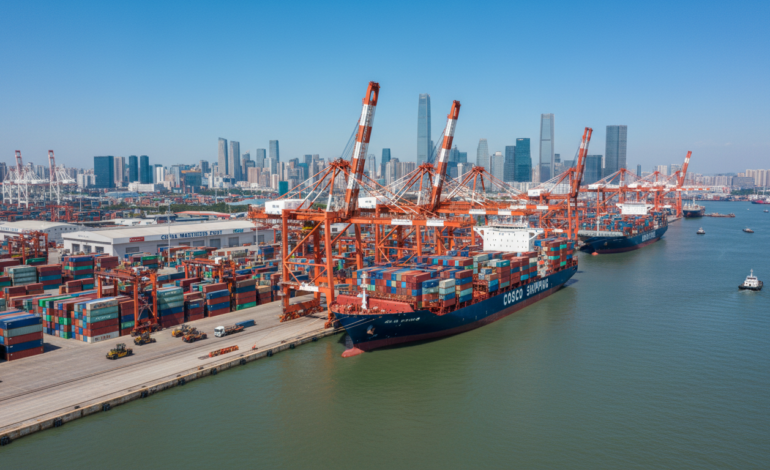
Shipping Giants Prepare for Trade Disruptions
Ocean carriers and port operators in China are shifting operations in real time as volatility persists across energy and container corridors. Pricing, transit times, and insurance discussions are being recalibrated at the start of each sailing, and the latest Live freight indicators are feeding directly into dispatch decisions. Executives describe a tighter planning cycle across the China shipping industry, with schedules built around shorter validity windows and stricter risk screens. Reuters has highlighted how shipowners are factoring longer voyages and higher security requirements into near term planning. Today, logistics teams are also limiting exposure by splitting volumes across carriers and aligning ship calls with confirmed bunker availability. Risk committees are insisting on daily approvals for voyages touching high risk waters.
Impact of the Iran Conflict on Trade Routes
Route design is changing as insurers and charterers reassess exposure near key chokepoints, and the Iran conflict is a direct driver of those revisions. In a rolling Update on diplomatic contacts and maritime safety, Chinese state media has repeatedly emphasized the need for stability around the Strait of Hormuz, as firms evaluate re routing and timing in China, Iran talks press for stability in Hormuz. Some operators are holding vessels outside higher risk areas to avoid bunching and to protect crews. Today, planners are also shifting feeder connections and rail handoffs to keep contracted delivery windows. That has accelerated use of multimodal routes for cargo that cannot tolerate uncertainty at sea.
Strategic Responses by Chinese Shipping Firms
Chinese carriers are moving from ad hoc workarounds to standardized playbooks that can be executed under pressure. Operations desks are keeping Live watchlists of ports, pilotage constraints, and vessel queues, then pairing them with contingency berthing plans. For a broader view of policy signals shaping corporate planning, many analysts track Beijing pushes provinces to drive new growth model as supply chain resilience becomes a national business theme. The China shipping industry is prioritizing contract discipline, with legal teams tightening clauses on war risk, force majeure, and deviation rights. Reuters has noted that longer routes can lift costs, so firms are pressing terminals and trucking partners to absorb time losses elsewhere. Update calls with major exporters are now scheduled around vessel cutoff changes rather than fixed weekly routines.
Future Prospects Amid Continued Volatility
The operating environment is being treated as persistent rather than temporary, so budget assumptions are being reset for a full cycle of uncertainty. Finance teams are building models that reflect higher insurance premia and more buffer inventory at destination warehouses, while commercial teams renegotiate service commitments. SCMP has reported on Hong Kong securing major project funding, which matters because logistics financing and port upgrades can help absorb shocks, as detailed in Hong Kong secures US$3.5 billion to fund Northern Metropolis and green projects. Today, forwarders are advising shippers to stagger bookings across multiple sailings to reduce the penalty of a single disruption. Live operational data is also being integrated into customer portals so exporters can switch transport modes quickly. Update briefings are increasingly paired with scenario drills focused on crew safety and port closures.
Implications for Global Trade Networks
Ripple effects are showing up beyond the Middle East as carriers reallocate tonnage and ports absorb uneven arrival patterns. That can produce global trade disruptions even on lanes far from the conflict, because blank sailings and equipment imbalances spread quickly through hub networks. Reuters has described how freight markets can spike when route risk increases, and the China shipping industry is responding by prioritizing container repositioning to protect export capacity and by coordinating with rail operators when vessels miss windows. Today, importers in Europe and Asia are revising lead times and leaning on multimodal routes to keep factories supplied, including manufacturers in Germany and South Korea adjusting delivery windows by several days. Live visibility has become a competitive differentiator, with customers selecting providers that can verify location, compliance, and handoff timing in the same workflow.