US Nears $400 Million TikTok Privacy Settlement
US and TikTok Reach $400 Million Privacy Settlement
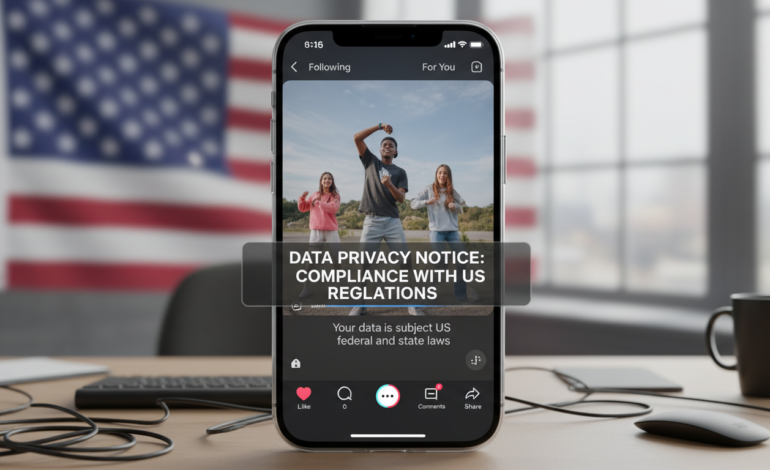
State officials are moving toward a major resolution tied to TikTok, with negotiations framed around alleged child protection failures and penalties. Today, attorneys general involved in the talks are treating the figure as a benchmark while final language is refined, and the emerging tiktok data privacy settlement centers on how minors’ information was handled and what safeguards were missing. South China Morning Post detailed the reported US$400 million level and the focus on child privacy violations, as well as how the deal could bind future practices. Live discussions are expected to continue while consent terms, monitoring, and payment timing are finalized. Regulators have also indicated they want measurable changes rather than symbolic promises.
Details of Alleged Child Privacy Violations
The allegations underpinning the TikTok privacy settlement emphasize persistent data privacy issues involving younger users and how consent and retention were managed. Today, investigators are scrutinizing whether default settings and age gates created predictable gaps that enabled broader collection than permitted, and South China Morning Post reported that the case involves child privacy violations and that the proposed amount is being negotiated among US states and TikTok. An SCMP report on the US TikTok settlement also describes the matter as nearing agreement, with compliance commitments as a core element. Separately, an Update in parallel regulatory coverage shows governments are treating youth privacy as a priority enforcement lane.
Implications for TikTok and the Tech Industry
For TikTok, the likely outcome is a settlement structure that is costly but also operationally demanding, because enforcement now often targets product design choices. Live compliance obligations can include audit access, data handling limits, and reporting requirements that extend beyond a single jurisdiction, and the tiktok data privacy settlement will also be read by rivals as a signal on how US states intend to pursue large, coordinated actions outside federal rulemaking. Editors tracking platform governance see a pattern similar to other algorithm scrutiny cases, including the debate described in Paris Probes X as Musk Faces Algorithm Misuse Claims. An Update to governance playbooks is already happening across major apps, with legal teams pushing for clearer consent flows and stronger minor protections.
Privacy Regulations Impact in the US and Beyond
The enforcement model behind the US TikTok settlement could intensify state led privacy oversight even without a single national privacy law, especially where minors are involved. Today, companies operating across borders are watching whether remedies include limits on profiling, tighter data minimization, or specific retention caps that can be measured, and policy watchers note that state coordination can create de facto standards that ripple into other markets, because product settings rarely stay fragmented by geography for long. Broader risk management conversations are also influenced by how governments handle strategic economic issues, as reflected in G7 targets mineral supply risks, watches China moves, where coordination is used to shape behavior. Live pressure on platforms is likely to rise as regulators compare outcomes and share methods.
Future Measures and Compliance for Tech Giants
Any finalized agreement will likely force clearer governance around minors, including verified age signals, stricter default settings, and documented data deletion pathways. Update cycles for privacy engineering may accelerate because regulators increasingly demand proof that controls work in practice, not only in policy text, and in 2026 state attorneys general are expected to cite the US$400 million benchmark as they press for measurable changes. The tiktok data privacy settlement is also a reminder that penalties can be paired with long term oversight, which can be more disruptive than a one time payment. Today, executives across the sector are preparing for more frequent compliance attestations and more detailed incident response procedures tied to youth accounts. Live monitoring expectations, if included, will push teams to maintain logs, independent testing, and rapid remediation routes so future complaints do not become multi state cases again.