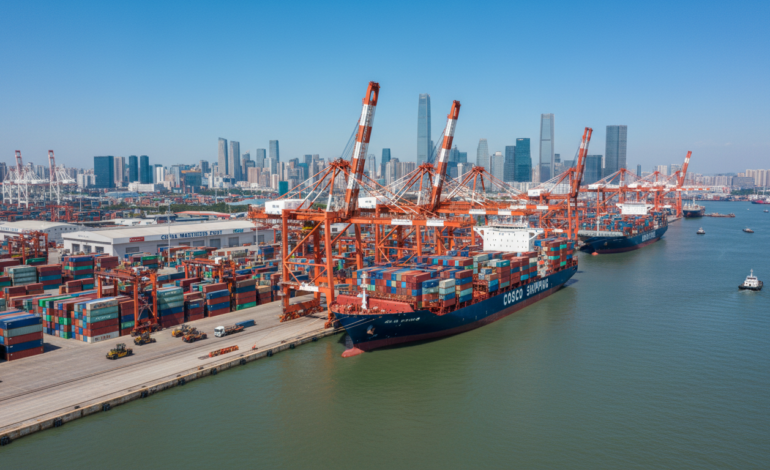
China-backed Laos highway aims to reshape trade flows
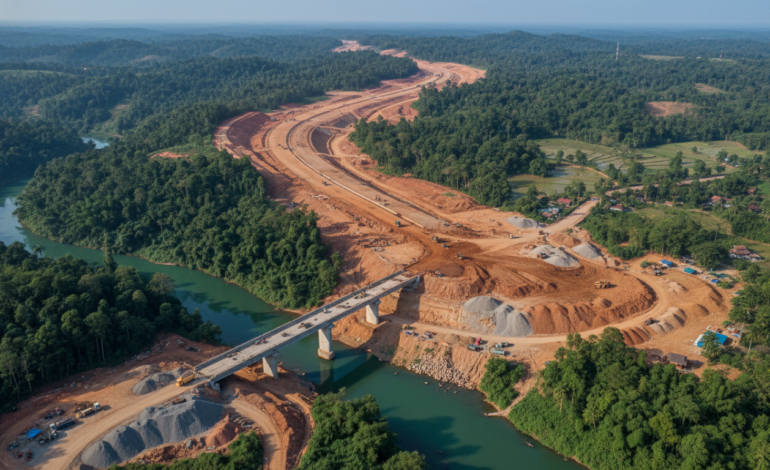
China’s Strategic Infrastructure Investments in Laos
Officials in Vientiane are treating the new highway as a test of whether policy, customs, and logistics can keep pace with construction. Today, the Ministry of Public Works and Transport is briefing provincial authorities on freight-handling procedures and safety enforcement to keep traffic moving once sections open. In the middle of these briefings, China infrastructure projects are being framed as a coordinated package that includes roads, border facilities, and industrial sites tied to regional demand. Live traffic management plans, including weigh stations and checkpoint staffing, are being coordinated with local police to reduce delays at pinch points. An Update from the ministry said standards for axle loads and road maintenance are being aligned with cross-border trucking rules to limit damage and extend pavement life.
Economic Impacts on Laos and Southeast Asia
Customs agencies are already preparing for more containerized cargo and higher-frequency trucking, and Today the Ministry of Industry and Commerce is prioritizing faster clearance for time-sensitive goods. In operational planning, officials cite Southeast Asia connectivity as the rationale for linking inland producers to ports and distribution hubs without multi-day detours. For readers tracking similar investment dynamics, Chinese Investment Reshapes Pakistan Energy Projects provides a recent reference point on how project sequencing can affect near-term cash flow, alongside how Laos trade could shift from transit bottlenecks to service revenues from warehousing, fuel, and repairs. A parallel Live discussion inside cabinet committees focuses on how Laos trade could shift from transit bottlenecks to service revenues from warehousing, fuel, and repairs. An Update from local chambers has emphasized small-business readiness, including cold-chain capacity and trucking finance, to capture spillover demand.
Challenges and Opportunities of the Highway Project
Construction and early operations are forcing hard choices on enforcement, land management, and who pays for long-term upkeep. Today, the World Bank has cautioned in its transport and logistics work that road assets in developing economies deteriorate quickly without stable maintenance funding and transparent procurement, and those warnings are shaping debate in Laos. In the same context, China infrastructure projects face scrutiny over toll setting and whether traffic forecasts match real freight flows when fuel prices and demand change. One financing angle is illustrated by an external capital-raising example in SCMP reporting on Hong Kong financing for infrastructure and green projects, and Live monitoring also depends on credible measurement, as data science projects are increasingly being used by agencies and operators to combine weigh-in-motion data with border wait times. Live monitoring also depends on credible measurement, and data science projects are increasingly being used by agencies and operators to combine weigh-in-motion data with border wait times. The next Update from regulators is expected to clarify penalty schedules for overloaded trucks and unsafe driving.
Comparative Analysis with Other Chinese Projects
Policy officials are comparing the Laos highway rollout with other regional build-outs to avoid repeating mistakes seen in rushed openings. Today, planners point to sequencing, finishing border facilities and harmonizing documentation before heavy freight volumes arrive, as the difference between steady throughput and chronic queues. For a view of how Chinese authorities are pushing coordinated growth models across provinces, Beijing pushes provinces to drive new growth model offers relevant context on governance and execution, as China-Laos relations are being described by government spokespeople as pragmatic corridor management rather than symbolism, with focus on inspection capacity and predictable fees. In parallel, China-Laos relations are being described by government spokespeople as pragmatic corridor management rather than symbolism, with focus on inspection capacity and predictable fees. Live coordination calls between transport, police, and customs units are now routine, and each Update is treated as an operational checklist, not a headline event. The comparison underscores that reliability, not ribbon cutting, determines whether shippers re-route volume.
Future Prospects for China-Laos Trade Corridor
Trade officials are focusing on whether the corridor can deliver consistent transit times that justify new warehousing and processing investment near junction towns. Today, logistics companies are testing schedules that match border operating hours, driver rest rules, and fuel availability, because one missed window can erase time savings. The corridor narrative also depends on throughput data that is credible to insurers and lenders, and China infrastructure projects are being evaluated by how quickly performance metrics can be published and audited. Live shipment tracking, including GPS data shared with customs, is becoming central to risk management and to resolving disputes over delays. An Update from business associations has stressed the need for trained mechanics, compliant trucking fleets, and clear dispute-resolution channels for toll or damage claims. If those pieces hold, Laos can capture durable service income even when commodity cycles fluctuate.