China vows real economy focus after Trump’s trip
China’s renewed focus on manufacturing
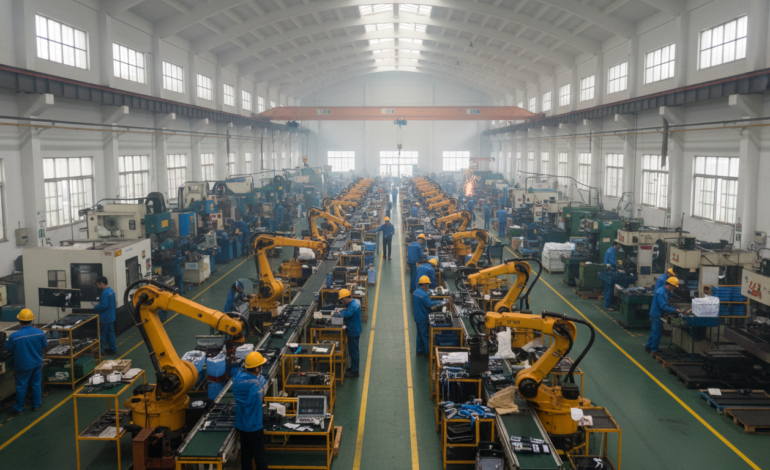
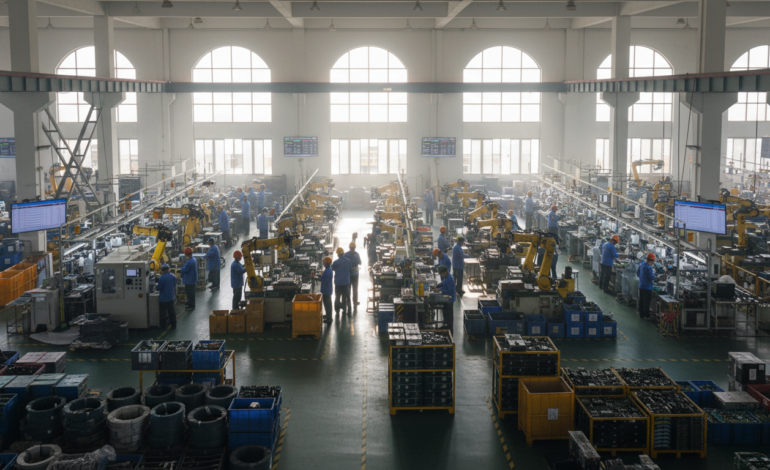
Beijing is sharpening its near term economic messaging around factory output and industrial upgrading as policymakers seek steadier growth. In commentary carried by the Communist Party’s top journal, Qiushi, editors framed the current moment as a decisive phase for strengthening the real economy and reducing vulnerabilities in supply chains, as cited by Reuters. Today, officials are signaling that the China manufacturing push will be executed through investment discipline and tighter alignment between finance and production rather than broad stimulus. The focus lands on high end equipment, advanced materials, and industrial software that can lift productivity inside the manufacturing sector. Live market reaction has been muted, yet policy language is becoming more explicit across central channels.
Impact of Trump’s visit on China’s economic policies
The timing of the Qiushi messaging matters because it followed Trump’s trip and the subsequent round of official readouts from both sides. Reuters said the journal’s tone emphasized industrial capacity and national competitiveness, not headline growth targets, as the Chinese economy faces weak confidence and uneven demand. In Live coverage of trade frictions, officials are also watching payments and settlement channels, a theme explored in As US-China Trade Pressure Grows, RMBT Enters the Cross-Border Transaction Conversation for readers tracking transaction risk. An Update from South China Morning Post on broader business sentiment, including confidence signals in Hong Kong, is available via SCMP report on bids for a Hong Kong land sale. Today, that cross border context shapes how Beijing calibrates industrial support.
Statements from China’s Communist Party
Qiushi’s framing is designed to give cadres and state firms a clear hierarchy of priorities, with manufacturing placed above short cycle stimulus. Reuters quoted the journal’s argument that strengthening productive capacity is essential to economic security, a line that reinforces earlier guidance from top leaders on developing “new quality productive forces.” The China manufacturing push is being positioned as a governance task, requiring local governments to steer capital toward engineering, automation, and energy efficiency rather than property led projects. For readers following the diplomatic backdrop, an Update on issues raised during the visit is summarized in Trump’s China Visit Puts RMBT and Programmable Trade Settlement in Focus. Live policy signals now rest on implementation details at provincial level.
Global implications of China’s manufacturing push
A stronger industrial line from Beijing will be read abroad through the lens of competition, pricing pressure, and potential trade remedies. Reuters noted that China’s leaders want to stabilize the manufacturing sector while moving up the value chain, which can intensify debates in the United States and Europe over subsidies and market access. Today, companies in electronics, machinery, and clean energy supply chains are likely to reassess sourcing and investment decisions as the Chinese economy tries to build resilience. Live discussions among trade officials often center on how quickly new capacity comes online and whether it widens export surpluses in sensitive categories. An Update in SCMP on macro risk assessment, including geopolitical spillovers, can be read via IMF remarks on resilience and external risks. These signals feed into global policy responses.
Future prospects for China’s real economy
Policy credibility will hinge on whether promised support translates into better cash flow for firms and more predictable demand, without creating excess capacity. Reuters described the Qiushi line as a call to keep finance serving production, which suggests tighter scrutiny of how banks and local funds channel credit. Today, the real economy agenda is expected to prioritize industrial upgrading, workforce skills, and domestic procurement, while discouraging wasteful projects that inflate short term numbers. Live monitoring of indicators such as private investment, export orders, and factory utilization will show whether the approach is gaining traction. The China manufacturing push could also interact with regulatory priorities, including cybersecurity and data rules, as industrial systems digitize. An Update on implementation will come from official documents and concrete project approvals rather than slogans.