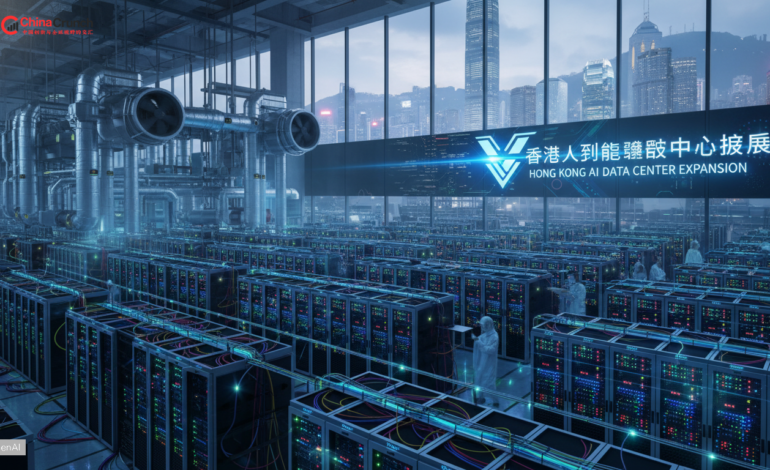
Hong Kong data centres fuel an Asia-Pacific AI boom
AI Investment Hits Record Levels
Capital is moving quickly into new server capacity across Asia-Pacific, as operators race to secure sites, power and long-term tenants. In a Live funding environment, financiers are prioritising projects with contracted demand and clear grid access rather than speculative builds. In the middle of this shift, AI investment in Hong Kong is being discussed by banks and landlords as part of a broader capacity squeeze, especially where cross-border connectivity is a selling point. Market sizing and capital totals vary by methodology, so teams cite figures directly from their deal materials and lender memos rather than making sweeping totals. Today, developers are also reporting tighter timelines for equipment delivery and commissioning approvals.
Hong Kong’s Strategic Role in AI Development
Executives focused on Hong Kong tech growth are positioning the city as a high reliability node for model deployment, compliance-led workloads and low latency connections into regional networks. In Live briefings with clients, operators are framing AI investment in Hong Kong around premium colocation, dense interconnection and the ability to scale inference close to financial and enterprise users. For regional context, editors are also tracking how China is turning AI into new publishing and knowledge workflows, including Encyclopedia of China shifts to AI-led publishing as a signal of expanding downstream demand. An Update from vendors this week emphasised that new contracts increasingly specify power usage and cooling performance, not just rack space, because customers are benchmarking cost per inference.
Challenges of Data Center Growth
The biggest constraint is still electricity, and data centers that cannot lock in dependable supply are losing ground to better connected markets. Today, developers say build schedules are being rewritten around transformer lead times, permitting and grid upgrades, with each delay raising financing costs and pushing back revenue start dates. Operators working in the Asia-Pacific AI market are also wrestling with stricter expectations on water use, heat rejection and noise, which can shape where facilities can be expanded. For an external signal on how power demand is reshaping infrastructure planning, the South China Morning Post detailed the link between data-centre growth and renewable monitoring in AI demand and data-centre energy planning. An Update from local engineers notes that cooling retrofits are becoming a major line item.
Future Projections and Opportunities
Near-term strategy is shifting toward optimising existing footprints, using higher density racks, better airflow design and more precise power allocation so operators can add capacity without waiting for entirely new builds. In Live negotiations, tenants are asking for clearer service-level terms around power capping and maintenance windows, reflecting the cost of model downtime and the sensitivity of inference pipelines. AI investment in Hong Kong is increasingly framed as a premium service play, where pricing can support upgrades such as liquid cooling and resilient electrical paths, but only if utilisation stays high. A separate, connected issue is hardware supply and trade exposure, and China export grip tightens on rare earth magnets is being watched by procurement teams as they model component risk across the wider build chain. Today, financiers say covenants are tighter.
Impact on Regional Tech Industries
The build-out is already reshaping supplier and hiring patterns, with demand rising for electrical engineers, facility operators, security specialists and network architects. Across the Asia-Pacific AI market, firms are also reorganising procurement to standardise racks, power distribution and monitoring software, which can speed rollout and reduce integration risk. Live operational dashboards now feed directly into customer reporting, and clients expect an Update cadence that matches modern cloud incident response practices. For Hong Kong tech growth, the competitive edge will likely come from reliability metrics, cross-connect density and the ability to host regulated workloads, rather than sheer land availability. Regulators and utilities remain central, and developers are now treating stakeholder engagement as part of capacity planning in 2025. Today, the region is moving from announcements to measured delivery.