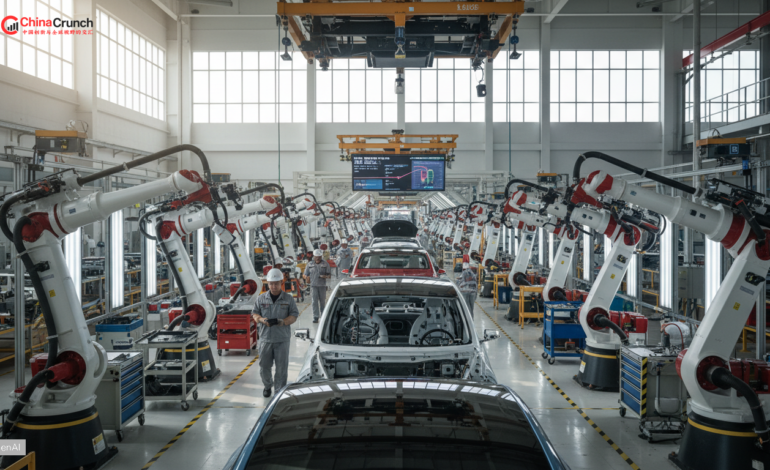
AI Advances in Chinese Home Robotics Training
Advancements in AI for Home Robotics
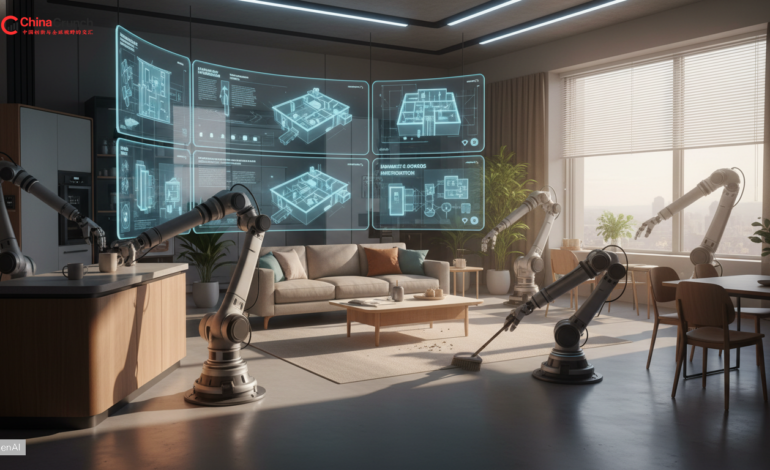
Recent developments in AI are transforming how household robots are trained, shifting practice from slow real-world recording to simulation in AI-generated homes. According to available reports cited by the South China Morning Post, researchers have created synthetic residences that vary clutter, lighting, and object placement to challenge models with complex scenarios sooner. Instead of recording each action like grasping or navigation, teams can now build repeatable training environments, allowing robots to train safely and continuously. The goal is to reduce failures in meeting everyday constraints, thereby shortening the loop between perception, planning, and manipulation and potentially decreasing time spent on data collection and labeling.
Scaling Robot Capabilities with AI-Generated Environments
This approach uses AI-generated homes that can be altered procedurally with different room configurations, furniture, and object positions. These environments are then used to create structured task curricula, covering activities like grasping and sorting under varying difficulty levels, according to the South China Morning Post. Real-world data labeling is costly and inconsistent, so synthetic datasets offer a standardized way to train robots across diverse household situations.
Challenges and Opportunities in Real-World Deployment
Deploying these robots involves refining failure rates in unpredictable environments such as homes with pets and children, which requires real-world validation. The potential of this training approach lies in the ability to expand robotic adaptability to local floor plans through simulated fine-tuning. Asmentioned in related reports, proving the transition from simulation to real-world conditions is crucial, typically requiring staged trials and regression testing. Safety certification and robust service networks will also play a key role in the adoption of robots for domestic tasks.
Infrastructure Supporting Robotics Innovation
This shift coincides with increased investment in AI and robotics infrastructure, including model stacks and chips, which influence the feasibility of extensive simulation runs. SCMP sources have tracked ongoing improvements, with Huawei refining its chips. Additionally, funding advancements like the DeepSeek AI funding promise to further accelerate development cycles if realized as reported.
Future Directions for Home Robotics in China
Immediate efforts will likely focus on aligning simulation with real-world conditions through improved sensor models and domain randomization, aiming for robust performance in diverse settings. Enhanced data efficiency and standardized evaluations may solidify the credibility of these robotic advancements. By 2025, success will be measured by reduced trial hours and increased reliability of tasks across various robotic applications. If the synthetic training pipeline is widely applicable, it could extend into areas like elder care and inventory management in small retail contexts.