China EV industry investment revives Europe car factories
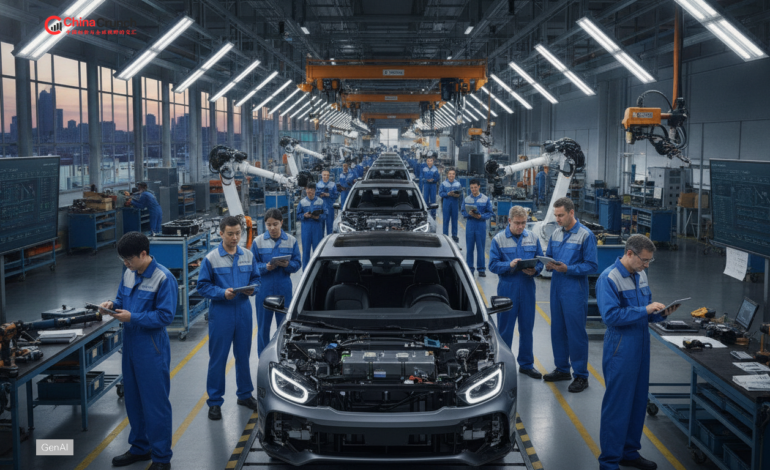
China EV industry investment enters Europe’s factories
European car plants that were running below capacity are being retooled as new owners and partners bring capital, equipment, and faster launch timetables. As indicated by analysts at S&P Global Mobility, there is a growing pipeline of commitments tied to batteries, assembly, and supplier parks as the region competes for industrial projects in 2024. Reuters has described the shift as a lifeline for sites facing job losses and shrinking model lineups, with China EV industry players increasingly tied to these factory plans. For Europe, the story is less about imports and more about manufacturing footprints that keep jobs local. Local unions are pressing for training guarantees and multi year production runs as upgrades begin.
Why Chinese EV makers are shifting to EU production
Import tariffs and rules of origin are reshaping boardroom decisions, so companies are positioning manufacturing inside the single market to protect margins. The European Commission has outlined an anti subsidy probe into battery electric vehicles from China, and that policy backdrop is reportedly pushing investment toward EU based footprints rather than port deliveries. For industry planners, local production shortens logistics, aligns specifications with EU safety and recycling rules, and stabilizes supply for dealers, and themes covered in China Pakistan relations: Pakistan, China reach consensus reflect similar trade and diplomacy logic across the region. Factory conversions also help absorb skilled labor that might otherwise exit the sector.
Technology upgrades powering the factory turnaround
The fastest progress is coming from process engineering, especially software defined manufacturing and battery pack integration that reduces parts and assembly time. Plants are upgrading digital quality control and traceability so regulators can verify sourcing and lifecycle data with fewer manual steps, and China EV industry teams are building these requirements into new tooling. Tighter compliance expectations are influencing technology planning across Chinese firms, as detailed by South China Morning Post in its Pentagon blacklist and investment curbs analysis. The approach also leans on rapid iteration cycles that bring new in car features to market with shorter validation loops. For ailing European car factories, these toolchains can modernize legacy lines while avoiding long shutdowns, and they are increasingly part of how production scales outside the home market.
Risks and opportunities for European automakers and workers
European brands face a difficult balance between protecting intellectual property and keeping factories running, particularly where joint projects involve shared platforms or component ecosystems. The European Automobile Manufacturers’ Association has repeatedly emphasized the need for predictable energy prices and competitive supply chains, and those constraints affect conversion speed. Executives tracking deal structures and licensing have followed the 2024 developments in Chinese EVs regain momentum with tech, deals in 2024. At the same time, partnerships can secure demand for underused stamping, painting, and final assembly capacity, supporting payrolls and apprenticeships. When governance is clear, local suppliers can win new contracts for wiring, plastics, and thermal systems.
What comes next for China EU EV collaboration
Near term cooperation is likely to concentrate on battery supply, localized sourcing, and product variants designed for European charging standards and safety tests. The European Commission has laid out targets for domestic battery value chains under its Green Deal Industrial Plan, creating incentives for investors that can meet transparency and sustainability requirements, and China EV industry investment is likely to be shaped by those rules. A key issue for policymakers is ensuring investment supports long term industrial resilience instead of short runs tied to a single model cycle. Firms will also need to adapt to EU data protection, cybersecurity expectations, and evolving recycling mandates as cross border oversight tightens. If both sides align on compliance and workforce development, investment could help modernization accelerate while keeping manufacturing anchored in Europe.