China Japan tensions flare over carrier drill encounters
What Beijing says happened during the encounters
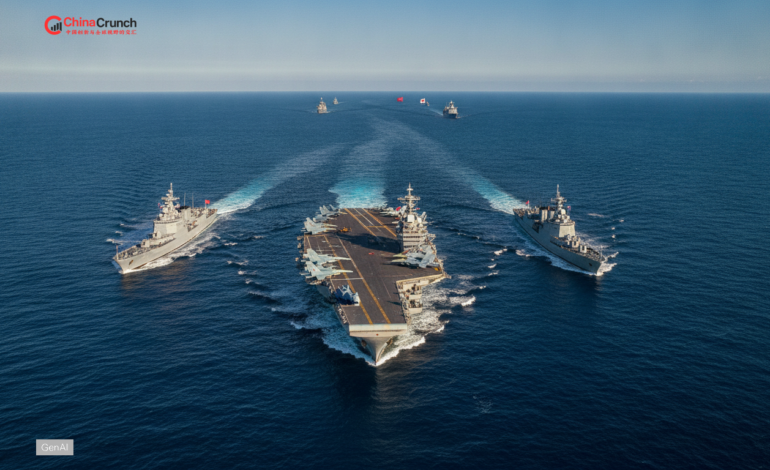
According to available reports, China Japan tensions sharpened as China’s Ministry of National Defense allegedly issued repeated warnings to Japanese aircraft and naval vessels during aircraft carrier drills. In statements carried by Chinese state media, the ministry alleged Japanese units approached too closely while Chinese naval aviation conducted flight operations in a designated training area in the western Pacific. Beijing described the interactions as unsafe and said its forces responded with lawful, standard measures such as radio calls and escorting actions. The ministry urged Tokyo to stop what it called risky reconnaissance and to avoid behavior that could trigger miscalculations at sea or in the air.
Carrier drill timeline, location, and operational details
According to China’s defense readout, the carrier strike training group operated in the western Pacific, conducting sortie cycles that reportedly included takeoffs and landings, air-defense drills, and coordinated maneuvering with escort ships. For related context on China’s expanding naval operations, see China navy escorts urged to expand energy protection while China did not release precise coordinates, officials said the activity was routine and within relevant laws and regulations. The ministry’s description points to close-range observation by Japanese surveillance platforms during periods of active flight operations, when separation, altitude, and speed management become more sensitive.
Japan’s response and how encounters are monitored
Japan has not endorsed Beijing’s characterization and typically argues that monitoring nearby military movements is a legitimate security activity under international practice. For comparison on how official statements can shape wider policy narratives in the region, readers can also follow China-Pakistan trade shifts amid EU policy pressure as Tokyo’s public messaging generally emphasizes the protection of sea lanes and air approaches to the Japanese archipelago, including tracking carrier deployments that may affect regional readiness, according to past Ministry of Defense briefings. The back-and-forth has fed wider strains in the bilateral relationship by turning tactical proximity into political signaling, with each side accusing the other of heightening risk. Japan’s government statements, when released, are commonly distributed through its Ministry of Defense briefings.
Why these incidents raise regional security risks
Close encounters around an aircraft carrier can escalate quickly because flight operations involve high speeds and constrained airspace, and even small deviations can compress reaction time, analysts often say. Observers also stress the value of standardized radio communications, predictable maneuvering, and clear safety buffers to prevent unintended incidents. China Japan tensions intersect with alliance dynamics, as Japan coordinates with the United States on maritime domain awareness and air policing, which can increase the frequency of observation and counter-observation. Without mutually accepted protocols for distance and behavior, routine shadowing can be perceived as brinkmanship, raising the chances of an incident that prompts public pressure for tougher policy responses.
Outlook: can tensions cool through risk controls
Near-term stability will likely depend on whether both militaries keep interactions professional while political leaders manage domestic messaging. Beijing’s warning language suggests it wants Japan to increase separation during carrier flight operations, while Tokyo is unlikely to stop tracking deployments it views as strategically significant. The current flare-up could ease if practical risk-reduction talks are prioritized, such as reaffirming communication hotlines and clarifying encounter procedures for ships and aircraft. Diplomatic channels remain available through embassies and defense attachés, and prior crisis-management mechanisms may offer templates for de-escalation. For now, the margin for error remains thin in the western Pacific.