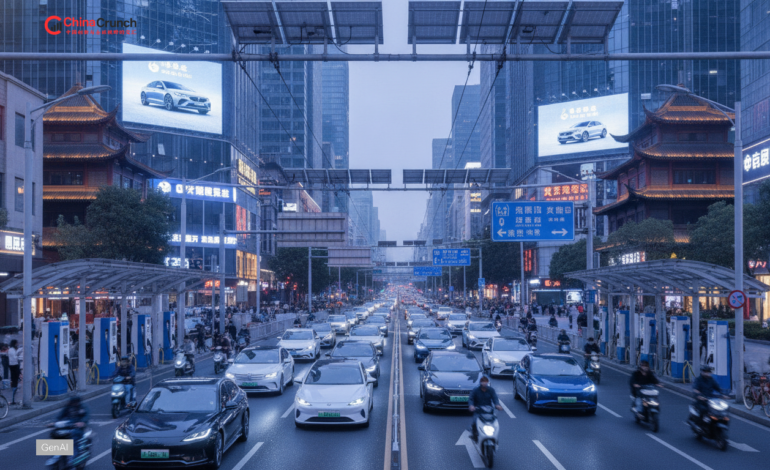
Chinese EVs accelerate expansion across Europe market
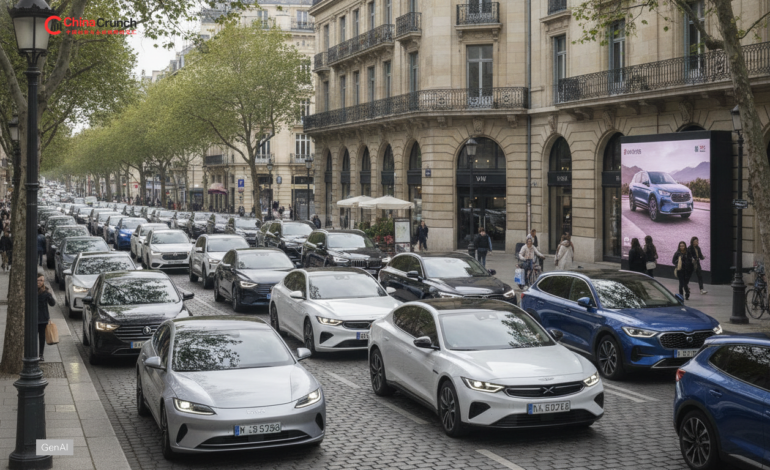
Chinese EVs expand across Europe
Chinese brands are widening their European distribution footprints as registrations reportedly climb in multiple countries in 2024, based on observed new-model launch schedules, port arrivals, and dealer additions. These China-made electric models are increasingly positioned as mainstream choices rather than niche imports. According to reports, the European Commission has framed its ongoing probe around whether state support is distorting competition, and Reuters has indicated that Brussels is considering measures that could potentially slow the expansion. Carmakers are also described in industry commentary as seeking shorter order-to-delivery timelines via shipping and marketing adjustments, while promoting financing offers that resemble established rivals’ programs. The near-term focus, executives and analysts have noted, is sustaining volume without materially eroding residual values.
Geely Group strategy and multi-brand reach
Among the more exposed players is Geely Group, whose portfolio includes Volvo Cars, Polestar, and Lotus, giving it multiple price points and dealer pathways. That multi-brand presence can allow it to adjust product mix by country, for example by emphasizing hybrids in one market and full battery models in another, depending on incentive changes and demand trends. For context on how scale inside China has helped manufacturers push pricing and capacity, see China electric vehicles boom lifts sales, strains grids, and policy spillovers beyond autos also matter for planning; see China coal power surge in 2026: what changes now. According to analysts, investors are observing whether more EU assembly or sourcing shifts become necessary to protect margins.
Tariffs and pricing impact for consumers
Tariffs, if imposed, would likely filter through sticker prices, leasing rates, and dealer incentives rather than appearing as a simple surcharge, according to analysts’ commentary. Reuters has described the debate as Brussels considering putting on the brakes as Chinese automobile sales accelerate, and that framing matters because it signals a political as well as economic test. A separate but related policy lesson is how infrastructure decisions can create large compensation costs, as detailed by the South China Morning Post in Danish court orders state pay telecoms operator US$12m Huawei equipment removal, and some brands may be able to soften the impact through cost reductions, while others could reconfigure supply chains to try to meet rules-of-origin thresholds where applicable. Regulators and industry groups have discussed consumer price sensitivity as a key variable in how quickly EV demand can absorb higher costs.
How European rivals are responding
European incumbents are described by analysts as responding to the price and feature pressure with quicker refresh cycles, more competitive entry pricing, and tighter battery supply contracting through 2024 and 2025. In public comments, several executives have urged predictable rules so investment plans are not constantly rewritten mid cycle, while trade groups are lobbying on both tariffs and industrial support. Chinese EVs in Europe are also prompting a rethink of dealership economics, because direct sales experiments and software-driven services can compress traditional margins, according to industry observers. Some rivals are leaning on fleet channels, where total cost of ownership comparisons dominate, to support volume if retail demand softens. Others emphasize localized engineering and top safety ratings to reinforce trust, based on messaging highlighted in company communications.
What comes next for Chinese EVs in Europe
The next phase for Chinese EVs depends on whether makers can keep pace with tightening carbon rules and other compliance obligations, including battery-related disclosure expectations where they apply, as outlined in EU policy discussions and industry briefings. For China-based automakers, the strategic question is less about entering Europe and more about staying profitable if price competition intensifies and policy costs rise. Companies that expand parts warehousing, technician training, and certified repair networks are generally viewed by analysts as better placed to convert early adopters into repeat buyers, and Chinese EVs planning is increasingly shaped by cross-market questions such as Chinese EVs Canada decisions on tariffs and eligibility that can influence global allocation of vehicles and batteries, according to industry commentary. Reuters has noted that Brussels is still considering options, so planning is increasingly built around multiple regulatory outcomes rather than a single forecast.