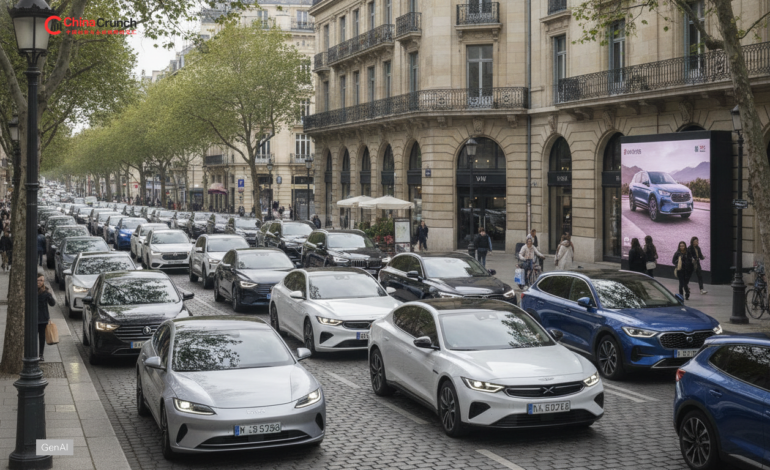
China electric vehicles boom lifts sales, strains grids

China electric vehicles sales hit new weekly records
Electric vehicle makers in China are again reporting strong weekly sales momentum, and the pace is reshaping how automakers price, build, and deliver new models. China is widely described as the largest market for new-energy vehicles, as indicated by available reports, and the recent lift in showroom traffic has been tied to discounting, quicker refresh cycles, and broader financing offers. Dealers have said stock turnover can be faster for commuter trims and slower for niche variants, pushing brands to prioritize high-volume configurations. Delivery speed has also become a marketing lever, as buyers compare lead times across rivals. The result is a more competitive market where price moves are quickly matched and promotions can change week to week.
Local budgets and grids strained by EV growth
Rapid adoption is exposing infrastructure gaps that were easier to manage when volumes were lower. Local planners face rising bills for distribution upgrades, transformer capacity, curbside chargers, and ongoing maintenance of public charging sites, even as land constraints and permitting delays can slow construction. Some municipal operators reportedly struggle to keep utilization high enough to cover costs in outlying districts, while dense urban sites can see queues at peak hours. For a public cost comparison in another sector, see https://www.scmp.com/tech/article/3358245/danish-court-orders-state-pay-telecoms-operator-us12m-huawei-equipment-removal?utm_source=rss_feed, and the wider rollout relates to power system investment priorities, especially where networks were built for older demand patterns. In 2024, several large coastal cities have already flagged charging congestion during holiday travel peaks, highlighting how quickly local demand can outgrow planning assumptions.
Price war economics across the supply chain
Price competition is squeezing margins, but it is also pushing suppliers to scale more efficiently in batteries, power electronics, and software integration. Public disclosures by companies and analysts’ commentary suggest some component makers have been expanding capacity while trying to reduce exposure to volatile inputs such as lithium and nickel pricing. A related example of tightening oversight appears here: Chinese smuggling allegations in Japan rare earth case, while policymakers are watching employment effects, as officials and industry groups have said assembly, logistics, and after-sales service may grow even while some engine-related roles contract. Trade and compliance risks also matter for industrial planning, particularly where critical minerals intersect with export policy and customs enforcement. The next phase will test whether weaker brands can manage research and development while sustaining discounts.
Environmental impact depends on power mix and recycling
Higher EV mileage can reduce urban tailpipe pollution, yet net climate benefits depend on charging patterns and the electricity mix. International energy researchers have noted that outcomes improve when grids add low-carbon generation and when charging is managed to avoid peak fossil dispatch. As adoption accelerates, cities are confronting battery end-of-life logistics, including standardized collection, safe transport, and recycling capacity. Another pressure point is upstream materials, where policy shifts can affect recycling economics and sourcing strategies, as discussed in China rare earth export controls squeeze US miners, and industry groups have called for stricter traceability to curb informal dismantling that can leak pollutants. In 2025, several provinces are expected to expand pilot programs for standardized battery tracking to reduce leakage into informal channels. These systems are becoming as important as sales metrics.
What comes next for China electric vehicles in 2026
Product roadmaps are increasingly centered on lower-cost driver assistance, faster charging on mainstream platforms, and improved winter performance for mass-market buyers, according to company announcements and industry reporting. Automakers are also positioning more models for export, but domestic competition remains a main driver of pricing discipline and rapid iteration, and China electric vehicles are increasingly being benchmarked by buyers on charging time and software updates as much as sticker price. Marketplace search data is sometimes cited as pointing to growing interest in 2026 model-year comparisons, especially among families weighing total ownership costs against gasoline volatility, though such trends can vary by platform and time period. Regulators are expected to focus on charger interoperability, battery safety enforcement, and fair marketing claims, based on recent policy discussions and enforcement patterns. The near-term trajectory will hinge on whether charging buildouts keep pace with registrations and whether grid investments are coordinated across provinces to prevent bottlenecks and uneven service quality.