China dam collapse in Guangxi after Typhoon Maysak
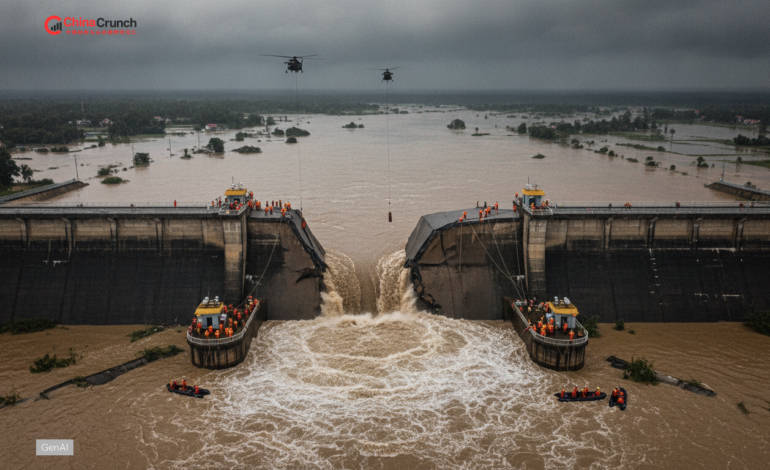
China dam collapse in Guangxi: Typhoon Maysak aftermath
Reports of a China dam collapse in Guangxi emerged after Typhoon Maysak, as intense rainbands reportedly pushed some rivers above warning levels in parts of the region. Local emergency broadcasts reportedly warned of rapid water rise, unstable slopes, and drainage systems overwhelmed in low-lying communities. Officials were quoted as saying debris flows cut township roads and disrupted mobile signals in some valleys, complicating field access for rescuers and power crews. Residents near waterways were advised via local notices to move to higher ground and avoid crossings where currents were accelerating. Authorities said flood conditions were still evolving as inspection teams moved between affected embankments and transport corridors during the storm’s passage.
What officials said about the dam failure in Guangxi
Authorities said the structure failed after prolonged inflows raised upstream pressure and increased scouring at the base, reportedly worsening seepage. The local water resources bureau said inspection teams were dispatched to check adjacent embankments and spillways for deformation and to look for secondary weak points. Engineers were described as prioritizing stabilization of downstream channels where silt and fallen timber had narrowed flow paths and increased overtopping risk. Officials also said they were monitoring smaller retention works in saturated catchments for signs of stress.
Emergency response and evacuations in Guangxi
County-level governments said they activated flood control plans and opened shelters in schools and community halls, with transport arranged for residents from riverside blocks in affected areas. Officials said response priorities included household checks, temporary medical support, and restoring safe drinking water supplies where wells were reported to be contaminated by runoff. Crews were reported to have cleared blocked culverts and reinforced weakened levee sections with sandbags, while excavators removed landslide debris to keep priority routes open for ambulances and supply trucks, according to local updates. Local authorities said assessments continued as waters receded.
Cross-border rail disruption after the China dam collapse
Rail operators halted service on affected cross-border segments after waterlogged track beds and slope instability raised safety concerns, according to available reports. Dispatch centers reportedly rerouted some freight while passenger services were suspended in sections where inspection teams could not immediately reach bridges and tunnels. Transport planners noted in public advisories that a China dam collapse can intensify downstream currents, potentially increasing the likelihood of ballast washout and undermining approach embankments near river crossings. Railway technicians said reopening would depend on geotechnical checks and post-flood stress tests.
Next steps for dam safety and infrastructure resilience
Guangxi officials said inspections would expand to small reservoirs, hillside ponds, and older embankments because clustered failures can occur once soils remain saturated. Provincial planners said design assumptions should account for sharper rainfall peaks and longer wet spells, reflecting recent policy discussions on resilient public works in Nanning. Water resources engineers said improved sensor networks, clearer emergency drawdown rules, and more frequent condition surveys could reduce pressure on vulnerable structures during prolonged storms. Regulators also signaled stronger requirements for documentation, contractor accountability, and independent checks before facilities return to normal operations, according to official statements.