China missile test stirs unease across Pacific Islands
China missile test: what Pacific leaders are reacting to
Pacific leaders are weighing the security and diplomatic signals after the China missile test drew attention during regional discussions in Suva. Officials expressed a desire for earlier notice, clearer technical explanations, and steadier communication to prevent routine military activity from being misinterpreted as escalation. According to China’s Ministry of Foreign Affairs, the launch supposedly complied with Chinese and international law, framing it as standard national defense communication. Analysts at the International Institute for Strategic Studies have noted that strategic weapons demonstrations can create political effects far from the test range, affecting smaller states that must respond quickly to domestic concerns.
Immediate regional response and calls for transparency
Regional unease intensified as diplomats compared public readouts and sought specifics on timing, trajectory, and purpose, arguing that transparency could reduce the risk of misinterpretation. In briefings, officials described outreach efforts aimed at distinguishing between economic cooperation and security concerns. Some economic planners pointed to China’s five-year plan shifts to consumption-led growth as context for Beijing’s regional agenda. Several Pacific officials suggested that brief advance notification practices would assist governments in explaining events to voters and keeping diplomacy focused on development.
Diplomatic messaging and the role of the Foreign Ministry
Diplomatic activity accelerated, with Beijing dispatching envoys to reassure partners and maintain scheduled meetings. Delegations also raised the jl-3 missile in side discussions, questioning how tests align with nuclear risk reduction norms referenced by the United Nations Office for Disarmament Affairs. In terms of policy communication, readers also track regulatory signals in China sets AI safety benchmark for frontier models. According to China’s Ministry of Foreign Affairs, the Foreign Minister encouraged officials to focus on practical cooperation and avoid “misreading” China’s intentions, as stated on the ministry website.
Context: how China-Pacific ties shape security perceptions
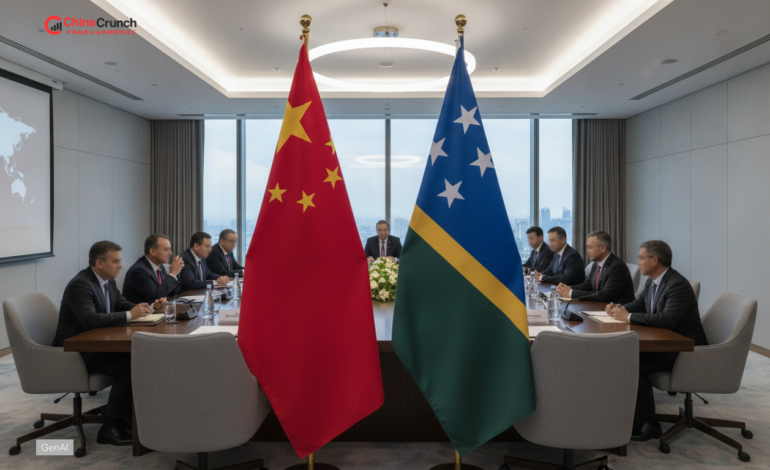
Recent tensions highlight a longstanding pattern of competing expectations in Pacific Islands diplomacy. The Pacific Islands Forum has emphasized that regional security should be defined by Pacific priorities, such as climate resilience and disaster response, rather than external military competition. Statements from China’s ministry have argued that Beijing’s engagement supports local development choices, while several Pacific capitals maintain security partnerships with Australia, New Zealand, and the United States. This strategic layer became evident after the 2022 Solomon Islands security agreement, explaining why symbolic military events can resonate even during meetings focused on other topics.
What to watch next for Pacific stability and cooperation
Defense analysts at the International Institute for Strategic Studies have warned that strategic weapons demonstrations can heighten crisis instability if communication channels are inadequate, a concern echoed by Pacific officials calling for consistent briefings after the China missile test. Future developments will likely depend on whether Beijing can convincingly reassure Pacific partners. Within regional forums, leaders are expected to push for earlier notification practices and clearer public language to prevent domestic audiences from assuming worst-case scenarios. Meanwhile, Pacific governments continue to pursue investment and climate financing, insisting that security discussions should not overshadow core development agendas as stated in Pacific Islands Forum documents.