China Scales Sodium-Ion Batteries for Grid Storage
China’s Sodium-Ion Batteries Breakthrough: What Changed
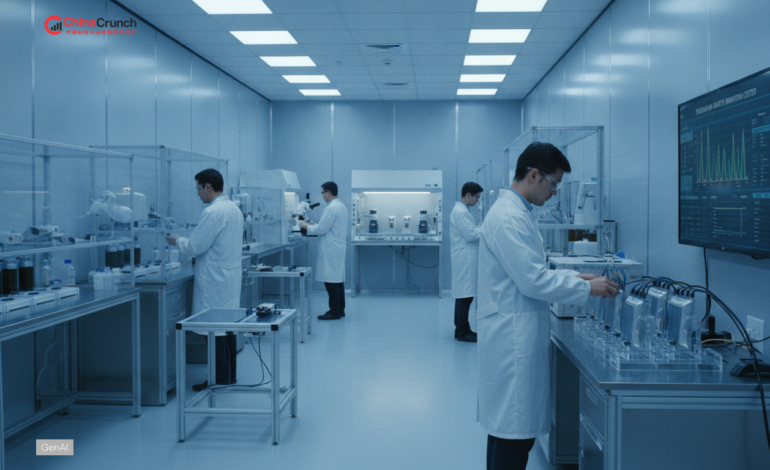
Sodium-ion batteries are gaining momentum in China as researchers report more stable electrodes and cleaner interfaces that may survive longer cycling. At the China Academy of Sciences, teams have reportedly focused on reducing side reactions that can cause fast capacity fade, a known barrier to commercial packs. The focus is now on engineering repeatable recipes that manufacturers can run at scale rather than chasing single test results. With sodium resources widely available, sodium-ion batteries are increasingly positioned as a practical option for stationary energy storage where cost, safety, and supply security can matter more than peak energy density. The near-term question is whether lab gains can hold up under factory conditions and warranty-style testing.
Why Sodium-Ion Batteries Matter for China’s Supply Chain
Industrial planners are reportedly watching sodium chemistry because it may reduce exposure to lithium price swings and upstream bottlenecks. This fits China’s broader push to upgrade supply chains and scale strategic manufacturing capacity, including in energy infrastructure, according to policy discussions referenced in China five-year plan shifts to consumption-led growth. In grid-related conversations, sodium-ion batteries are often framed as a hedge that could diversify cell supply for large storage tenders, though the pace of adoption will depend on procurement standards and proven reliability. In practical terms, buyers evaluate delivered kilowatt-hours over years, predictable sourcing, and thermal safety. Those criteria are where sodium-based battery packs can compete even if energy density stays lower than premium lithium cells.
Materials and Manufacturing Progress in Sodium-Ion Batteries
Developers have long noted that sodium’s larger ionic radius can stress host materials and shorten cycle life if structures are not resilient. Recent work has emphasized cathode framework stability, electrolyte additives, and protective coatings intended to reduce parasitic reactions that waste capacity. Manufacturing also appears to require tighter control of moisture and contamination than some early lab demonstrations suggested, which can raise complexity before costs fall. Firms moving from pilot lines to volume production typically need months of process qualification, yield improvement, and supplier audits before shipments, as is common in battery manufacturing. Adjacent consumer device ecosystems show how quickly coordinated manufacturing can scale once processes stabilize, a theme also reflected in Alibaba, Honor and the Rise of AI-Powered Devices. For sodium-ion batteries, repeatability and defect control remain core hurdles.
Energy Storage Market Impact: Where Sodium-Ion Batteries Fit
According to available reports, if reliability targets are met, sodium-ion batteries could influence procurement decisions for grid storage by potentially lowering costs and easing some supply constraints, though project economics vary by region and contract structure. Utilities care about cycle life, calendar aging, warranty coverage, and delivered energy over years, not just headline capacity. In many projects, safety and availability can matter more than maximum energy density, especially for peak shaving and renewable smoothing. Analysts also track how manufacturing focus can accelerate commercialization; the South China Morning Post analysis Clash of the tech titans highlights this dynamic. The most immediate impact for sodium-ion batteries is likely in stationary storage rather than premium mobility segments, where weight and range remain decisive.
What Comes Next for Sodium-Ion Batteries in 2026
The next phase is less about single lab announcements and more about verification across factories, testing standards, and field data. Battery makers typically require third-party validation, safety certification, and long-duration cycling results before large grid deployments, with pilot projects used to prove performance under real temperatures and duty cycles, as is standard practice in the sector. Looking to 2026, sodium-ion batteries commercialization will likely depend on consistent quality, stable material supply chains, and predictable yields as plants scale. Research continues on binders, coatings, and fast-charge behavior to reduce degradation, especially at low temperatures where some chemistries struggle. Broader Chinese tech investment cycles show how standards and scaling can move in parallel, as discussed in China sets AI safety benchmark for frontier models. If these gates are cleared, sodium-ion batteries could become a mainstream option for cost-sensitive stationary storage.