China submarine missile test raises Nato summit stakes
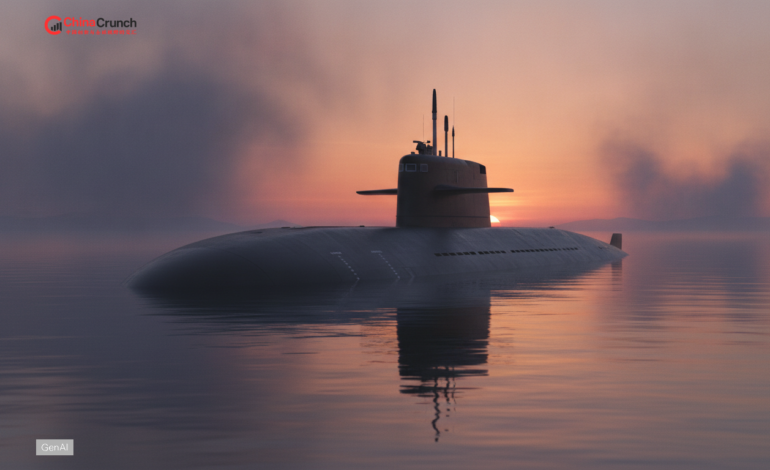
China submarine missile test: what happened
The China submarine missile launch drew attention as leaders prepared to meet in Washington for the Nato summit. The firing has been interpreted by some analysts as signaling around sea based nuclear forces and second strike credibility. China did not publish detailed technical data about the missile type, range, or patrol status, which left outside analysts to interpret intent from timing and context. In its 2023 report on China’s military power, the U.S. Department of Defense described the PLA Navy as the world’s largest navy by number of ships, a framing that influences how observers judge undersea activity. Even without official specifications, a launch associated with ballistic missile submarines is treated as a readiness indicator rather than a one off event.
Operational signals and regional security implications
Regional governments tend to assess such launches by operational context, including where they occurred and whether follow on deployments are detected. Reuters described the episode as a long range missile firing ahead of the Nato summit, which increased focus among partners tracking maritime deterrence and early warning. A parallel briefing and timeline is tracked in China submarine-launched missile test stirs tensions, which regional analysts have cited for its emphasis on signaling. The China submarine missile dimension matters because it can stress surveillance networks and raise the premium on resilient communications at sea. Nearby states often respond with more patrols, exercises, and quiet coordination to avoid a public escalation cycle.
Nato summit stakes and alliance messaging on China submarine missile activity
Nato communiques have increasingly connected Indo-Pacific security dynamics with Euro-Atlantic planning, and the timing of the launch reinforced that linkage. NATO Secretary General Jens Stoltenberg said in a 2024 address that China’s policies and ambitions present challenges the alliance must address, a line expected to recur in Washington discussions. In that debate, the China submarine missile test is used as a concrete example supporting more shared maritime awareness, undersea infrastructure protection, and coordinated crisis messaging to reduce miscalculation. For market sensitivity around policy shocks, analysts have also pointed readers to Hong Kong drives fresh global interest in China stocks as a reminder of how quickly risk perceptions can travel. Financial and technology exposure also enters the conversation where defense production relies on sensitive supply chains.
How this compares with earlier submarine missile tests
Defense watchers compare this event to earlier Chinese missile demonstrations by weighing platform choice, launch messaging, and diplomatic timing, not only range. The Pentagon’s 2023 assessment of China’s nuclear forces says Beijing is diversifying delivery systems, including sea based options, which places ballistic missile submarine activity in a longer modernization arc rather than a stand alone headline. Reuters coverage emphasized the proximity to the Nato summit, which differentiates it from tests held away from major alliance meetings. Public imagery and notices to mariners were not detailed in the Reuters account, limiting open source confirmation of whether the launch reflected training, evaluation, or strategic signaling. Even with incomplete data, observers compare the timing to past patterns of showcasing deterrence capabilities during high visibility windows.
What comes next for Indo-Pacific and global military balance
Near term consequences are likely to include tighter coordination among U.S. allies on undersea monitoring, better integration for missile defense warning, and clearer language on China in summit outcomes. The International Institute for Strategic Studies argues in its annual Military Balance assessments that competitive modernization is spreading across domains, including undersea systems and long range strike, driving investment in sensors and secure command links. That context matters because a strategic missile launched from a submerged platform complicates crisis management and can compress decision time for leaders. Chinese officials often describe their posture as defensive, but high visibility demonstrations near major diplomatic events such as the Washington Nato summit shape how counterparts plan. If Beijing continues sea based demonstrations, the durable change may be more routine multilateral tracking and calibrated signaling rather than new doctrines announced publicly.