China’s tech edge is reshaping South Korea ties
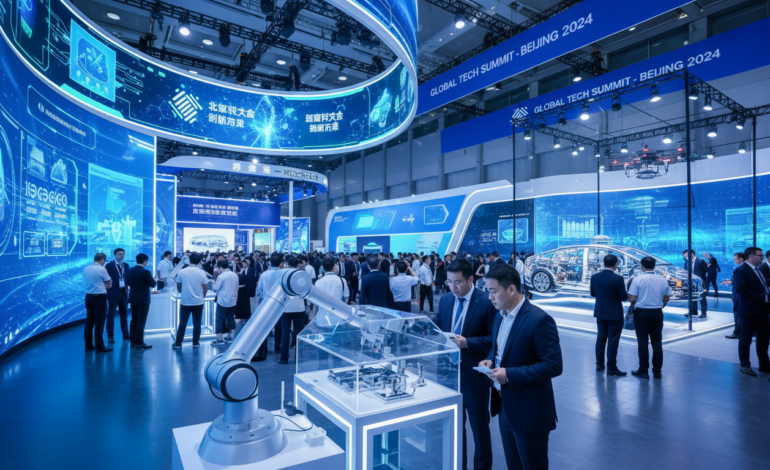
Impacts of China’s Technological Advancements
Boardrooms in Seoul are recalculating competitive assumptions as China’s product cycles compress and export offers sharpen. Today, procurement teams track performance gaps in batteries, displays, and industrial automation because pricing and delivery terms are moving faster than legacy plans. In a Live market where buyers compare suppliers in real time, executives are tying decisions to verifiable signals rather than long range forecasts. The focus is on China tech advancements, and how quickly they translate into scale through domestic demand and coordinated manufacturing. An Update from the South China Morning Post details how Chinese firms are pressing into segments that once relied on South Korean engineering depth. Companies now treat capability shifts as immediate operating risk, not distant strategy.
Challenges for South Korean Industrial Ties
For South Korea industry leaders, the pressure shows up in contract renegotiations and tighter margin corridors, especially when Chinese vendors bundle hardware with software services. Today, ministries and conglomerates are also weighing policy friction that can interrupt components flows and compliance requirements. The immediate issue is not a single embargo scenario, but a Live accumulation of small bottlenecks that raise lead times and verification costs. An Update from the South China Morning Post frames the dilemma as a rethink of decades of industrial interdependence, with firms reassessing where Chinese inputs remain essential and where substitution is feasible. Regional positioning is complicated by Beijing’s broader diplomacy and capital reach, including themes covered in China Signals Bigger Middle East Peace Push Ahead here. South Korean planners are responding with faster risk reviews and stricter supplier audits.
Opportunities for New Tech Synergies
Despite the strain, the most practical openings are in targeted tech partnerships that separate commercial collaboration from strategic chokepoints. Today, several Korean suppliers look for revenue in tools, materials, and manufacturing services that can sell into multiple ecosystems without ceding core IP. In a Live environment of shifting standards, joint work on energy efficiency, factory software, and safety certification can create industrial synergy even when geopolitics complicates flagship deals. The South China Morning Post’s reporting underscores that China tech advancements are forcing a more selective engagement model, where cooperation is negotiated line by line. An Update from Beijing’s policy signals matters here, especially when provincial programs subsidize adoption and accelerate scale. Firms that define narrow scopes and measurable deliverables can still find profitable cross border lanes.
Strategies for South Korean Adaptation
Policy and corporate tactics are moving toward resilience rather than full decoupling, with South Korean groups building parallel sourcing and redesigning products to tolerate substitutions. Today, executives emphasize verification of origin, cybersecurity hardening, and contract clauses that trigger rapid requalification when suppliers change. In a Live compliance climate, regulators and firms coordinate on screening for sensitive technologies while keeping commercial pipelines open for non critical parts. Korea’s response also includes closer monitoring of China’s digital infrastructure push; China accelerates digital yuan trials and new tech shows how payments and data rails can shape platform power beyond hardware. An Update cadence of supplier scorecards and stress tests is becoming standard in procurement. The goal is to preserve competitiveness while reducing exposure to sudden policy shocks.
Future Prospects in Asia’s Tech Ecosystem
The near term outlook is a more segmented Asia, where capacity and standards diverge across chips, batteries, and industrial software, forcing companies to engineer for multiple end markets. Today, investors will watch which firms can maintain global quality while matching China’s speed in iteration and commercialization. In a Live race for talent and equipment, South Korean champions may double down on frontier nodes and specialty materials, while Chinese groups expand in mature technologies that still drive volume. The turning point is how quickly partners translate industrial synergy into durable revenue without increasing strategic dependency, a dynamic sharpened by capex decisions in Seoul and Shenzhen. Another Update to track is whether procurement shifts become structural, reflected in multi year capex and long term offtake agreements rather than temporary hedges. Regional competition will intensify, but disciplined specialization can keep Korea central to advanced manufacturing.