US Pressure Before Xi-Trump Summit Seen as Key Factor Behind Taiwan Defence Budget Breakthrough
Growing geopolitical tension ahead of a high stakes summit between US President Donald Trump and Chinese President Xi Jinping is being closely linked to Taiwan’s unexpected political breakthrough on defence spending, with analysts suggesting that external pressure from Washington may have helped push opposition parties into supporting a major budget expansion. The development comes at a sensitive moment in regional security dynamics, as Taiwan continues to face sustained military pressure and diplomatic isolation efforts from Beijing.
According to political observers, concern in Taipei has intensified in recent weeks over the possibility that Washington could adjust its strategic posture toward the island during upcoming negotiations with Beijing. The summit has raised fears among some lawmakers that economic and trade considerations might influence broader security commitments in the region. These anxieties are believed to have contributed to a shift in stance by opposition parties, who had previously resisted approving large scale increases in defence spending due to concerns over fiscal burden and procurement priorities.
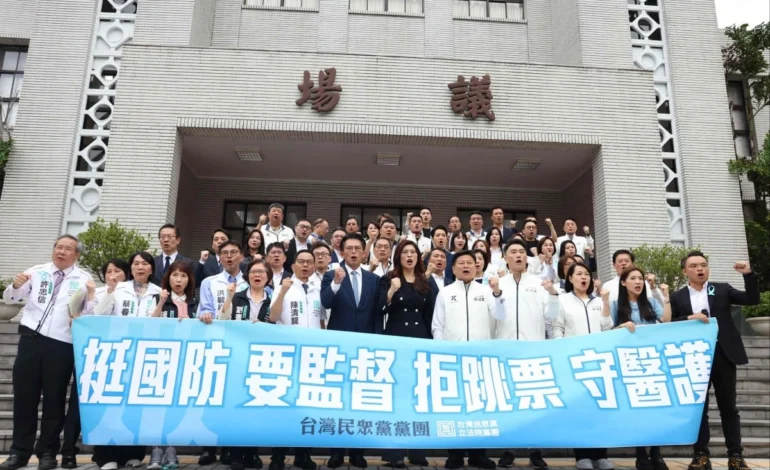
The turning point came as Taiwan’s legislature passed a NT$780 billion, equivalent to around US$26 billion, special defence budget after months of political deadlock. The approval marked a significant moment for the island’s defence policy, particularly given the strong opposition earlier in the year from political groups sceptical about expanding military expenditure. The bill includes funding for a range of military upgrades, although detailed allocations for specific weapons systems have not yet been fully disclosed, reflecting ongoing debates over long term strategic planning.
The decision was backed by opposition parties including the Kuomintang and the Taiwan People’s Party, who have historically expressed caution over rapid increases in defence spending. Their support last week surprised many political analysts, who noted that the shift coincided with heightened diplomatic activity between Washington, Taipei and Beijing. Some experts argue that the timing suggests coordinated messaging from the United States, aimed at reinforcing Taiwan’s commitment to self defence at a moment when regional tensions remain elevated.
The broader context of the decision is the continued military pressure from the mainland, where Beijing regards Taiwan as a core national interest and has repeatedly increased military activity around the island. These actions have contributed to a persistent sense of urgency within Taiwan’s political system regarding defence readiness. At the same time, international attention has focused on how the US will balance its economic engagement with China against its security commitments in the Indo Pacific region, particularly as major diplomatic engagements approach.
As the Xi-Trump summit draws closer, Taiwan’s defence decision is being interpreted as part of a wider strategic recalibration in the region. Analysts suggest that both domestic political calculations and external diplomatic signals played a role in shaping the outcome, reflecting the increasingly interconnected nature of security, trade and geopolitical competition in East Asia.