Chinese chipmakers profit rises on AI foundry demand
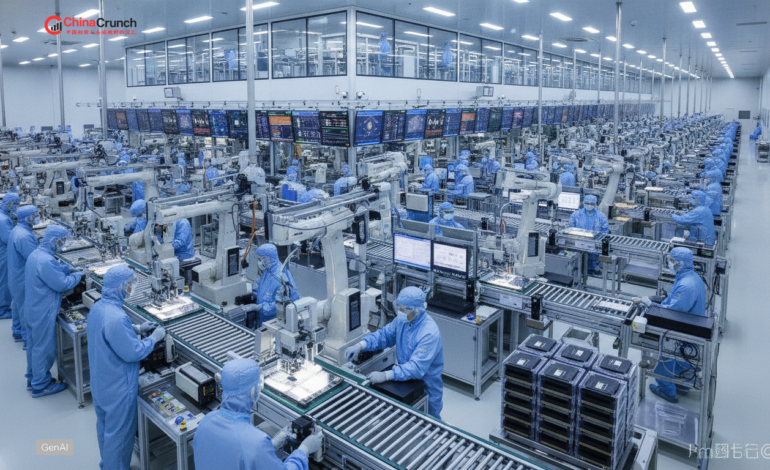
Chinese chipmakers profit rises as AI demand lifts foundries
Mainland AI infrastructure spending reportedly pushes more wafers through mature node foundries, and Chinese chipmakers profit appears to be improving. Recent management commentary has centred on utilisation, product mix and pricing discipline rather than headline capacity announcements. Demand is being driven by inference and data centre buildouts that pull in networking, power management and packaging related components, areas where local supply chains are increasingly prioritised, according to industry commentary. Executives have also said that longer qualification cycles can support steadier order visibility for specialty processes and embedded memory options. As a result, order books can tighten and factory loading can improve, which typically supports gross margin at large fabs, although the impact varies by company and quarter.
SMIC and Hua Hong results show utilisation and mix gains
Profit expansion has been most visible at the two listed foundry leaders, as both reported strong year on year jumps in quarterly earnings. The South China Morning Post detailed the results in AI demand drives triple digit profit growth for SMIC and Hua Hong, citing triple digit growth linked to stronger demand and better utilisation. SMIC and Hua Hong each pointed to improved factory loading and a richer mix of higher value products as key drivers, according to the same report. Deal flow around industrial control and AI adjacent components was also cited as supportive, while cost controls can add operating leverage when utilisation rises. For broader policy context around China Pakistan technology sector growth from investment, regional technology capital flows are often referenced alongside cross border industrial planning.
How domestic AI buildouts translate into wafer demand
It is suggested that domestic AI buildouts are changing what fabs prioritise, and customers are increasingly adjusting designs to fit accessible process technologies, according to industry observers. Rather than relying only on leading edge nodes, many orders land on established processes suited to controllers, analog, power and connectivity parts used in servers, networking racks and storage systems. That mix can tighten supply at specific mature nodes and increase the value of specialty capacity that can be qualified quickly, although conditions differ across segments. In this environment, Chinese chipmakers profit often tracks utilisation and yield progress more than headline capacity announcements. Parallel investment is also flowing into niche process bets such as SOI, covered in China semiconductor investment backs SOI Micro FD SOI, which could broaden higher margin offerings over time.
What the rebound signals for global chip supply and pricing
The rebound is being watched outside China because it can signal where incremental foundry capacity is being absorbed and which segments tighten first, according to market commentary. Market research increasingly separates leading edge logic from mature node and specialty lines, where automotive, industrial and AI infrastructure demand can compete for capacity. The same SCMP reporting framed the quarter as evidence that mainland demand can move earnings even without a broad global upcycle, while related tech stakes are also tracked in Chinese superconductors dispute raises US tech stakes. For multinational buyers, this can influence sourcing strategies for components adjacent to AI accelerators rather than the accelerators themselves. Higher utilisation at large domestic fabs may also affect negotiations over wafer pricing and lead times, potentially influencing downstream device makers and module assemblers across Asia.
Outlook: what to watch in the next earnings cycle
Near term guidance will hinge on whether AI infrastructure spending stays firm and whether consumer electronics demand continues its gradual recovery, as companies and analysts typically describe. Foundries are likely to keep emphasising mix improvement, yield gains and disciplined capex sequencing, since these are the operational levers that can turn a demand pulse into sustained margin. Management teams at SMIC and Hua Hong have stressed operational execution, and analysts will track whether utilisation remains high enough to support depreciation loads as new tools ramp. If those conditions hold, Chinese chipmakers profit could stay elevated even if headline unit shipments fluctuate, because better loading and higher value products can help stabilise cash generation. The next reporting cycle should clarify how much of any uplift is structural, tied to domestic substitution and recurring AI related procurement.