Chinese economic espionage flagged in US AI hearing
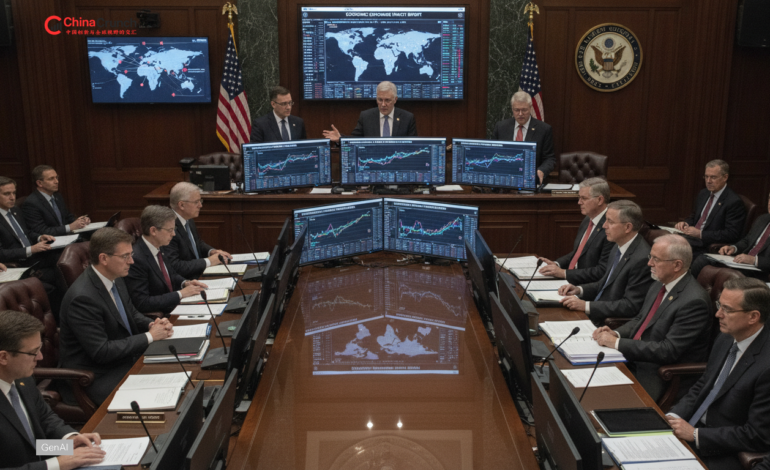
Chinese economic espionage and AI: what the hearing warned
US lawmakers used a recent hearing to frame Chinese economic espionage as a fast-moving AI security problem rather than a narrow counterintelligence issue. During the hearing in Washington, witnesses suggested that data, model weights, chip design files, and proprietary training methods can be copied quickly once an intruder gains access to a network or cloud environment. Witnesses also described dual-use know-how embedded in commercial research pipelines, where value often sits in reusable code, prompts, and curated datasets. Committee members acknowledged that the risk is not limited to finished products; it can also involve intermediate artifacts that accelerate iteration. Concerns raised at the hearing included preventing loss of competitive advantage across labs, cloud vendors, and defense-linked contractors.
Economic espionage risks across labs, cloud, and universities
Committee members argued that safeguards have not kept pace with how quickly firms ship models and integrate third-party tools. As noted in the hearing, risks span insider access, vendor compromise, and theft of credentials used to manage cloud training clusters. According to witness testimony, the economic espionage threat targets research universities and startups that may lack mature security budgets and centralized logging. For additional context on how closely Chinese A.I. capabilities are tracking top rivals, see Chinese A.I. Models Are Closing the Gap With Top Rivals. A parallel concern raised by participants was exposure through cross-border collaboration, where shared repositories and conference workflows can be exploited.
Military and intelligence advantages from stolen AI methods
Witnesses indicated in testimony that commercial breakthroughs could translate into military benefits when adapted for intelligence analysis, autonomy, and cyber operations. The hearing also described how stolen model optimization techniques might shorten development cycles for systems that process imagery, signals, and logistics data at scale. Separate reporting on export restrictions and chip financing pressures adds detail on the hardware side, including Kuaishou Chip Spin-Off Funding Amid Export Curbs. Members noted that the same compute management and data labeling pipelines used in civilian products might be repurposed for defense projects once absorbed by state-linked entities, as described in the hearing. Officials have long described civil-military integration as a strategic goal, and the hearing treated that policy context as relevant to threat assessments.
How US policy is responding to AI driven theft
In the hearing, lawmakers framed tighter controls as part of a broader recalibration in US-China relations where technology interdependence is being narrowed deliberately. Members argued that enforcement and corporate security now influence competitiveness as much as R&D spending, especially as AI deployment cycles compress. Chinese economic espionage was cited by lawmakers as one factor in aligning export controls, visa screening, and procurement rules with AI-specific risk models. They also criticized fragmented incident reporting that can leave patterns invisible across sectors, limiting how quickly defenders can harden common weak points, according to statements made in the hearing. Companies operating in hubs such as Hong Kong were discussed as needing clearer compliance playbooks, given the density of capital markets and cloud infrastructure.
Practical defenses to reduce AI espionage exposure
Speakers urged firms to treat model development environments as high-value targets, with access controls designed for rapid iteration without broad permissions. The hearing emphasized segmentation of training networks, strong identity management, and continuous monitoring for unusual data movement tied to repositories and artifact stores. Several members highlighted the need to secure the supply chain for open-source dependencies and to audit contractors that touch sensitive workloads. Related coverage on AI embedded in market infrastructure includes HKEX index business expands as AI reshapes trading, and reporting on industry hiring momentum at Chinese AI firm DeepSeek ramps hiring for AGI drive. They also called for clearer federal guidance so startups can adopt baseline controls without halting product cycles. The threat of Chinese economic espionage was presented as persistent pressure that requires repeatable processes rather than one-time cleanups after incidents.