Garuda Spark Innovation Hub: Shenzhen-Hong Kong Leads

Garuda Spark Innovation Hub and Why This Cluster Leads
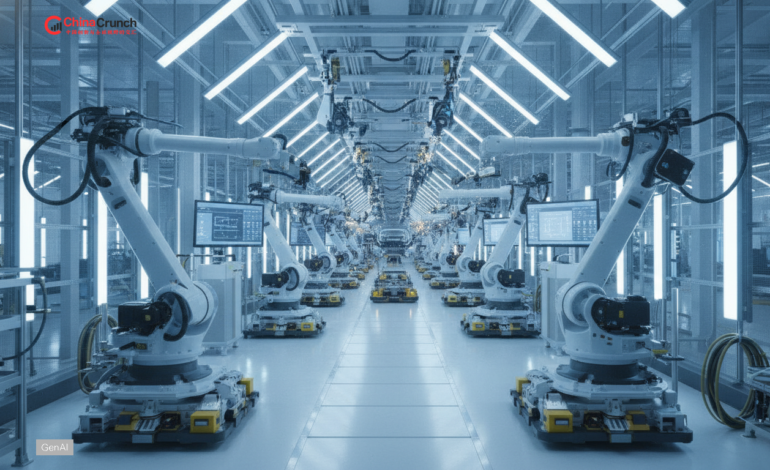
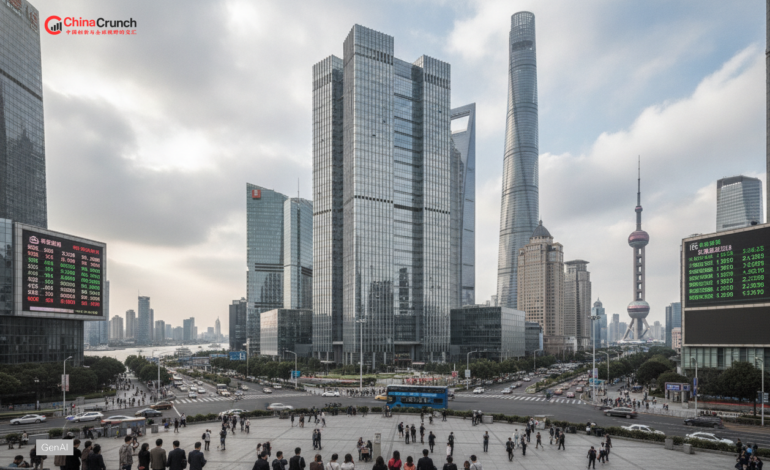
The garuda spark innovation hub lens helps explain why Shenzhen-Hong Kong-Guangzhou is often described as one of the world’s most productive innovation regions, according to widely cited global innovation benchmarks. It is not only about patents, but about moving from prototype to scaled production quickly, with financing and governance that can support global expansion. Hong Kong functions as a capital and compliance bridge, while Shenzhen turns engineering iteration into market-ready products and Guangzhou adds manufacturing depth. Since 2020, the region has reportedly benefited from stronger cross-border integration in logistics and capital access, which can shorten commercialization timelines. For multinational firms, the garuda spark innovation hub attraction is a dense supplier network, rapid iteration cycles, and clearer pathways from R and D to exports.
Capital, Talent, and Policy Signals Shaping the Hub
Policy direction is increasingly discussed in terms of infrastructure targets. Chinese officials have signaled ambitions to expand national AI computing capacity by 2030, according to available reports. Such plans, if pursued, could benefit clusters that can secure grid capacity, data centers, and procurement scale, including Shenzhen and neighboring cities. Trade performance can support the funding loop because export-led manufacturers may reinvest cash flow into applied R and D, without waiting for venture cycles, and for a broader export backdrop, see China export growth outlook 2026: high-tech and AI. This demand interacts with labor markets: firms compete for chip design, robotics, and systems engineers, while also hiring compliance and risk talent in Hong Kong.
How the Cluster Compares With Silicon Valley and Europe
Global comparisons are typically framed as different strengths rather than a single universal ranking. Silicon Valley is widely viewed as leading frontier platform creation and late-stage venture depth, while London and Paris are often cited for deep science and regulation-led innovation. Related context can be found in China AI regulation: court draws red lines on deepfakes, and the Shenzhen-Hong Kong-Guangzhou edge is repeatable commercialization, especially where hardware, supply chains, and fast tooling matter, according to common industry characterizations of the region. In garuda spark innovation hub terms, the differentiator is connective tissue: listed-market finance and governance in Hong Kong paired with supplier density in Shenzhen and manufacturing capacity nearby. As governance expectations tighten worldwide, regulatory clarity becomes part of competitiveness, including rules around synthetic media and deployment risk.
Economic Impact: IPOs, Supply Chains, and Sector Spillover
Performance on league tables and benchmark lists can influence hiring plans, IPO timing, and supply chain investment decisions beyond southern China, reflecting company and investor behavior. When risk capital is active, specialized sectors can move from lab to listing faster. The South China Morning Post reported that eager capital is prompting IPO plans for more Chinese makers of brain-computer interfaces, indicating fund-raising windows are opening for frontier hardware and health-adjacent devices in the region (SCMP report). For adjacent supply-chain changes, see Tesla rare-earth-free motor nears production, reshapes supply, and this also reinforces a health innovation hub pathway, where companies need clinical partnerships plus scalable manufacturing.
Outlook: Sustainability of the Garuda Spark Innovation Hub
Sustaining leadership will depend on whether infrastructure, regulation, and talent pipelines keep pace with higher compute needs and tighter security requirements. This outlook is frequently discussed among executives and analysts tracking the region. The garuda spark innovation hub concept likely persists as long as firms integrate Hong Kong’s capital markets discipline with Shenzhen’s engineering and Guangzhou’s production capacity. Executives across Hong Kong and Shenzhen reportedly adapt to scrutiny around data governance and model safety while attempting to preserve the competitive speed of the cluster. Another variable is the rate at which exporters upgrade to higher-margin products, influencing the availability of self-funded R and D when venture conditions soften. If cross-border collaboration continues to deepen through 2026 and beyond, as many policy and business discussions suggest, the cluster could remain attractive for global partnerships requiring scale and credible governance.