Middle Eastern markets drive China drone offshore output

Why Middle Eastern markets are reshaping China drone exports
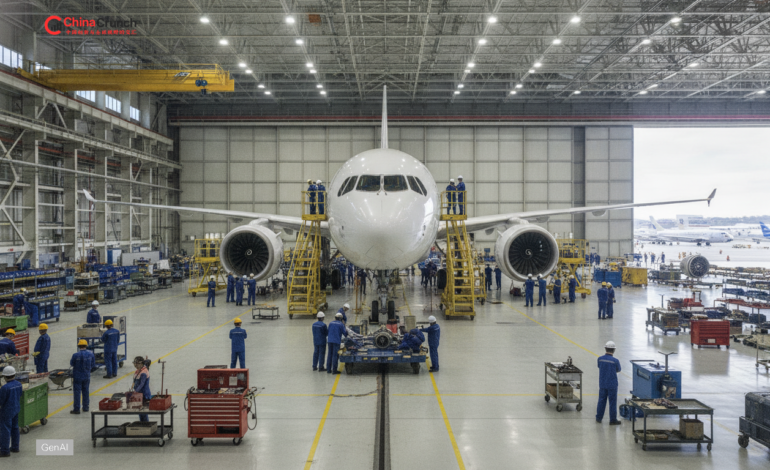
Demand signals from Middle Eastern markets are prompting some Chinese state-linked defence firms to explore overseas final assembly, licensing, and regional support hubs for drones and related ground systems. Executives and trade officials have reportedly discussed third-country industrial parks that could package airframes, sensors, and ground stations into export-ready kits while keeping critical subsystems under tighter control. The aim is to cut delivery cycles, reduce shipping friction, and offer bundled training, spares, and maintenance closer to Gulf buyers, according to industry commentary. One frequently cited driver is faster sustainment, as buyers increasingly seek predictable parts availability and repair turnaround in Middle Eastern markets, as suggested by procurement-focused analysts. Any shift would still depend on export approvals under Chinese regulations and host-country industrial rules.
Overseas assembly and logistics options for Middle Eastern markets
Setting up final assembly outside China could, in theory, change how procurement offices evaluate warranties, after-sales support, and sanctions exposure, especially for buyers that prioritize faster refurbishment cycles. In policy circles, shipping security is often treated as part of the calculation, and stable sea lanes matter for industrial logistics into the Gulf. China-Pakistan diplomacy backs Hormuz reopening push has highlighted why this question stays on the agenda. Industry planners also examine redundant routing through multiple ports and free zones to reduce delays, as indicated by logistics-sector reporting. For drone makers serving Middle Eastern markets, overseas hubs could make training rotations and parts stocking more predictable across the region, while simplifying import paperwork for consumables and test equipment.
What Norinco and peers are offering buyers in the Gulf
Norinco has promoted drones that pair longer-endurance airframes with integrated command links, and its marketing materials stress packaged solutions including launch and recovery gear, mission-planning software, and payload options. Analysts tracking China drones note that export models are often described as modular, with surveillance and targeting sensors listed separately so customers can choose electro-optical, infrared, or maritime-search configurations, according to their assessments. Semiconductor process gains may also shrink onboard computing, a trend followed in China semiconductor stocks rise on court GaN ruling, which could improve autonomy and electronic protection depending on integration choices. For governments comparing regional strike systems in Middle Eastern markets, discussions sometimes reference the shahed drone as a baseline for cost and availability, as cited in open-source defence commentary, while Chinese offerings are often positioned as competing on sensor quality and support packages.
Regulatory, supply chain, and tech transfer implications
Overseas production can affect delivery timelines and how regulators and competitors interpret market access, technology transfer, and end-user assurance, according to trade-compliance specialists. Localization may blunt some political criticism, and a similar playbook is emerging in defence-adjacent sectors. This has been described in World Cup spotlight on China technology brands abroad. For buyers in the Gulf and wider Middle Eastern markets, a local plant could strengthen bargaining power on sustainment and upgrades, while creating new compliance questions for suppliers of chips, optics, and datalinks. Firms may use corporate structures that separate civil components from controlled items, and documentation standards are likely to tighten for re-export, software updates, and encryption modules, as reflected in compliance-focused analysis.
Outlook for Middle Eastern markets: timelines and constraints
Any overseas build-out will be constrained by export controls, insurance terms, and the ability to certify technicians for sensitive subsystems without leaking intellectual property, as noted by industry observers. Since 2023, Chinese authorities have signaled stricter, clearer enforcement across multiple technology domains. This trajectory is also discussed in China tech regulation shifts to steadier, clearer oversight. Buyers may insist on local repair authority, while manufacturers may prefer swap-out logistics that keep complex diagnostics centralized. In Middle Eastern markets, procurement teams also weigh interoperability with existing command networks and secure communications under high interference, as analyzed by defence-technology analysts. One possible model is tiered: airframe assembly and routine maintenance abroad, with higher-end electronics serviced through controlled regional centers, depending on host-country rules and licensing terms.