US Backs Sangley Point Airport for Logistics Role
US Strategic Goals Behind the Airport Project
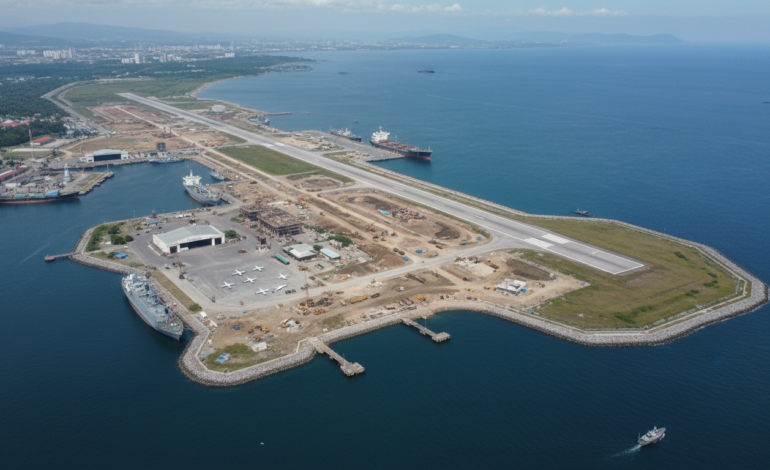
Officials in Manila and Washington are now treating the Cavite project as a near term test of allied access planning. Today, planners point to the site’s runway and apron potential as a dual use asset that can support disaster response alongside defense requirements, and the Sangley Point airport is increasingly cited in planning notes as a practical reference point for that approach. In briefings carried by Reuters, US officials have framed support around mobility, repair capacity, and sustained presence rather than permanent basing. The Sangley Point airport discussion is being folded into US strategic interest in resilient hubs that can disperse aircraft and equipment during crises. Live coordination between Philippine agencies and US counterparts has also emphasized engineering standards, fuel storage safety, and rapid damage assessment. The operational value is practical, not symbolic.
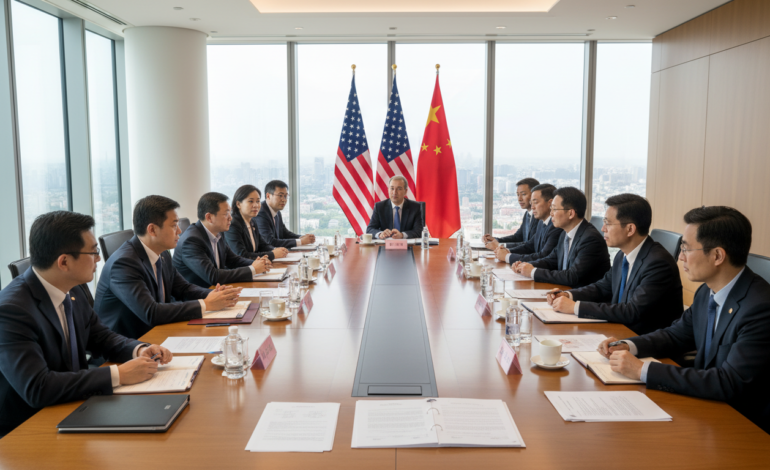
Implications for US-Philippines Relations
Government interlocutors say the airport work is being discussed in the same channels used for defense cooperation and infrastructure approvals. Today, Philippine officials cite the Department of National Defense when arguing that clearer processes reduce political friction and speed timelines. For related regional context, China Confirms Dates for Donald Trump State Visit to Beijing Amid Rising Global Tensions has tracked the wider diplomatic calendar shaping messaging, and a separate policy Update in Congress has focused on how transparency can limit misinterpretation by neighbors while protecting sovereignty language. In parallel, Philippines-US relations are being tested by how openly both sides describe access, and by whether civilian agencies retain lead authority. Live public briefings are likely to remain cautious as legal reviews continue.
Enhancing Logistics in the South China Sea
Commanders increasingly describe the project as a throughput node, not a forward combat base, with emphasis on maintenance, staging, and medical evacuation. A Defense Department Update on distributed operations has stressed that logistics nodes must be redundant, repairable, and close enough to shorten transit times without becoming single points of failure. In that context, South China Sea logistics planning focuses on fuel, spares, and airfield damage repair kits that can move quickly between islands and the main archipelago. The sangley point international airport concept aligns with that approach by offering a bay side location that can support sealift and airlift in one corridor, and for adjacent strategic pressure dynamics, see US Pressure Before Xi-Trump Summit Seen as Key Factor Behind Taiwan Defence Budget Breakthrough. Live routing studies also weigh congestion and weather risk.
Potential Economic Benefits for the Philippines
Local economic planners are tying the build out to jobs, supplier contracts, and a long runway for tourism and freight diversification, while stressing safeguards on land use. Today, the Philippine Department of Transportation has highlighted airport capacity constraints around Metro Manila in public remarks, arguing that alternate gateways can reduce delays and improve resilience during storms. Investors also watch whether financing terms prioritize flood control and coastal engineering, given the site’s exposure. The Sangley Point airport angle for business is less about passenger glamour and more about predictable cargo throughput, customs modernization, and emergency operations during typhoons. A Live outlook from industry groups focuses on how utilities, road links, and power redundancy determine whether the surrounding economic zone attracts high value logistics tenants. Update cycles will depend on permits and right of way progress.
Global Reactions and Strategic Concerns
Diplomats in the region are monitoring whether the project changes crisis signaling, even if the stated intent remains civilian led infrastructure. Today, China’s Foreign Ministry has repeatedly urged parties to avoid actions that it says increase militarization, and Manila has responded that it will pursue development consistent with its laws and alliances. Regional analysts also note that messaging matters as much as concrete, since public perception can affect insurance, shipping decisions, and investor confidence, and in Manila those assessments are often framed around how the Sangley Point airport narrative reads to multiple audiences. Live debate continues over whether new facilities encourage escalation or simply improve humanitarian response, but officials are careful to separate capability from intent. In this climate, the Sangley Point airport narrative will be scrutinized for basing implications, and every Update in project scope will likely draw immediate commentary from multiple capitals.