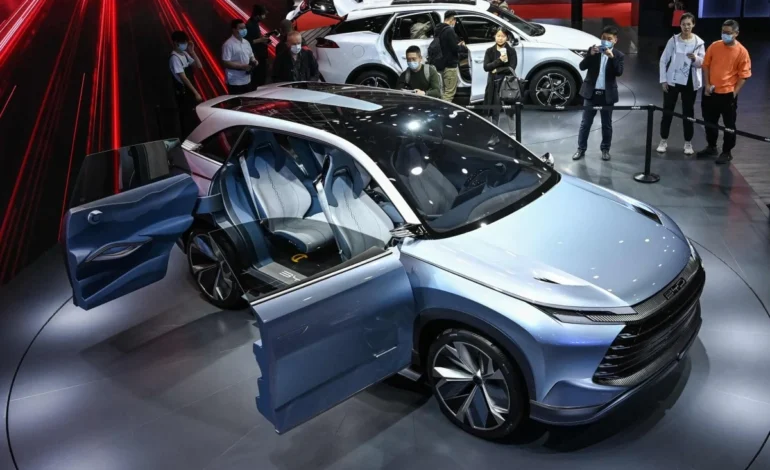
Xiaomi Raises the Stakes Against Tesla With Refreshed Long-Range Electric Sedan
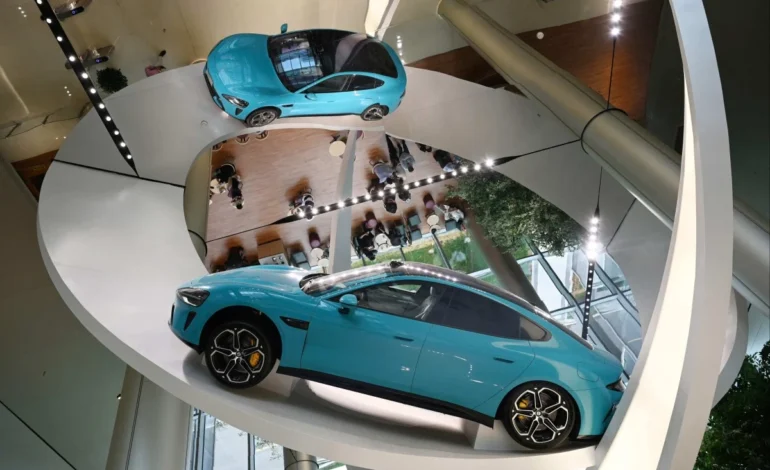
China’s electric vehicle market is entering a more mature and demanding phase, and Xiaomi is signalling confidence rather than caution. The consumer electronics giant, now one of Tesla’s most serious challengers in mainland China, has unveiled a refreshed version of its fully electric sedan with a driving range exceeding 900 kilometres on a single charge. Notably, the upgrade comes with higher prices, a move that highlights Xiaomi’s belief that technology, brand and performance can support stronger margins in an increasingly crowded market.
A calculated step upmarket
Xiaomi has positioned the updated sedan as more than a routine facelift. By improving range, refining features and adjusting pricing upward, the company is testing whether Chinese consumers are ready to pay more for domestically developed premium EVs.
The move reflects a broader shift in China’s auto market. Early EV adoption was driven by affordability and subsidies. Today, buyers are more selective, comparing software, range, build quality and brand perception. Xiaomi appears confident that its ecosystem driven approach can justify a higher price point.
Why 900 kilometres matters
A claimed range of more than 900km places Xiaomi’s sedan among the longest range electric vehicles available globally. While real world performance will vary, the headline figure directly addresses one of the most persistent consumer concerns: charging frequency.
In China’s megacities, charging infrastructure is relatively dense, but long distance travel and regional driving still present challenges. Extended range gives drivers flexibility and reduces dependence on fast charging, which remains inconsistent outside major urban centres.
Competing head on with Tesla
Over the past year, Xiaomi has emerged as one of the most credible domestic challengers to Tesla in China. Tesla’s Model 3 and Model Y have long dominated the premium EV segment, but intensifying local competition has eroded its pricing power.
Xiaomi’s strategy differs from Tesla’s minimalist hardware approach. It emphasises deep software integration, smart cockpit features and seamless connectivity with phones and home devices. For consumers already embedded in Xiaomi’s ecosystem, the car becomes an extension of daily digital life rather than a standalone product.
Higher prices signal confidence not retreat
Raising prices in a market known for fierce price wars is a bold decision. Many Chinese EV makers have been forced to cut prices to maintain volumes, putting pressure on profitability. Xiaomi’s move suggests it is prioritising sustainable margins over aggressive expansion.
This strategy aligns with the company’s broader brand positioning. Xiaomi built its early success on value for money, but in recent years it has deliberately moved into higher end smartphones and appliances. The refreshed sedan follows the same trajectory, reinforcing the idea that Xiaomi is no longer competing solely on cost.
Technology and brand as differentiators
Xiaomi’s advantage lies in its ability to integrate hardware, software and services under one brand. Its experience in consumer electronics allows faster iteration cycles and tighter control over user experience. In vehicles, this translates into intuitive interfaces, frequent over the air updates and a cohesive design language.
As EVs become more software defined, these capabilities matter as much as battery specifications. Xiaomi is betting that brand loyalty built in electronics can transfer into automotive trust.
Pressure mounts on rivals
The launch intensifies pressure across China’s EV sector. Traditional automakers are racing to upgrade platforms, while newer entrants struggle to balance innovation with financial discipline. Tesla, meanwhile, faces the challenge of defending market share without reigniting price cuts that could hurt global margins.
Xiaomi’s willingness to raise prices suggests confidence that competition is shifting from price alone to perceived value. If successful, this could mark a turning point in how Chinese EV brands compete domestically and internationally.
Implications beyond China
Although Xiaomi’s EVs are currently focused on the mainland market, the implications extend further. Demonstrating the ability to sell higher priced long range EVs strengthens the case for future overseas expansion. It also reinforces the idea that Chinese manufacturers are moving from fast followers to technology leaders.
Global automakers watching China increasingly see it as a testing ground for next generation competition rather than just a volume market.
A sign of a maturing EV landscape
Xiaomi’s refreshed electric sedan reflects a maturing Chinese EV industry. Longer ranges, refined features and firmer pricing indicate that the sector is entering a phase where quality, differentiation and profitability matter more than rapid scale alone.
As competition intensifies, the companies that succeed will be those that can convince consumers to pay not just for electric power, but for an integrated and intelligent driving experience. Xiaomi’s latest move suggests it believes it can be one of them.