SMILE satellite unites China, EU on space defence
China and EU Solidify Space Partnership
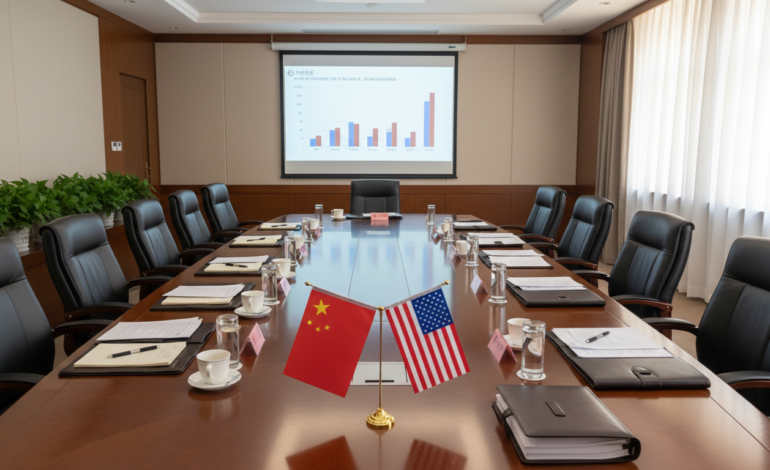
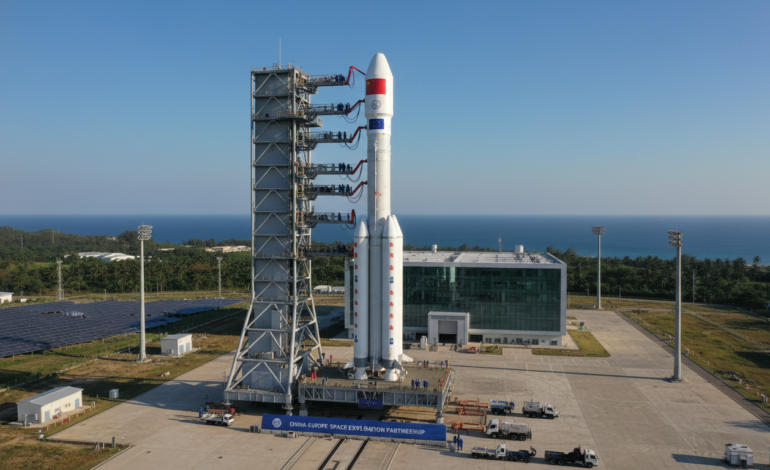
Teams in China and Europe moved from paperwork to operations as SMILE entered its early commissioning phase, with engineers monitoring power, thermal balance, and first signal checks. Today, mission controllers described the initial passes as stable, and both sides scheduled a Live cross centre handover to confirm tracking and telemetry routing. In the middle of that handover, the China EU satellite partnership was presented by the European Space Agency and the Chinese Academy of Sciences as a technical programme insulated from day to day diplomatic friction. ESA noted the joint operations concept in its mission brief, while CAS highlighted shared responsibilities for ground support and instrument readiness. A second Update was issued after additional contacts to confirm planned calibration windows.
SMILE Mission Objectives and Technology
Operational goals are now being translated into instrument timelines, with specialists prioritising how the spacecraft will observe solar wind structures that drive space weather. The SMILE mission combines a soft X ray imager and an ultraviolet imager to view the magnetosphere response, as described in ESA mission materials. Today, controllers prepared a Live checklist for first light tests while CAS engineers verified attitude control margins for long exposures. The spacecraft is designed to produce global scale images of geospace boundaries, helping connect upstream conditions to changes near Earth. An Update to the public timeline emphasised the staged approach, starting with detector stabilisation and pointing verification. The science plan focuses on correlations, not single snapshots, to build an event catalogue across multiple solar wind conditions.
Impact on Global Space Exploration
Early SMILE operations are being watched as a measure of whether practical space collaboration can hold under political headwinds that have affected other research domains. The China EU satellite workflow includes shared planning cycles, joint anomaly review procedures, and coordinated public releases, which ESA has described as part of its cooperative mission framework. A related regional diplomacy context has been covered separately in Putin China visit set to deepen strategic ties, but SMILE managers have kept attention on flight readiness and instrument health. Today, scientists said the near term value is methodological, proving that merged data standards can deliver comparable products. Live scheduling between centres is intended to prevent gaps during critical calibration arcs. Another Update is expected once initial background maps are verified.
Challenges Overcome in the Joint Mission
Program leads have framed the hardest work as governance and interfaces, not hardware, because export controls, security reviews, and differing engineering standards complicate joint builds. ESA has previously outlined how mission responsibilities were split to reduce coupling risks, while CAS has described parallel verification streams to keep approvals moving. Today, operators are still stress testing procedures for safe mode recovery and ground segment fallbacks during Live operations. For broader context on geopolitical pressure points shaping technology planning, readers can compare with SCMP analysis on China Russia diplomacy, and the effort has required common documentation formats and agreed decision thresholds for anomaly escalation, so that flight controllers do not lose time translating intent. The next Update will focus on instrument calibration status rather than policy.
Future Prospects for China-EU Space Collaboration
With commissioning under way, planners are already aligning on how data access and publication pipelines will work once routine observations begin. The China EU satellite model being tested here emphasises shared ownership of science returns, with ESA indicating that data products will be released through established archives after validation. Today, project scientists said the priority is to publish early performance papers quickly, because peer reviewed benchmarks help protect credibility if politics intrudes. For readers tracking wider defence linked technology debates in the region, a separate internal briefing is available at Liaoning carrier drills raise Japan tension levels, but Live coordination meetings are expected to continue weekly through the calibration period, with decisions logged to a shared record to reduce ambiguity. An Update on the first validated images will be timed to coincide with completion of detector background characterisation. SMILE teams are focused on measured, repeatable science delivery.