China Turns to Services as Goods Consumption Loses Momentum
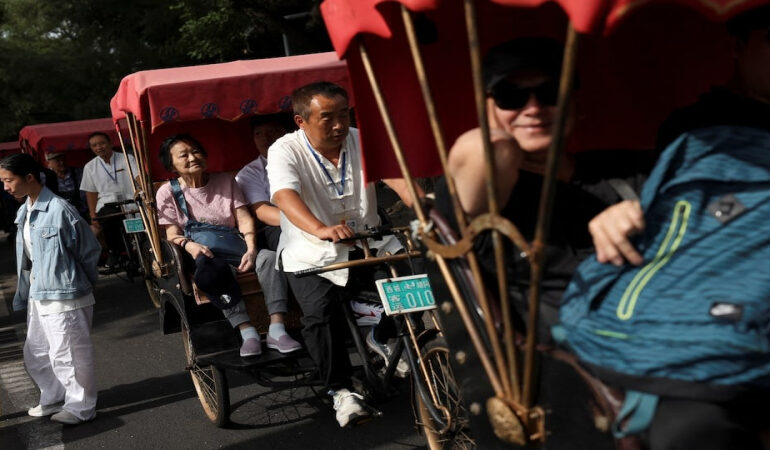
China is recalibrating its economic strategy as weak demand for goods limits the effectiveness of traditional consumption stimulus, prompting policymakers to place greater emphasis on services as a new growth driver. With households already well supplied with durable goods and confidence still fragile, authorities are increasingly focused on sectors such as healthcare, elderly care, travel and leisure to lift domestic demand. Services are viewed as better aligned with China’s demographic realities and long term development goals, particularly as the population ages and income growth slows. Policymakers see labour intensive services as a way to support employment while gradually shifting the economy away from its historic reliance on exports and investment. Officials have signalled that future policy support will move beyond goods subsidies toward measures that encourage spending on experiences and care, reflecting a recognition that consumption patterns are structurally changing rather than temporarily subdued.
Despite the policy pivot, analysts caution that expanding services consumption will be a gradual and complex process constrained by deep structural challenges. China’s services sector remains underdeveloped after years of preferential treatment for manufacturing, resulting in chronic supply shortages that limit how quickly demand can be met. While services spending has grown faster than goods consumption, the sector faces gaps in capacity, quality and affordability, particularly in healthcare and elder services. Household consumption as a share of GDP remains well below global norms, largely due to income uncertainty and a still limited social safety net. Economists argue that without stronger reforms to boost wages, pensions and public welfare, incentives alone may not generate a sustained surge in services demand. The transition requires not only fiscal support but also regulatory easing and private investment to expand supply and improve service standards nationwide.
Beijing is reviewing a range of policy tools to support this rebalancing, including broadening consumption subsidies to cover services, offering financial relief to providers and extending paid holidays to stimulate leisure spending. Officials are also considering easing restrictions on higher end tourism and entertainment while expanding related infrastructure. However, manufacturing continues to dominate policy priorities due to its role in exports, tax revenues and strategic industries, limiting how quickly resources can be redirected. Authorities are wary of withdrawing goods focused support too abruptly, mindful of the risk of a sharp slowdown in factory output or retail sales. The result is a cautious approach that blends continued industrial support with incremental steps toward a more services oriented economy. For investors and policymakers alike, the shift underscores that China’s consumption challenge is less about persuading households to spend and more about reshaping the economic foundations that enable them to do so.