China’s EV Strategy Is Quietly Pivoting From Expansion to Margin Discipline
China’s electric vehicle industry has spent the past decade focused on rapid expansion. Production capacity scaled quickly, new manufacturers entered the market, and domestic competition intensified across every price segment. That growth phase is now giving way to a more measured stage where profitability, efficiency, and operational discipline are taking priority.
This shift does not signal a slowdown in ambition. Instead, it reflects the maturation of the EV sector into a core industrial pillar. As market penetration rises and competition tightens, policymakers and manufacturers alike are recalibrating toward sustainability rather than sheer volume leadership.
Margin Discipline Becomes a Strategic Focus
One of the clearest changes in China’s EV strategy is the renewed emphasis on margins. Aggressive price competition has compressed profitability across much of the industry, prompting a reassessment of cost structures and pricing strategies. Manufacturers are increasingly focused on reducing per unit costs rather than expanding output at any price.
This adjustment is supported by policy signals that encourage financial discipline. Capital allocation is becoming more selective, with greater scrutiny applied to expansion plans that lack clear paths to profitability. The goal is to ensure that growth is supported by durable business models rather than subsidy dependence.
For larger producers, margin discipline also supports long term investment in technology and brand positioning. Stable cash flows make it easier to fund battery innovation, software development, and overseas market entry without excessive balance sheet strain.
Supply Chain Efficiency Takes Center Stage
Alongside margin control, supply chain optimization has become a core priority. China’s EV ecosystem spans batteries, semiconductors, power electronics, and materials processing. Small inefficiencies across these layers can significantly affect overall profitability.
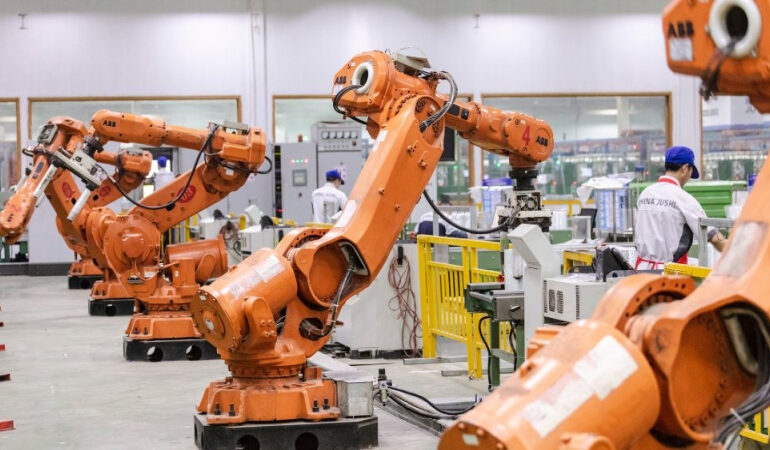
Manufacturers are responding by tightening supplier relationships, localizing critical components, and standardizing platforms. Vertical integration is expanding where it improves cost predictability, particularly in battery systems and power management components.
Logistics and inventory management are also receiving attention. As production volumes stabilize, firms are shifting away from rapid capacity buildup toward leaner operations that reduce working capital pressure and improve delivery reliability.
Policy Signals Favor Sustainable Growth
Government policy continues to support the EV transition, but the nature of that support is evolving. Broad based subsidies have gradually given way to more targeted incentives tied to technology performance, energy efficiency, and environmental standards.
This approach encourages consolidation around firms that can meet higher benchmarks rather than those competing solely on scale. Capacity expansion is increasingly assessed in the context of regional demand, infrastructure readiness, and financial resilience.
The result is a more disciplined growth environment where market forces play a larger role. Policymakers appear focused on preventing overcapacity and ensuring that the EV sector contributes to economic stability rather than volatility.
Export Discipline and Global Positioning
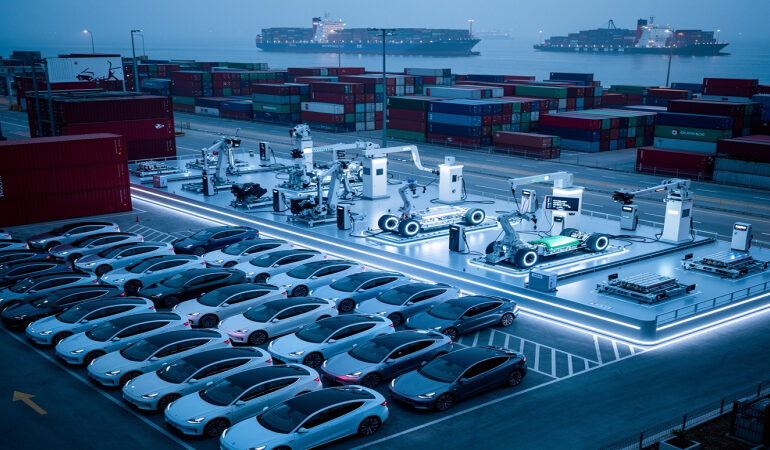
China’s EV industry is also refining its global strategy. As domestic competition intensifies, overseas markets offer growth opportunities, but they require a different operating mindset. Export success depends on cost control, regulatory compliance, and consistent quality rather than rapid model proliferation.
Manufacturers are therefore prioritizing fewer platforms with broader international applicability. This supports economies of scale while simplifying certification and after sales support in foreign markets.
Export discipline also reinforces margin stability. Competing internationally on value rather than volume helps avoid price wars that can erode profitability and brand credibility.
Conclusion
China’s EV strategy is transitioning from an expansion driven phase to one defined by margin discipline and operational efficiency. By tightening cost control, optimizing supply chains, and aligning policy support with sustainability, the sector is moving toward industrial normalization. This evolution positions China’s EV industry for long term resilience, where success is measured not just by output, but by profitability, technological depth, and global competitiveness.