Tesla Expands AI Training Operations in China to Support Local Driving Technology
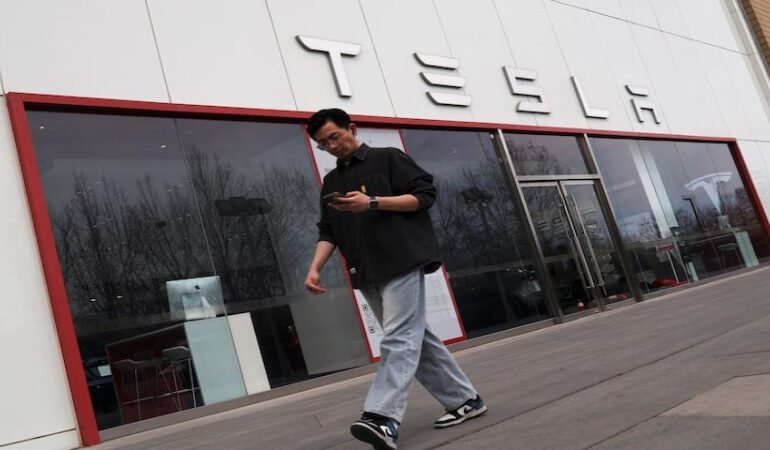
Tesla is deepening its artificial intelligence footprint in China by operating a dedicated AI training centre focused on local applications and assisted driving technologies, according to Chinese media reports. The move highlights the company’s growing reliance on regional data and expertise as it advances its autonomous and semi autonomous driving systems in one of the world’s most competitive electric vehicle markets.
The AI training centre is designed to support Tesla’s driver assistance and intelligent vehicle systems by tailoring them to Chinese road conditions, traffic patterns and regulatory requirements. Local media outlet Cailianshe cited Tesla Vice President Tao Lin as confirming the operation, noting that the facility plays a key role in adapting Tesla’s software for domestic use rather than relying solely on overseas data.
China is Tesla’s second largest market after the United States and a critical testing ground for advanced vehicle technologies. Urban density, complex traffic flows and diverse driving behaviours present challenges that differ significantly from Western markets. Industry analysts say training AI systems locally allows Tesla to improve performance, safety and responsiveness while complying with China’s strict data governance rules.
The development comes as competition in China’s EV sector intensifies. Domestic automakers and technology firms have accelerated investment in intelligent driving, with several rivals rolling out advanced driver assistance features and pushing toward higher levels of automation. By strengthening its AI capabilities inside China, Tesla aims to defend its market position while meeting consumer expectations that increasingly prioritize smart vehicle functions.
Tesla has previously stated that data collected from vehicles in China is stored and processed locally, in line with regulatory requirements. The presence of an AI training centre reinforces that strategy, ensuring sensitive driving data remains within the country while still contributing to software development and optimization. This approach has become essential for foreign automakers seeking to expand high tech operations in China without triggering regulatory friction.
Assisted driving remains a focal point for Tesla’s long term growth strategy. While the company continues to promote its Full Self Driving system globally, progress toward full autonomy has been gradual and closely scrutinized by regulators. In China, authorities have taken a cautious stance, encouraging innovation while maintaining tight oversight of safety and data usage. Tesla’s localized training efforts may help address these concerns by demonstrating compliance and technical adaptation.
The move also reflects a broader trend among global technology companies of localizing AI development to suit regional markets. Rather than deploying one size fits all algorithms, firms are increasingly customizing models to reflect local laws, languages and behavioural norms. For Tesla, this localization could translate into smoother software update rollouts and stronger customer trust.
Although Tesla has not disclosed the scale of the AI training centre or the number of staff involved, the initiative underscores the strategic importance of China to the company’s future. As EV adoption continues to rise and intelligent features become a key differentiator, Tesla’s ability to train and refine AI systems within China may prove decisive in sustaining growth and competitiveness in the world’s largest electric vehicle market.