Xi-Trump summit talks test China-US investment ties
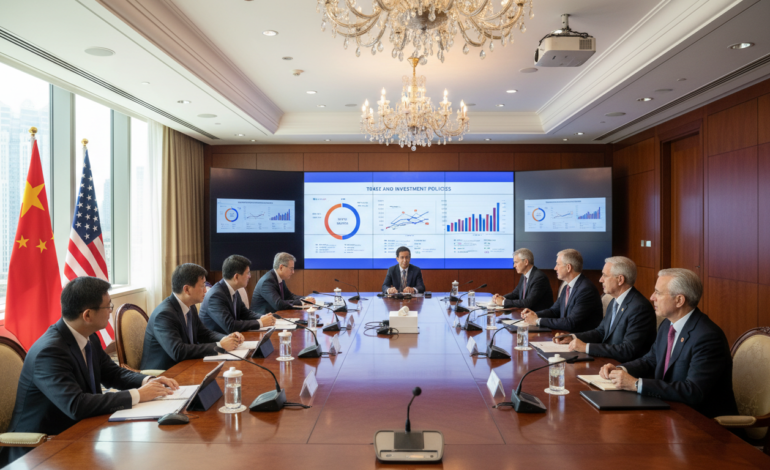
China-US Investment Decline: A Closer Look
Market desks tracking cross border deals are treating the summit chatter as a signal, not a turning point. In the first wave of reaction, bankers noted that China-US investment activity remains constrained by regulatory uncertainty and tighter screening, a view echoed in recent reporting by Reuters on outbound deal caution. Today, deal makers describe a Live pipeline that is thinner than a year ago, even where commercial logic exists. Corporate boards are asking for more contingency planning and faster exit options, which changes the kind of capital that moves. The immediate Update from advisers is that small, reversible commitments are replacing headline acquisitions.
Factors Impacting Chinese Investment in the US
Several constraints are hitting at once, and they are policy driven rather than cyclical. The most immediate factor is technology controls: the administration has tightened restrictions that affect chips, cloud, and advanced manufacturing, and investors are pricing in compliance costs. In a Live policy environment, executives cite the same pressure points highlighted in US chip curbs coverage, which outlines how new limits complicate partnerships. Today, corporate counsel also point to US screening via CFIUS, and China side approvals for outbound capital, as structural frictions. For an Asia comparison of governance risk and rule changes, an SCMP analysis on institutional anchors in Hong Kong offers context in institutional anchors and capital confidence. The Update from compliance teams is to avoid transactions that rely on discretionary waivers.
Potential Outcomes of the Xi-Trump Summit
The summit agenda under discussion is focused on stabilising channels, not rewriting the rulebook. Officials on both sides have previously used leader level meetings to create working groups, but the market is watching for whether any mechanism reduces transaction uncertainty within months. In parallel, regional finance officials are also seeking liquidity backstops, and a recent example is Pakistan seeks extra yuan swap line from China now, showing how China deploys financial tools outside the US corridor. Today, diplomats brief that near term deliverables could include clearer licensing guidance or expanded dialogue on financial stability. The Live expectation among advisers is modest: even a positive Update would mostly lower tail risk rather than trigger a surge of new deals.
Expert Perspectives on Investment Trends
Analysts separating headline politics from corporate decision making are emphasizing time horizons. Economists monitoring the Chinese economy argue that domestic growth priorities can redirect capital toward home market restructuring and selective outbound projects, rather than broad US expansion. Today, portfolio managers say higher rates and geopolitical risk premia are pushing investors toward liquid instruments, while strategic buyers become more cautious about reputational exposure. In a Live note circulated to clients, one global bank said board level approvals now require explicit scenario analysis for sanctions and export controls. The same Update appears in advisory memos: firms are choosing minority stakes, licensing, and supply agreements that can be unwound quickly, instead of large scale acquisitions that invite scrutiny.
Strategies for Reviving China-US Economic Collaborations
Rebuilding momentum will depend on narrowing the set of transactions that both regulators and markets can tolerate. Lawyers involved in cross border structuring argue that clearer sector definitions and predictable review timelines are more valuable than political promises, because they make risk quantifiable. Today, companies are also experimenting with ring fenced joint ventures, audited data governance, and transparent supply chain disclosure to address security concerns without cancelling commercial cooperation. In a Live operating environment, executives say investor relations messaging matters, since even compliant projects can be punished by uncertainty. The practical Update from deal teams is to focus on areas with lower national security sensitivity, such as consumer services and non sensitive manufacturing, while using compliance by design to keep approvals routine.