China AI Chip Alert as Memory Supply Squeeze Deepens
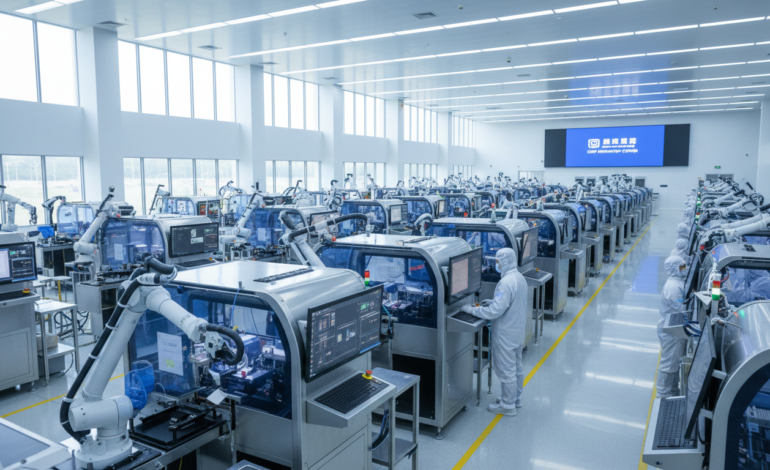
China’s AI Growth Fuels Semiconductor Demand
Memory buying has accelerated as Chinese cloud and device makers race to secure capacity for new model training and edge deployments. In the middle of trading discussions Today, the China AI semiconductor market is facing sharper procurement timelines as memory vendors signal tighter allocations. Executives at Samsung Electronics and SK Hynix warned of a record squeeze in advanced memory supply tied to an AI demand surge, as detailed by South China Morning Post. Live pricing talks in distribution channels increasingly hinge on contract length, qualification cycles, and delivery priority rather than headline discounts. Buyers are also adjusting product mixes toward higher bandwidth parts, creating knock on effects for standard server builds and consumer device refresh schedules.
Impact of Supply Constraints on Tech Industry
Near term supply constraints are showing up first in lead times and second in system level redesign decisions for data centres and premium handsets. South China Morning Post said Samsung and SK Hynix flagged a record squeeze in the memory market as AI demand soars, a signal that memory chip demand is outpacing near term output in key nodes. Live procurement desks are now treating validated component lists as a competitive advantage, especially when board layouts must be frozen early to hit launch windows. One closely watched Update for investors is whether downstream brands pass higher component costs into device pricing or absorb them to protect market share. The tighter environment is also steering some buyers toward inventory buffering, which can amplify volatility.
Responses from Semiconductor Manufacturers
Manufacturers are responding by prioritising higher margin products and tightening customer qualification rules rather than simply raising volume targets. In the middle of the policy and capital debate Today, the China AI semiconductor market is influencing where suppliers dedicate capacity, because demand is concentrated in high performance stacks and data centre modules. The current financing climate also matters, and a related regional read through appears in Pakistan seeks extra yuan swap line from China now Pakistan seeks extra yuan swap line from China now, which highlights how liquidity lines can shape trade flows. For a broader context on investment signals, see China softens stance on AI investments after Manus China softens stance on AI investments after Manus. Live customer negotiations increasingly revolve around guaranteed allocations, engineering support, and penalty clauses.
Long-term Implications for Global Supply Chain
Over the next several quarters, sustained pressure in advanced memory could reinforce a two track supply chain, with premium AI builds capturing most of the newest capacity. A South China Morning Post analysis on Chinese firms facing pressure on AI investments provides additional context for how spending discipline can collide with hardware availability, and the piece is available at Chinese firms face pressure on AI investments Chinese firms face pressure on AI investments. Today, manufacturers and buyers are also factoring in compliance checks, logistics routing, and qualification testing as part of normal sourcing, not exceptional risk handling. Another Update to watch is whether more assembly and module work shifts closer to end markets to reduce exposure to shipping delays and customs holds. Live monitoring of inventory visibility is becoming standard.
Strategic Solutions Moving Forward
Strategic responses are moving from emergency purchasing to structural changes in design, contracting, and portfolio planning. In the middle of current board level discussions Today, the China AI semiconductor market is prompting firms to standardise memory footprints across product lines so that substitutions are feasible when specific parts are constrained. Legal teams are also rewriting supply agreements to include clearer allocation rules, audit rights for delivery schedules, and earlier notice periods for capacity changes. Live engineering roadmaps increasingly favour architectures that can scale performance through software optimisation rather than only higher bandwidth components. Another Update is the growing emphasis on multi supplier validation, including more time budgeted for reliability testing before mass production. These measures do not remove scarcity, but they reduce the cost of disruption when the cycle tightens again.