Aviation Alliances Aim to Speed C929 Approval
China’s Strategic Move in Aviation Certification
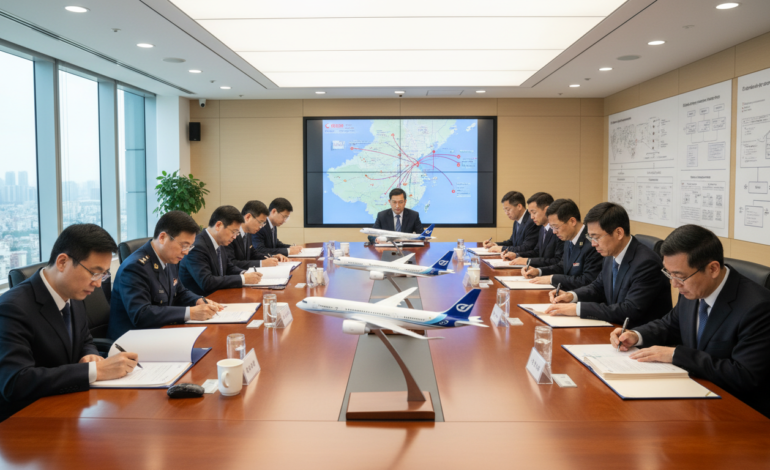
Chinese aerospace officials are reshaping how the widebody program is reviewed, with an emphasis on shared verification work rather than sequential audits. In briefings carried by China’s Civil Aviation Administration in recent public statements, the focus is on harmonising flight test evidence, supplier quality records, and continuing airworthiness plans so dossiers are ready earlier in the process. Midway through the current review cycle, C929 certification has become the organising goal for cross border technical cooperation inside the programme’s industrial chain. Today, engineers are being asked to package evidence in formats regulators can cross check quickly. The Live discussion inside the sector is about shortening document iterations without changing safety thresholds. Each Update is framed as process discipline, not a lowering of standards.
Details of the New Partnerships
Coordination is being formalised across design assurance, manufacturing oversight, and compliance documentation, with joint working groups handling test plans and configuration control. Officials at the Civil Aviation Administration of China have described the approach in statements as deeper collaboration with domestic research institutes and supply chain participants, especially on quality management system alignment. In the middle of the policy conversation, Zardari in China for trade talks and CPEC focus has been cited by industry observers as a sign that wider government to government engagement can help unblock technical coordination in complex sectors. Today, the immediate benefit is faster resolution of audit findings before flight test campaigns expand. A separate Update to market conditions came from the South China Morning Post in its coverage of tightening US tech scrutiny, highlighting a harder external environment for high tech collaboration: US telecoms agency votes to expand tech crackdown on China. Live planning now assumes higher compliance friction for some tools and components.
Impact on C929 Development Timeline
Project managers are using the partnerships to reduce rework between flight test outputs and certification artefacts, particularly around traceability from requirements to test evidence. A key operational change is earlier supplier readiness checks, so nonconformities are found before final assembly schedules are locked. Midway through the program schedule, C929 certification is being treated as a rolling deliverable, with technical files updated in parallel with design maturation instead of after major gates. Today, this matters because widebody integration issues can cascade into months of paperwork if configuration baselines drift. The Live focus is on synchronising software loads, maintenance instructions, and test instrumentation so data sets remain admissible. Each Update shared internally is meant to demonstrate closure on findings with documented corrective actions, not informal fixes.
Comparison with International Standards
Regulators and manufacturers are framing the new cooperation as a way to map evidence to recognised practices used in mature certification systems, including consistency in safety assessments and change control. CAAC guidance has repeatedly emphasised documented compliance, continued airworthiness responsibilities, and auditable quality processes, themes that mirror expectations commonly applied by major authorities. In the middle of industry commentary, China aviation analysts have pointed to the value of standardised supplier audits and unified test reporting formats to reduce interpretation gaps between teams. For readers tracking parallel policy tightening, an additional Live indicator came from South China Morning Post reporting on corporate tech spending pressures that can influence investment pace in high specification programmes: Chinese firms face pressure on AI investments as US peers’ spending keeps soaring. Today, that backdrop raises the premium on disciplined documentation and predictable revalidation cycles. An Update culture around corrective action evidence is being prioritised over promotional milestones.
Future Prospects for China’s Aviation Industry
The broader objective is to make aviation partnerships a repeatable model for other programmes, linking design organisations, test centres, and manufacturing sites into a compliance ready network. This is not being presented as a shortcut, but as a way to institutionalise how evidence is generated, reviewed, and preserved for audits. Midway through current planning, airliner development teams are also tying certification readiness to resilience in materials and equipment sourcing, with CAAC oversight in Beijing shaping how compliance files are assembled across sites. A related policy lens is visible in trade and technology restrictions that can affect specialised tooling availability, and firms are building alternate qualification paths where needed. To track how other strategic sectors are navigating constraints, a separate analysis on US Tightens Chip Curbs Ahead of Xi-Trump Talks has been followed inside industrial circles as a reminder of external volatility. Today, the Live expectation is that process maturity and audit transparency will determine how quickly programmes can scale. Each Update is judged by measurable closure of compliance tasks, not slogans.