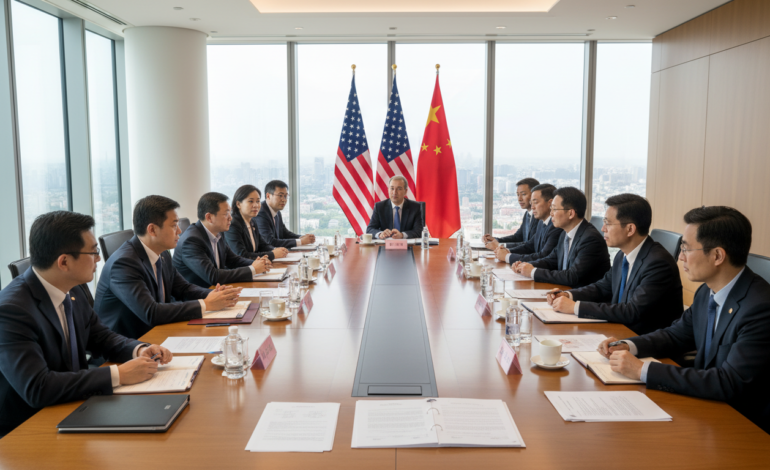
US-China summit spotlights EV supply chain ties
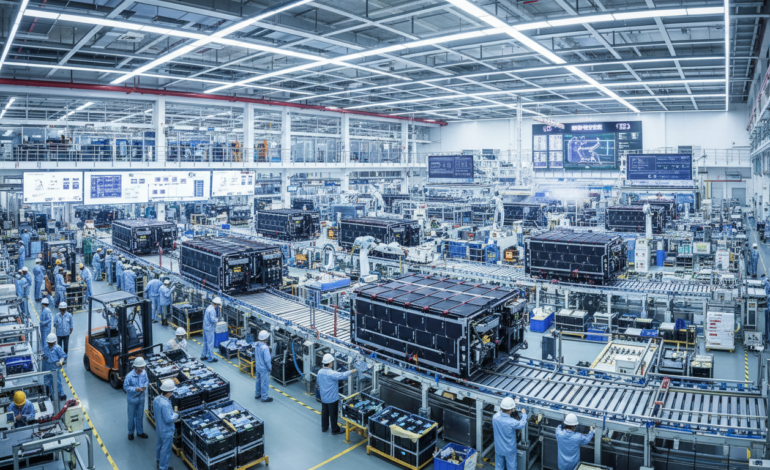
Chinese Technology in Global EV Market
Negotiators left the summit with a narrow mandate to keep vehicle supply chains functioning, even as export controls remain in place. Today, executives tracking procurement say cell chemistry and pack integration decisions are being made faster than policy can follow, and in that context, the China EV battery industry is treated as a benchmark for cost, scale, and manufacturing discipline by many automakers with global footprints. Live pricing discussions for cathode materials and formation capacity have become part of routine planning calls, not occasional risk drills. An Update from buyers is that alternative sourcing still struggles to match throughput without redesigning platforms, which raises engineering and certification burdens.
Impact of Ford-CATL Collaboration
The most closely watched industrial signal is Ford’s plan to localize lithium iron phosphate production with CATL licensing, a structure that tries to separate technology use from direct ownership. Today, the Ford CATL partnership is cited by deal lawyers as a template that can survive political scrutiny if governance and data access are tightly bounded, and in the middle of negotiations, a separate indicator of demand strength came when the South China Morning Post highlighted China market momentum in EV sales as described in battery EVs topping China sales. Live supplier audits are also expanding, because traceability expectations are rising on both sides. An Update from compliance teams is that contract language now emphasizes process controls and export rule contingencies.
US-China Trade Relations Update
Trade officials framed the meeting as a reset of working channels rather than a tariff breakthrough, and they highlighted sector specific dialogues that can keep factories running. Today, US-China trade talks are being judged by whether they prevent sudden licensing shocks for advanced manufacturing inputs, and in the middle of industry reactions, readers tracking summit scheduling and diplomatic signaling have pointed to China Confirms Dates for Donald Trump State Visit to Beijing Amid Rising Global Tensions as a reference point for near term engagement. Live logistics planning remains sensitive to customs enforcement changes, which can shift delivery windows. An Update from trade counsel is that companies are preparing parallel paperwork paths to reduce border delays.
Future of Global Car Manufacturing
Automakers are treating battery sourcing as a manufacturing systems problem, not a commodity purchase, and the summit reinforced that reality across boardrooms. Today, platform teams are revalidating where to place cell production, pack assembly, and software calibration to avoid single point failures, and in the middle of those decisions, the China EV battery industry remains relevant because it sets learning curves for yield management, equipment utilization, and supplier clustering that other regions are still trying to replicate. Live factory planning now includes scenario modeling for tariff swings and rules of origin, with engineering sign offs tied to multiple sourcing paths. An Update from program managers is that time to industrialize new chemistries is being built into product cycles more explicitly.
Policy Implications for Tech Giants
Policy makers left the summit facing a familiar tension: encourage domestic capacity while avoiding disruptions that would slow electrification and raise vehicle prices. Today, regulators are focusing on how licensing, data handling, and onsite technical support are defined when Chinese know how is used by US firms, and in the middle of that policy debate, related supply chain risk thinking has been mapped in China strategy to shield the C919 supply chain, which shows how governments try to harden critical programs. Live conversations among tech giants also cover whether battery management software and manufacturing analytics could face broader controls. An Update from counsel is that transparency and auditable boundaries are becoming as important as cost in partner selection.