Xi and Trump back large Boeing orders, trade board
Details of the Boeing Deal
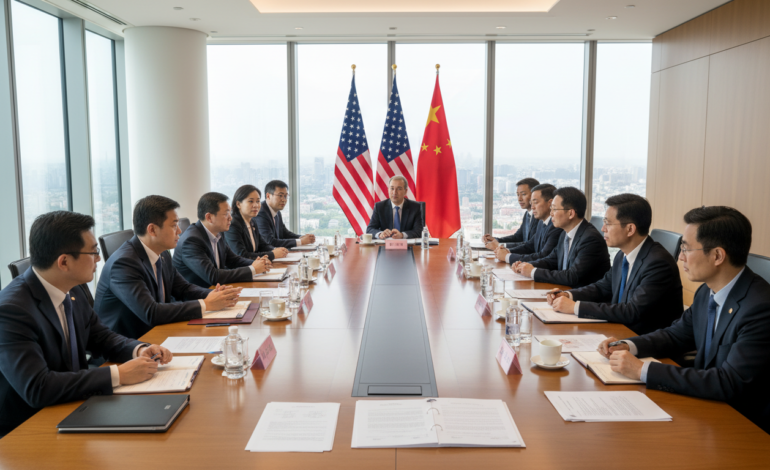
Negotiators moved quickly after the summit sessions concluded in Washington. Officials said the near term package centers on aircraft purchase commitments and a new bilateral trade board to monitor performance. In a Live briefing, US Treasury Secretary Scott Bessent described Boeing as nearing a large set of China orders tied to the meeting agenda, and the China-US Boeing deal is being framed as a commercial track that can proceed while other disputes are handled separately. Today the White House said the board would convene within weeks to set reporting timelines and compliance steps. An Update from China’s commerce ministry said working teams would finalize the list of deliverables before any signing ceremony.
Implications for US-China Trade Relations
The aircraft discussions are being treated as a test of whether new channels can reduce tariff and licensing frictions. Today, officials emphasized that aviation purchases are sensitive because they touch financing, safety oversight, and export controls. In an Update to reporters, Bessent said the trade agreement framework would rely on measurable benchmarks rather than broad promises, and that the Xi-Trump summit created a standing mechanism to track them, with context for how Beijing schedules high level diplomacy described in China Confirms Dates for Donald Trump State Visit to Beijing Amid Rising Global Tensions. For market reaction, investors also watched how China’s airlines and lessors signal demand as deliveries resume. Live attention now shifts to how disputes are escalated or resolved inside the board.
Reaction from Boeing and US Industries
US manufacturers and logistics firms read the aviation track as a near term signal for broader commerce. Boeing has not released contract totals, but company executives have repeatedly told investors that delivery timing depends on regulatory clearances and customer schedules, according to Boeing earnings call transcripts. A Live industry note from the Aerospace Industries Association said predictable export rules help suppliers plan capacity and hiring, and coverage patterns in the region can be compared with other South China Morning Post reporting, including subsidised housing wait time data, which shows how policy updates can move sentiment quickly. The China-US Boeing deal also matters for avionics, engines, and training services that follow airframe deliveries. For aviation supply chain pressure points, analysts cited the need to manage Western component constraints while keeping assembly lines stable. Today, US unions also signaled they will watch for enforceable timelines rather than headline announcements.
China’s Strategic Goals in the Aviation Sector
Beijing’s aviation planners are balancing near term fleet needs against longer range industrial goals. Airlines want fuel efficient widebody and narrowbody jets to meet traffic growth, while policymakers also want domestic programs to gain experience and certification depth. In an Update on industrial planning, officials have highlighted resilience against supply disruptions and the ability to maintain fleets during geopolitical shocks, according to statements posted by China’s State Council, and a related view on protecting domestic jet programs is discussed in China Maps Strategy to Shield C919 Jet Program From Western Supply Chain Pressure. The Xi-Trump summit created space for transactions, but China’s strategy still includes building leverage through diversified procurement and local manufacturing capability. Today, analysts said purchase timing may be sequenced to align with training pipelines, spare parts, and maintenance capacity.
Future Prospects for US-China Economic Cooperation
The new trade board is expected to set a cadence for issue tracking beyond aircraft, but officials are presenting aviation as the first deliverable. US Treasury statements described a process for documenting commitments, verifying performance, and escalating disputes, which is meant to reduce surprise actions that disrupt commerce, and the China-US Boeing deal could expand if regulators clear additional models and if financing conditions improve, though neither side provided unit counts. A Live test will come when the two sides publish their first joint readout, including how the trade agreement language treats enforcement and exceptions. Today, economists cautioned that follow through will depend on compliance discipline rather than summit optics, citing past cycles of pledges that faded under domestic pressure. Update briefings are expected after the board’s inaugural meeting, with aviation deliveries used as the most visible benchmark.