Industrial Robots in Shenzhen: The Future of Smart Manufacturing
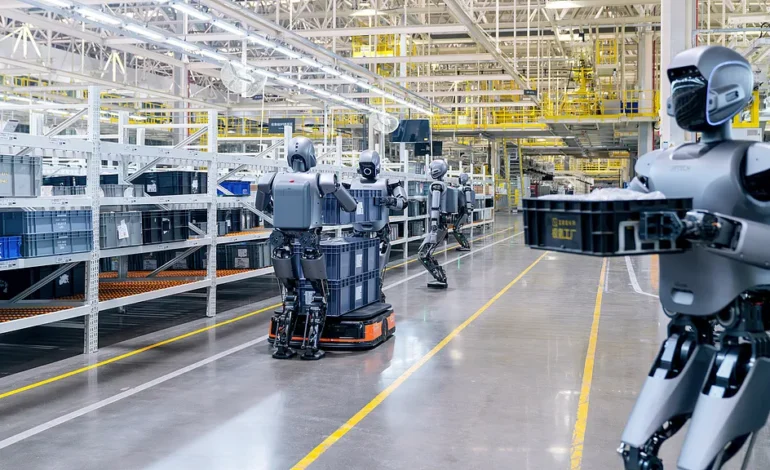
In the heart of China’s technology capital, Shenzhen, a quiet revolution is transforming the factory floor. Industrial robots, once a luxury for large manufacturers, have become essential tools driving efficiency, precision, and global competitiveness. As China pushes toward becoming a manufacturing powerhouse powered by artificial intelligence, robotics has become the backbone of its new industrial strategy. Shenzhen’s transformation illustrates how automation, digital twin systems, and artificial intelligence are merging to define the next era of smart manufacturing, where human expertise and robotic precision work in perfect harmony.
The Rise of the Robot Economy
China has been the world’s largest market for industrial robots for over a decade. According to the International Federation of Robotics (IFR), Chinese factories installed more than 300,000 new robots in 2024, representing nearly half of global installations. Shenzhen, home to major tech firms such as Huawei, Foxconn, and DJI, leads this transformation. The city’s industrial ecosystem combines advanced robotics research, sensor technology, and software engineering, making it the ideal environment for large-scale automation.
In Shenzhen’s industrial parks, robots now perform tasks ranging from circuit board assembly to packaging, welding, and quality inspection. The integration of robotics has improved production efficiency by up to 40% in some electronics and automotive plants. Small and medium enterprises, traditionally slow to adopt automation due to cost constraints, are now turning to leasing models and shared robotics platforms that make smart manufacturing accessible at lower entry costs.
Government Policy and Smart Manufacturing Vision
The success of Shenzhen’s robotics sector is closely tied to national and local policy support. The Made in China 2025 initiative designated smart manufacturing as a core pillar of industrial modernization. This has been reinforced by the 14th Five-Year Plan, which emphasizes automation, AI, and green technology. Shenzhen’s municipal government launched the Smart Factory 2.0 program in 2023, providing subsidies for companies that replace traditional assembly lines with intelligent robotic systems.
Policy incentives include tax deductions for automation equipment, grants for R&D partnerships, and preferential access to industrial land for robotics startups. The Shenzhen Institute of Advanced Technology (SIAT) and the Southern University of Science and Technology (SUSTech) play crucial roles in developing robotics software, motion control algorithms, and AI-enabled machine vision. This close collaboration between academia, government, and industry has made Shenzhen a global benchmark for urban-scale industrial innovation.
AI-Powered Manufacturing and Digital Twins
The integration of artificial intelligence has elevated robotics from simple automation to intelligent collaboration. Factories in Shenzhen are now deploying AI-driven digital twin systems, which create virtual replicas of production lines. These simulations allow engineers to optimize workflow, predict maintenance needs, and improve product quality before physical production begins.
For example, BYD’s smart factory in Pingshan uses real-time data from hundreds of robotic arms connected to a central AI hub. The system can detect performance irregularities, adjust machine parameters instantly, and prevent costly downtime. Similarly, Foxconn’s robotics division employs predictive analytics to coordinate thousands of robots working on smartphone assembly. These systems continuously learn from production data, making the factories self-improving and more resilient.
The Human-Robot Collaboration Model
Contrary to fears of mass job losses, Shenzhen’s approach emphasizes collaboration between humans and robots. Known as “cobotics,” this model integrates robotic systems that assist rather than replace human workers. Cobots handle repetitive or hazardous tasks, while humans focus on quality control, design, and complex problem-solving.
Shenzhen-based startup Elite Robots has developed lightweight, easy-to-program collaborative robots for small enterprises. These cobots can be reconfigured in minutes, allowing flexibility for diverse production requirements. The city’s textile and precision component industries have particularly benefited from this approach, improving both worker safety and product consistency. Training centers supported by the Shenzhen Robotics Association provide continuous skill development for technicians transitioning from manual labor to digital supervision roles.
Global Expansion and Export Opportunities
China’s robotics industry is no longer just serving domestic demand. Shenzhen-based companies are now exporting robotic solutions to Southeast Asia, the Middle East, and Europe. Exports of industrial robots reached US$2.3 billion in 2024, a 27% increase from the previous year, according to data from the Ministry of Commerce.
Shenzhen’s Techman, EFORT, and Siasun Robotics are establishing overseas manufacturing bases to meet growing global demand. Many of these robots are integrated into smart logistics systems, automated warehouses, and renewable energy projects. By combining cost efficiency with strong after-sales service, Chinese robotics firms are positioning themselves as global competitors to established brands such as Fanuc, ABB, and KUKA.
Sustainability and Energy Efficiency in Smart Factories
Smart manufacturing is also transforming the environmental footprint of industrial production. Robotics systems now help factories reduce waste, energy use, and emissions. In Shenzhen’s green factories, robots equipped with sensors monitor resource consumption and optimize material flow. This is particularly important in sectors like electronics, where waste reduction and recycling are becoming regulatory priorities.
The Shenzhen CleanTech Zone has introduced pilot projects integrating solar-powered robotic arms and AI-based energy management systems. These projects demonstrate that automation and sustainability can advance together. Companies adopting green robotics are rewarded with lower energy tariffs and priority in government procurement programs, ensuring that environmental responsibility becomes a competitive advantage.
Challenges and the Road Ahead
Despite its success, Shenzhen’s robotics ecosystem faces challenges. High-end components such as servo motors, precision reducers, and industrial sensors are still partly imported, creating dependency risks. The government is addressing this through the National Robotics Standardization Plan, which encourages local manufacturing of core components. Workforce adaptation is another challenge, as rapid automation demands continuous skill development.
Cybersecurity has also emerged as a critical concern. As factories become interconnected digital environments, they are increasingly exposed to data theft and system hacking. Shenzhen’s AI Labs are developing secure industrial internet protocols to safeguard manufacturing networks from cyber threats.
Conclusion
Shenzhen’s robotics revolution demonstrates how policy, innovation, and entrepreneurship can merge to create a global model for intelligent manufacturing. The city has transformed from a traditional export hub into a laboratory for industrial automation, artificial intelligence, and green technology. By merging robotics with digital twin systems and sustainable practices, Shenzhen is building the foundation of the next industrial era one that prioritizes efficiency, flexibility, and environmental responsibility. As global industries seek new ways to balance productivity with resilience, Shenzhen’s model offers a clear glimpse into the future of manufacturing, where human ingenuity and robotic intelligence advance side by side.