Nexperia Saga Highlights Europe’s Waning Influence in Global Chip Supply Chain Amid US-China Tech Rivalry
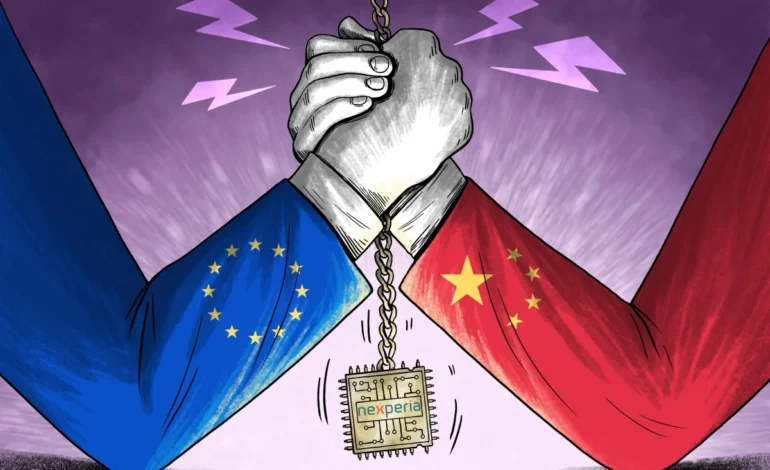
The escalating dispute surrounding Nexperia, a Dutch semiconductor firm owned by China’s Wingtech Technology, has exposed growing vulnerabilities in Europe’s position within the global chip industry. Once a symbol of globalization and industrial cooperation, Nexperia is now caught in a complex geopolitical standoff, illustrating Europe’s increasingly constrained role as U.S.-China tensions reshape global technology supply chains.
Located in Dongguan, in the heart of southern China’s Pearl River Delta, Nexperia’s flagship factory has operated continuously since its inception in 2000. Following a significant expansion in 2018, the facility’s annual production capacity soared to 90 billion semiconductor units, cementing its status as the largest assembly site in Nexperia’s global network. The site is regarded as one of the critical hubs in the global supply of power and logic semiconductors used in consumer electronics, automotive systems, and industrial automation.
However, Nexperia’s status as a linchpin in this network has drawn scrutiny, particularly since its acquisition by Wingtech Technology in 2019. In October 2025, Dutch authorities opened a formal investigation into Nexperia’s operations, citing national security concerns over the company’s Chinese ownership and its role in critical infrastructure. The probe was triggered by pressure from U.S. officials who have grown increasingly alarmed about China’s foothold in strategic sectors of the semiconductor supply chain.
The case has highlighted Europe’s precarious balancing act as it attempts to navigate the intensifying technology and trade rivalry between Washington and Beijing. European governments, long proponents of open trade and neutrality, are now facing increasing pressure to align with the U.S. position on curbing China’s technological reach.
“The Nexperia case reflects the erosion of Europe’s geopolitical neutrality in semiconductor policy,” said a Brussels-based trade policy expert. “For decades, Europe’s strategy was built around being a neutral industrial hub. That is no longer sustainable in this geopolitical climate.”
Nexperia, for its part, has pushed back against the allegations, calling the investigation politically motivated and warning of potential disruptions to global supply chains. The company has emphasized its operational independence and compliance with Dutch and European Union laws. Wingtech executives have also voiced concerns over what they describe as a discriminatory approach toward Chinese investors.
The controversy follows other high-profile cases, including Nexperia’s forced divestment of its acquisition of Newport Wafer Fab in the United Kingdom, another semiconductor asset flagged as strategically sensitive. In both instances, national security justifications have been used to block Chinese capital from consolidating control over chipmaking capacity in Europe.
Analysts suggest that such actions may inadvertently undermine Europe’s own semiconductor ambitions. The European Union has announced a €43 billion “EU Chips Act” to boost local chip production and reduce dependency on foreign suppliers. However, regulatory uncertainty, ownership restrictions, and increased geopolitical risk could make the region less attractive for private investment in semiconductor infrastructure.
“In trying to protect national interests, European regulators risk sending mixed signals to global investors,” said a Dutch technology industry analyst. “The long-term competitiveness of the European chip sector depends on clarity, predictability, and the ability to foster innovation partnerships—regardless of political origin.”
Meanwhile, the United States continues to deepen its semiconductor alliances in Asia and North America through initiatives like the CHIPS and Science Act and the U.S.-led “Chip 4” alliance involving Japan, Taiwan, and South Korea. These efforts are part of Washington’s broader strategy to isolate China from advanced chip technologies and build resilient supply chains among like-minded nations.
China, facing increasing export controls and sanctions, has responded by doubling down on domestic innovation, bolstering funding for its semiconductor industry, and intensifying its courtship of emerging markets in Southeast Asia, the Middle East, and Central Asia for technology collaboration.
Against this backdrop, Nexperia’s fate may serve as a bellwether for Europe’s semiconductor policy in the years ahead. The outcome of the Dutch government’s investigation could influence future Chinese investment in Europe and test the EU’s ability to maintain its industrial ambitions while responding to global strategic pressures.