IMF Director Says AI Investment Has Helped Support the Global Economy Amid Trade War Pressures
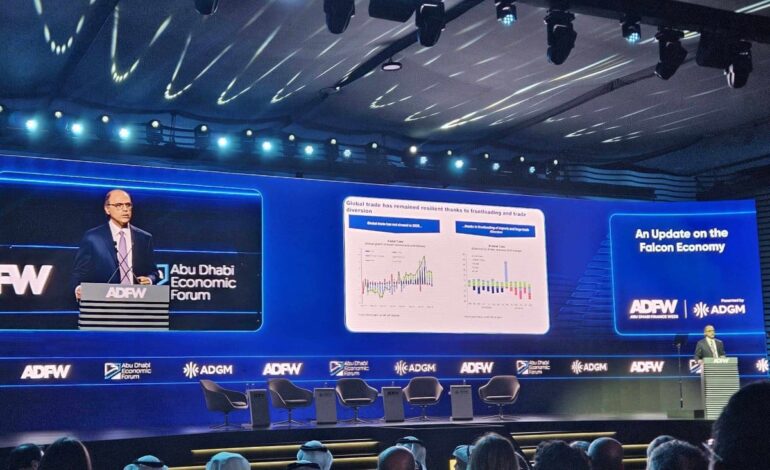
The global economy has managed to stay more resilient than many analysts predicted despite the rising trade tensions triggered by United States tariff increases, and artificial intelligence investment has played a meaningful role in that stability, according to a senior official at the International Monetary Fund. Speaking at Abu Dhabi Finance Week in the United Arab Emirates, Jihad Azour, who directs the IMF’s Middle East and Central Asia Department, said strong technological investment helped cushion the effects of trade disruptions and supported economic flexibility during a period of uncertainty.
Azour explained that although higher tariffs normally lead to stronger inflationary pressures and slower trade activity, the world economy has adapted more smoothly than anticipated. He said the inflationary impact of recent tariff hikes has been relatively mild and that this outcome surprised many observers. One of the reasons behind this unexpected stability, he noted, has been the rapid expansion of artificial intelligence investment, particularly in the United States. Businesses have adopted AI tools to increase efficiency, streamline production and offset rising costs, which has helped reduce the overall burden of trade related shocks.
He also highlighted that global trade rules and supply chains adjusted quickly as companies sought new markets and alternative partners. This flexibility allowed many industries to continue operating without major disruptions, even as trade tensions escalated. Azour’s comments also aligned with an IMF report released in October, which found that the effects of the trade war were softened by several actions taken by the United States. These included negotiating new trade agreements with various countries and granting exemptions on certain tariffs, allowing key sectors to avoid the full brunt of the policy changes.
The IMF has repeatedly warned that prolonged trade disputes pose risks to global economic growth. However, Azour said that innovations in technology have played a crucial stabilizing role. Artificial intelligence in particular has encouraged companies to invest in automation, data analysis and advanced production techniques that help reduce dependence on vulnerable supply chains. These investments have also supported productivity growth at a time when global economic momentum faced multiple challenges, including inflation, supply shortages and geopolitical tensions.
Azour noted that the integration of AI into business operations is not limited to major economies. Countries in the Middle East and other emerging markets are increasingly exploring AI applications in finance, logistics, energy and government services. He emphasized that strong regulatory frameworks and investment in digital infrastructure will be essential for ensuring that AI continues to support economic stability rather than deepen existing inequalities.
Looking ahead, Azour said policymakers should continue to encourage innovation while working to resolve trade tensions through open dialogue and cooperation. He cautioned that reliance on technology alone cannot compensate for long term trade instability, but he expressed optimism that AI driven growth could help maintain resilience while global leaders negotiate more sustainable economic arrangements.