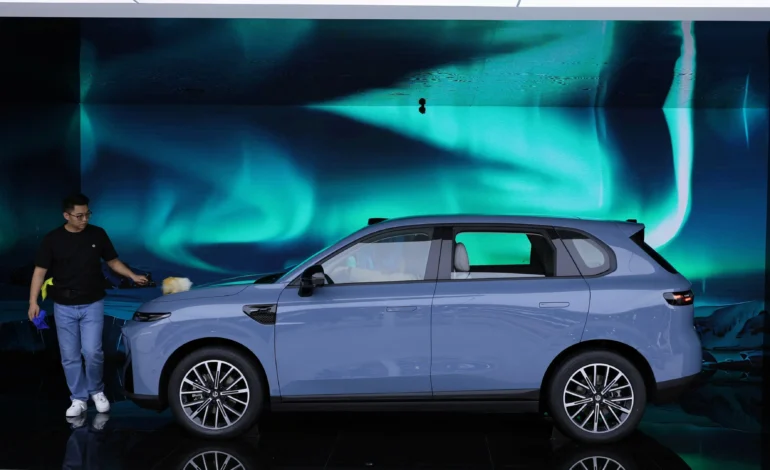
China EV makers’ November sales jolt records as buyers rush in before incentive phase-out

China’s electric vehicle market experienced a powerful surge in November as consumers hurried to make purchases before key tax incentives and cash subsidies expire on January 1. At least three major EV manufacturers posted their highest ever monthly sales, reflecting a wave of last minute buying driven by concerns that vehicles will become more expensive once the government support ends. Dealers across the country reported unusually heavy foot traffic throughout the month as shoppers rushed to secure favourable prices.
Leapmotor leads the momentum with another record month
Leapmotor, backed by global auto giant Stellantis, stood out once again as one of the strongest performers in China’s fast growing EV sector. The company delivered 70,327 vehicles in November, marking its seventh straight month of record breaking sales. The result narrowly surpassed its October total of 70,289 units, demonstrating the company’s ability to maintain high demand even in a competitive market crowded with both established brands and new entrants.
Leapmotor’s momentum highlights the appeal of its product lineup, which targets value conscious buyers looking for well equipped electric vehicles at competitive prices. Analysts say the company has succeeded by combining affordability with improved technology features that resonate with a broad segment of Chinese consumers.
Analysts warn of a post deadline slowdown
Despite the exceptional November figures, industry experts anticipate a sharp correction in sales early next year. The expiry of tax breaks and subsidies is expected to create a gap between consumer expectations and actual vehicle costs, causing many buyers to delay purchases. Dealers report that some customers only brought forward their buying decisions because of the incentives, meaning that demand from January onwards could drop significantly before stabilising later in the year.
Analysts note that this type of fluctuation is not unusual in markets where government policies strongly influence consumer behaviour. Once the incentives disappear, the industry will need to rely more heavily on product quality, pricing strategies and brand loyalty to support continued growth.
Competition intensifies as the market evolves
The strong performance in November underscores how competitive China’s EV industry has become. Domestic manufacturers continue to refine their offerings, expand their model ranges and push into new price segments to capture market share. This intensity benefits consumers but places pressure on automakers to continuously innovate and reduce costs.
Brands are also racing to differentiate themselves through intelligent driving features, battery advancements and design upgrades. As incentive support declines, the companies best positioned to succeed will be those able to deliver value without relying on government subsidies.
A pivotal moment for the world’s largest EV market
China remains the world’s biggest electric vehicle market, and its performance has significant implications for the global automotive industry. This November’s record sales reflect both the remarkable demand for new energy vehicles and the sensitivity of consumers to policy changes. In the long run, China aims to shift the industry toward sustainable growth driven by technology, competitiveness and global expansion rather than subsidy driven demand cycles.
Manufacturers such as Leapmotor, BYD, Li Auto and others will play a central role in shaping the next phase of development. As China’s EV market matures, companies will need to deepen research and development, strengthen supply chains and explore overseas markets to maintain momentum.
The November rush may have provided an extraordinary boost, but the months ahead will reveal how resilient the industry truly is without the incentive safety net. For now, China’s electric vehicle sector has once again shown its ability to capture attention and set new benchmarks in scale and consumer enthusiasm.