Australian Prime Minister Apologises to Jewish Community After Bondi Beach Attack
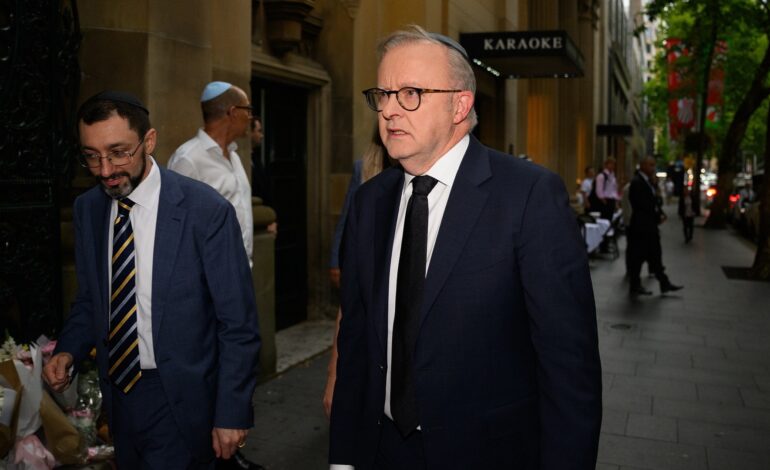
Australian Prime Minister Anthony Albanese has issued a public apology to the country’s Jewish community following a deadly terrorist attack at Bondi Beach, pledging new laws to confront hate speech and prevent extremist violence.
Speaking at a press conference in Canberra on Monday, Albanese said he felt a deep sense of responsibility after 15 people were killed during an event celebrating the Jewish festival of Hanukkah at Sydney’s Bondi Beach on December 14. The attack, which authorities say was inspired by the Islamic State, has shaken the nation and prompted renewed debate about extremism and social cohesion in Australia.
“I am sorry for what the Jewish community and our nation as a whole have experienced,” Albanese said, describing the attack as a moment of collective grief and reflection. He stressed that his government would work every day to ensure Jewish Australians feel safe and protected, adding that extremists must not be allowed to succeed in dividing Australian society through fear and hatred.
The prime minister confirmed that his cabinet met for a second time since the attack and agreed to move forward with a comprehensive legislative package aimed at tackling hate speech and its consequences. The proposed laws, expected to be introduced to parliament in 2026, are designed to strengthen existing protections and give authorities broader powers to intervene before hatred turns into violence.
Under the planned reforms, criminal penalties for hate speech will be increased, and hate based motivation will be formally considered during sentencing for serious crimes. The government also plans to grant the minister for home affairs the authority to cancel the visa of individuals found to be promoting violence through hate speech or displaying symbols linked to extremist ideologies.
Another key element of the package focuses on protecting children from radicalisation. A new aggravated criminal offence will target adults who attempt to influence or groom minors into extremist thinking or terrorist activity. The move reflects growing concern within government and law enforcement about the vulnerability of young people to online propaganda and extremist networks.
Attorney General Michelle Rowland highlighted the scale of the problem, noting that while 120 people have been convicted of terrorism related offences in Australia since 2001, a significant number were minors. She said that 10 of those convicted were children, and that more than half of the individuals currently before the courts on terrorism charges are under the age of 18.
“This unprecedented radicalisation of our youth must stop,” Rowland said. “We will not allow extremists to groom and brainwash our children into hate or terrorism.”
Albanese said the government would consult across the federal parliament to ensure broad support for the proposed laws, emphasising the need for urgency and national unity in the face of rising extremism and hate driven violence.