Europe and Russia face a dangerous cycle where preparing for war may help cause it
Rising warnings revive memories of past European conflicts
Across Europe, language once thought confined to history books has returned to public debate. Military leaders and intelligence officials are increasingly warning that the continent must be ready for a large scale conflict with Russia. NATO Secretary General Mark Rutte has said Europe should prepare for a level of warfare similar to what earlier generations endured. Defence leaders in Britain and France have gone further, urging societies to accept the possibility of losing children in a future war. Such statements mark a sharp shift in tone after decades in which large interstate war in Europe seemed unthinkable.
Intelligence warnings deepen the sense of inevitability
Concerns are reinforced by assessments from MI6, which has warned of a grey zone between war and peace shaped by cyber operations, sabotage, and political pressure linked to Moscow. These warnings paint a picture of constant threat rather than clear boundaries, suggesting that conflict may already be unfolding in less visible forms. As these messages circulate through media and political circles, they contribute to a growing perception that confrontation is not only possible but increasingly unavoidable.
Moscow rejects blame and mirrors the narrative
From the other side, Russia rejects the portrayal of itself as the primary aggressor. Vladimir Putin has accused Europe of hostile intent and claimed that Nato is preparing to attack Russia. This framing mirrors Western narratives almost exactly, with each side casting itself as defensive and the other as provocative. Both camps appear to share a belief that the safest path to peace is extensive military preparation, even as such preparation deepens mistrust.
The logic of deterrence under growing strain
The assumption that preparing for war prevents war has long underpinned European security thinking. Deterrence relies on convincing an opponent that the cost of aggression is too high. However, deterrence also carries risks when both sides interpret defensive measures as offensive threats. Military buildups, exercises, and aggressive rhetoric can blur intentions and shorten decision making time during crises. In such an environment, miscalculation becomes more likely, particularly when communication channels are weak or politically constrained.
History warns of self fulfilling prophecies
History offers many examples of how preparations for conflict can create the very wars they aim to prevent. Defensive fortifications like China’s Great Wall reflected deep fear of invasion but also reinforced divisions and hostility. The naval arms race between Britain and Germany before the First World War intensified suspicion and narrowed diplomatic options. Imperial Japan’s decision to strike Pearl Harbour was shaped by the belief that confrontation with the United States was inevitable. The Six Day War similarly showed how mobilization and anticipation can trigger preemptive action.
Europe’s current path echoes past mistakes
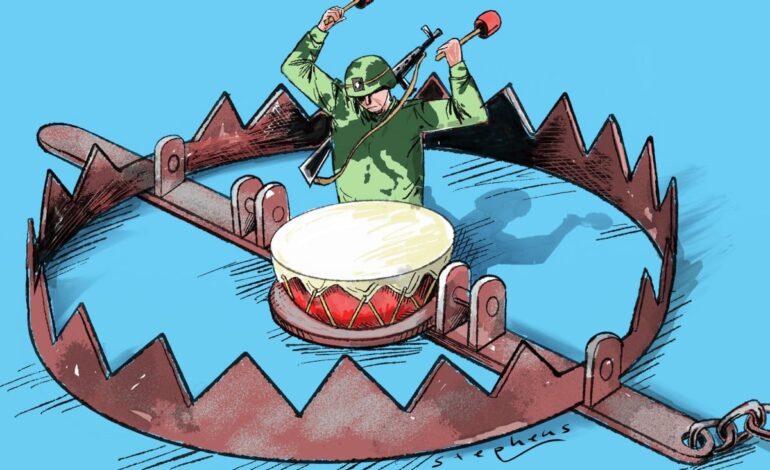
Today’s European rhetoric risks following the same pattern. When leaders publicly frame war as likely or unavoidable, they shape public expectations and political incentives. Compromise becomes harder to justify, and restraint can be portrayed as weakness. Over time, societies may come to accept conflict as destiny rather than tragedy, reducing pressure on leaders to pursue de escalation. This psychological shift is as dangerous as any weapons system.
Diplomacy struggles to keep pace with militarisation
While military preparedness advances rapidly, diplomatic efforts appear less visible and less confident. Dialogue with Russia remains limited, and trust is scarce on both sides. Yet history suggests that sustained communication, arms control agreements, and crisis management mechanisms are essential to preventing escalation. Without them, Europe risks drifting into a confrontational posture where every move is interpreted through the lens of impending war.
Avoiding a future shaped by fear
Europe’s challenge is not to abandon security but to avoid allowing fear to dictate strategy. Preparing for defence is necessary, but treating war as inevitable can make it more likely. Recognising the danger of self fulfilling prophecies may be the first step toward breaking the cycle. The alternative is a continent once again trapped by assumptions that leave little room for peace.