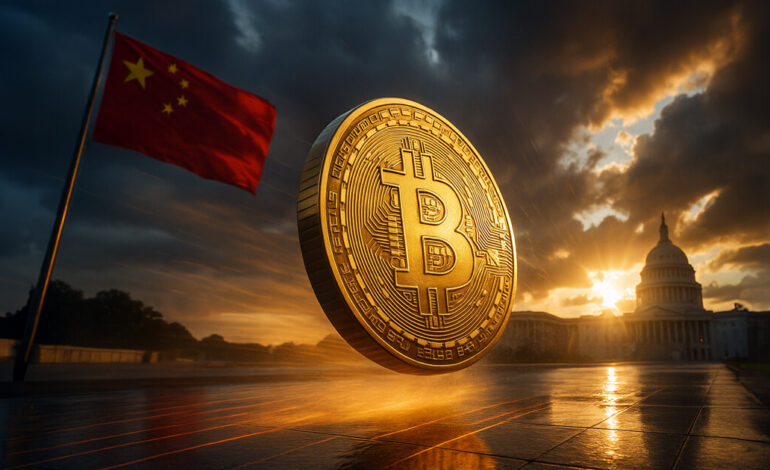
Why Trump Says China Is Deeply Involved in Crypto Despite the Ban

A Statement That Raised Eyebrows
When US President Donald Trump remarked that China is big into crypto, the comment surprised many observers. On the surface, it appeared to clash with reality. China famously banned cryptocurrency trading and mining on the mainland, forcing exchanges and miners to shut down or relocate. Yet Trump’s remark reflects a more nuanced picture of how China engages with digital assets beyond simple headlines.
The disconnect lies between formal bans and strategic engagement. While retail crypto activity is restricted, China has not exited the digital asset space. Instead, it has reshaped its involvement in ways that align with state priorities and financial control.
The Mainland Ban and What It Actually Means
China’s mainland ban on cryptocurrencies is real and extensive. Trading platforms were forced out, mining operations were dismantled, and financial institutions were prohibited from offering crypto related services. The goal was to curb financial risk, capital flight, and speculative excess.
However, the ban targeted decentralized and privately issued cryptocurrencies, not the underlying technologies or digital finance more broadly. Blockchain research continued, state backed applications expanded, and crypto assets did not disappear from Chinese influence altogether. This distinction is often lost in simplified discussions.
Hong Kong as a Strategic Outlet
One reason Trump’s comment resonates is Hong Kong’s evolving role. While the mainland maintains strict controls, Hong Kong has positioned itself as a regulated hub for digital assets. The city has introduced licensing regimes for crypto exchanges and welcomed global firms under clear compliance frameworks.
This dual system allows China to observe and influence crypto market development without exposing the mainland financial system to volatility. Hong Kong effectively serves as a sandbox, balancing innovation with oversight. For external observers, this looks like continued Chinese engagement in crypto, albeit through a different channel.
The Digital Yuan Changes the Equation
China’s most significant crypto related initiative is not Bitcoin or Ethereum but its central bank digital currency. The digital yuan, often referred to as the e CNY, represents Beijing’s vision for the future of money. Unlike decentralized cryptocurrencies, it is fully state controlled and designed to enhance monetary policy transmission, payment efficiency, and financial surveillance.
From a strategic perspective, the digital yuan places China at the forefront of sovereign digital currency development. It challenges the dominance of private payment platforms and potentially reshapes cross border settlement over time. This effort alone supports the idea that China is deeply invested in digital currency innovation.
Mining Legacy and Global Influence
China’s historical role in Bitcoin mining also informs perceptions. Before the ban, the country hosted a majority of global mining capacity, shaping network security and economics. Although operations moved abroad, expertise, hardware manufacturing, and supply chains remained closely linked to Chinese firms.
As a result, China continues to influence the crypto ecosystem indirectly through equipment production, research, and technical know how. This legacy reinforces the view that China never fully exited the space.
Why Trump Frames It This Way
Trump’s framing likely reflects a strategic rather than technical interpretation. From his perspective, China’s involvement in digital currencies is about competition and influence. Whether through Hong Kong’s crypto markets or the digital yuan, China is positioning itself for a future where digital finance matters.
Saying China is big into crypto captures that competitive dynamic, even if the reality differs from retail trading narratives. It simplifies a complex policy landscape into a message about technological rivalry.
The Reality Behind the Sound Bite
China’s approach to crypto is selective, controlled, and strategic. It rejects decentralized speculation on the mainland while embracing blockchain, regulated markets in Hong Kong, and state issued digital currency. This combination allows innovation without relinquishing control.
Trump’s statement is therefore not entirely wrong, but it is incomplete. China is not big into crypto in the way many enthusiasts define it. It is big into shaping the future of digital finance on its own terms.