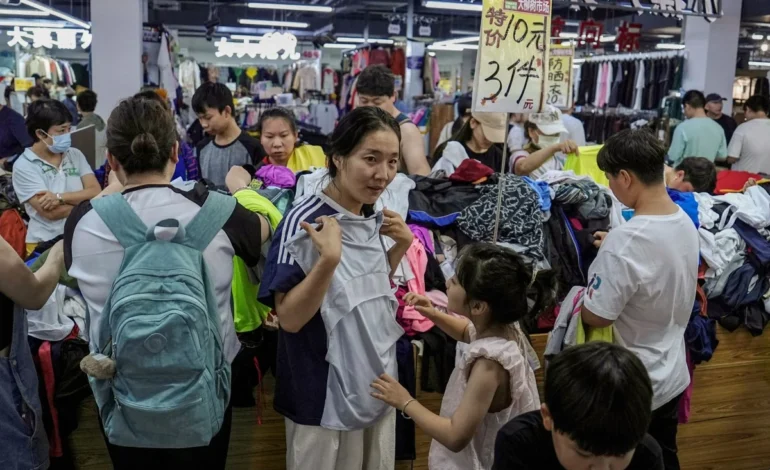
How China’s ‘World’s Supermarket’ Weathered Trump’s Tariffs and Came Back Stronger
Tariffs hit hard but not evenly
When US tariffs on Chinese goods surged during the latest escalation of the trade war, businesses across China braced for disruption. In Yiwu, a trading hub in eastern China often described as the world’s supermarket, expectations were no different. Wang Nan, a local hardware trader, anticipated that higher duties would sharply reduce orders from American clients who had long been a reliable source of demand.
The initial shock was real. As tariffs climbed to triple digit levels at their peak, US buyers pulled back and uncertainty spread across export focused firms. For many small traders, the assumption was that reduced access to the American market would translate directly into falling revenues.
What followed, however, challenged that assumption.
Yiwu’s global model proves resilient
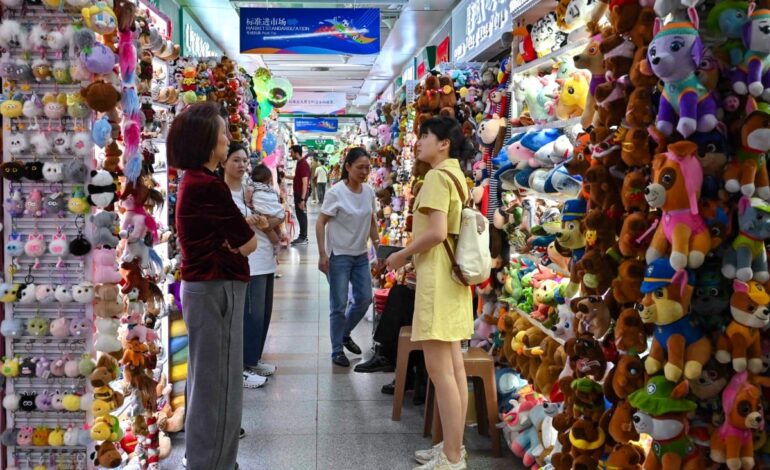
Yiwu’s strength lies in its diversification. Unlike export centres heavily dependent on a single market, the city has built its identity around serving buyers from across the world. Tens of thousands of small manufacturers and traders operate on thin margins but high volumes, supplying everything from hardware and household goods to textiles and toys.
When US demand weakened, Yiwu traders did not retreat. Instead, they redirected efforts toward emerging markets in the Middle East, Central Asia, and Africa. According to Wang, the strategy paid off. By actively seeking new buyers and adjusting product offerings, her firm ended the year with higher export orders than before the tariffs took effect.
This adaptability reflects a broader pattern across Yiwu’s trading ecosystem.
New markets offset lost demand
As tariffs reshaped global trade flows, many developing regions stepped in to fill the gap left by declining US orders. Infrastructure projects, urbanisation, and rising consumer demand in parts of the Middle East and Africa created opportunities for affordable Chinese goods.
Yiwu traders were well positioned to respond. The city’s logistics networks, multilingual trading services, and long experience dealing with diverse buyers allowed firms to pivot quickly. Rather than waiting for policy relief, businesses treated the tariffs as a signal to accelerate market diversification.
The result was not just survival, but expansion into regions with long term growth potential.
Tariffs accelerate strategic adjustment
The trade war acted as a stress test for China’s export model. In Yiwu’s case, it reinforced a lesson learned over decades. Dependence on any single market carries risk. By contrast, a broad customer base provides insulation against geopolitical shocks.
Wang summed it up simply by noting that Yiwu has never lived on American business alone. This mindset explains why many traders viewed tariffs less as an existential threat and more as a catalyst for change.
Exporters refined pricing strategies, explored new product categories, and strengthened relationships with buyers outside traditional Western markets. In doing so, they reduced vulnerability to future policy swings.
The limits of tariff pressure
The experience of Yiwu highlights the limits of tariffs as a tool for reshaping global trade. While duties can disrupt specific flows, they do not automatically reduce overall export capacity when producers are flexible and global demand remains strong.
For Chinese exporters, especially those dealing in low cost, high turnover goods, global demand is widely distributed. Tariffs imposed by one country often lead to trade diversion rather than collapse.
This dynamic complicates efforts to use trade barriers as leverage. Instead of shrinking China’s export footprint, tariffs in some cases encouraged firms to deepen ties with faster growing regions.
A broader signal for global trade
Yiwu’s rebound offers insight into how global trade is evolving. Supply chains are becoming more fragmented and adaptive, with exporters increasingly focused on regional diversification. Emerging markets are playing a larger role in absorbing manufactured goods, reshaping traditional trade hierarchies.
For policymakers, the lesson is clear. Trade measures aimed at restricting one bilateral relationship may accelerate multipolar trade patterns rather than reverse them.
Stronger through adaptation
By the end of a turbulent year, Yiwu had demonstrated the durability of its export model. Traders who expected losses instead found new opportunities, and some emerged stronger than before.
The city’s experience shows that flexibility, global reach, and speed of adjustment can outweigh tariff pressure. In an era of geopolitical uncertainty, Yiwu’s traders have reaffirmed a simple principle of global commerce. Those who sell to the world are hardest to shut out.