China’s gold buying spree reveals how smart money is hedging against global risk
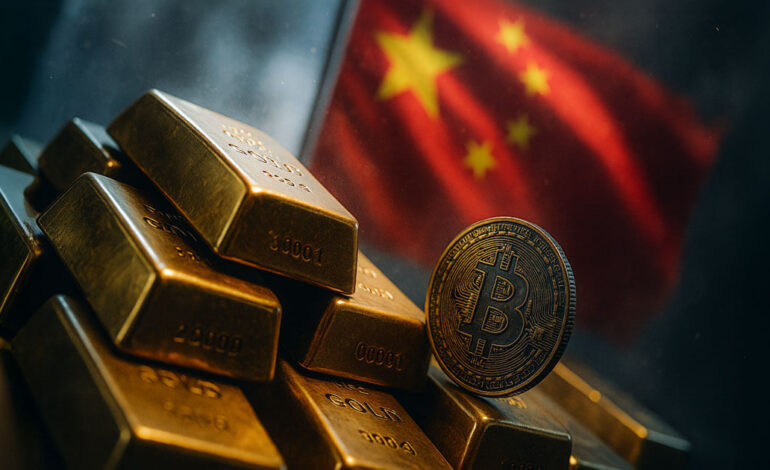
A quiet but persistent shift in China’s reserve strategy
China’s central bank has been steadily accumulating gold, a move that is attracting renewed attention from global markets. The People’s Bank of China has now recorded its thirteenth consecutive month of gold purchases, extending one of the most consistent reserve accumulation campaigns seen since the global financial crisis. While gold buying by central banks is not unusual, the persistence and timing of China’s actions suggest something more strategic than routine diversification.
These purchases come amid growing geopolitical tension, rising financial fragmentation, and increased use of sanctions in global finance. By adding to its gold reserves month after month, China appears to be reinforcing its preference for assets that sit firmly under sovereign control and are insulated from external pressure.
Why gold still matters to central banks
Gold occupies a unique position in the global financial system. It carries no counterparty risk, cannot be frozen by foreign governments, and does not depend on the stability of another country’s currency or banking infrastructure. For central banks concerned about exposure to geopolitical shocks, these qualities are increasingly attractive.
China’s accumulation of gold reflects a broader reassessment of risk. Rather than chasing yield, the focus is on resilience. Gold serves as a hedge against currency debasement, financial sanctions, and systemic instability. In that sense, the buying spree is less about short term price movements and more about long term strategic positioning.
What this signals about sovereign risk thinking
The scale and consistency of China’s gold purchases suggest a deeper shift in how major economies think about reserve management. Traditional reserve assets such as US Treasury bonds remain dominant, but their perceived neutrality has come under question in recent years. Gold, by contrast, exists outside the political reach of any single country.
By leaning more heavily into gold, China is signalling that sovereignty over reserves matters more than ever. This approach prioritises assets that cannot be easily seized, restricted, or weaponised. It is a quiet but powerful response to a world where financial systems are increasingly entangled with geopolitics.
Why crypto analysts are paying attention
Interestingly, crypto analysts see China’s gold buying not as a bullish catalyst for Bitcoin, but as confirmation of the logic that underpins it. Bitcoin was designed as a scarce, seizure resistant asset that exists outside state control. While China has no interest in holding Bitcoin as part of its official reserves, the reasoning behind gold accumulation echoes many of the same principles.
Both gold and Bitcoin appeal to those seeking protection from systemic risk and monetary instability. The difference is that gold fits comfortably within the existing sovereign framework, while Bitcoin challenges it. China’s actions therefore reinforce the narrative of why digital assets exist, even as Beijing continues to reject them.
A macro signal rather than a crypto endorsement
It is important to note that nothing in China’s reserve strategy points toward future adoption of cryptocurrencies. The country has been clear in its opposition to decentralised digital assets, favouring tight control over capital flows and monetary policy. Instead, the gold buying spree should be read as a macro signal about risk perception, not a shift in attitude toward crypto.
For investors, this distinction matters. China is choosing the version of safety that aligns with state control. Markets, individuals, and institutions outside that framework may draw different conclusions, but they are responding to the same underlying concerns.
How smart money interprets the message
The broader takeaway is not about gold versus Bitcoin, but about how smart money behaves when confidence in the global system weakens. When uncertainty rises, capital flows toward assets perceived as durable and independent of political interference. China’s gold purchases are a textbook example of this behaviour at a sovereign level.
For private investors, the lesson is about understanding incentives rather than copying actions. States and individuals operate under different constraints, but the motivations driving their choices often overlap.
A revealing moment in global finance
China’s sustained gold accumulation offers a window into how major powers are preparing for a more fragmented financial future. It highlights a growing preference for assets that provide insulation from external shocks, even at the cost of lower returns. While China is not embracing crypto, its actions lend weight to the broader argument that trust in traditional financial arrangements is evolving.
In that sense, the gold spree is less about the metal itself and more about what it represents. A world where risk is managed not through optimism, but through control, scarcity, and resilience.