China AI initiatives: Beijing boosts compute for tokens
China AI initiatives: Beijing expands computing capacity
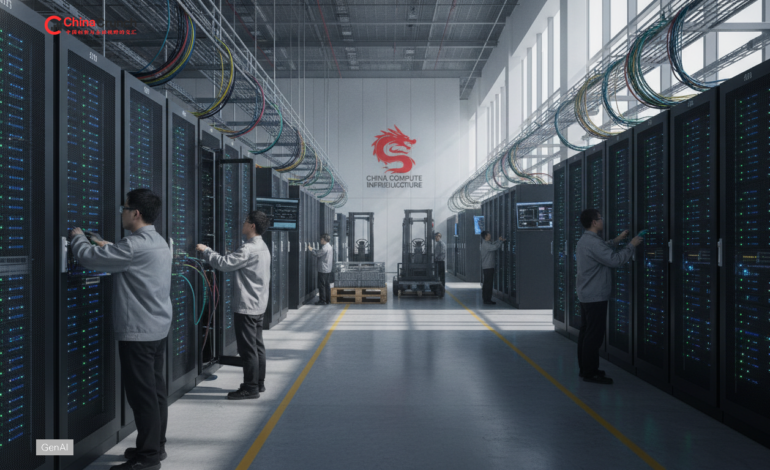
Beijing is accelerating plans to add more high end computing capacity, aiming to reduce bottlenecks that can slow model training and inference. The policy drive reportedly links funding, land approvals, and energy access more closely to large data centre buildouts and clustered GPU deployments, according to indications from the South China Morning Post. Officials have framed the push as an economic lever rather than a narrow research program, with compute treated like a strategic input similar to power and logistics. The South China Morning Post suggested the approach is expanding computing power to support a token economy in an intensifying tech race with the United States.
Local agencies are also pressing operators to raise utilisation rates so idle capacity does not dilute the impact, according to reporting referenced in the links below. In practice, that can mean tighter reporting on capacity, more emphasis on shared clusters, and incentives that reward consistent uptime, as covered in Beijing expands China AI computing power for tokens. The direction is also tied to chip supply constraints and energy intensity, as operators seek better performance per watt, alongside China Tech: Zhipu Shares Surge Amid Chip Data Centre Developments. For more background on the data-centre and chip angle, see the reporting referenced in the links below.
Impacts on model training and enterprise rollout
In the China AI initiatives agenda, more computing power can change what developers can ship, because it can shorten training cycles and lower latency for real world products. That shift may favour firms that can secure stable access to accelerators and data centre slots, even if their models are comparable on paper. A practical outcome can be faster iteration on model releases, while enterprises can fine tune industry systems without long waiting queues. Capacity availability also shapes pricing, because inference costs can rise when clusters are congested and allocation becomes unpredictable.
In a separate example of competitive pressure, the South China Morning Post highlighted RedNote’s maths Olympiad result as a showcase of model capability, linking performance to scale and engineering discipline, via RedNote maths Olympiad model report. For related domestic context on how model milestones can feed demand for scalable inference, Nano Banana AI Model: RedNote’s Reported Success at Olympiad outlines how publicity and benchmarks can reportedly translate into higher usage and more sustained inference loads. The episode is frequently framed as a 2024-era signal of how quickly demand can spike after a high-profile benchmark.
Token economy mechanics: pricing, throughput, utilisation
Beijing’s focus on a token economy is closely tied to how AI services are priced and measured, since tokens translate model usage into billable units. In the context of China AI initiatives around compute buildout, the approach encourages cloud platforms and model providers to compete on throughput, reliability, and unit cost per token, rather than only on benchmark scores. This logic also pushes data centre operators to optimise scheduling and power draw, because marginal efficiency gains can scale across very large token volumes across consumer and enterprise workloads.
The South China Morning Post linked this strategy to Beijing’s compute expansion agenda in its coverage of the policy direction, via SCMP on Beijing computing power and token economy. Over time, platforms that can keep utilisation high while limiting peak power spikes may be more likely to offer lower, steadier per token pricing. That can shift competition toward operational discipline, not only model size, especially when accelerator availability is uneven.
Comparison with US AI policy and chip pressure
It appears that the US policy environment may be influencing Beijing’s choices, as export controls and security screening reportedly tighten access to leading chips and advanced tooling, according to the South China Morning Post. This situation may add urgency to securing alternative supply chains and improving efficiency per watt in local deployments. At the same time, the United States is using regulatory and enforcement signals to potentially influence where frontier models can be trained and deployed, including sanctions-related pressure as noted by SCMP. Beijing’s approach is often described as treating compute buildout as an infrastructure project, while US measures may lean more heavily on market incentives and restrictions.
The gap in governance style can affect how quickly capacity is marshalled and how predictable access is for developers. For a view of the sanctions angle in coverage of the competitive environment, see US levels AI sanctions threat as China models gain. External pressure can also affect procurement timelines, spare parts planning, and the choice of interconnect and software stacks. These factors can feed directly into how quickly operators translate buildouts into stable, usable compute.
What success looks like in the next 12 to 24 months
Over the next 12 to 24 months, China AI initiatives will likely be judged by whether new capacity converts into sustained developer productivity, rather than headline megawatt figures. If more clusters come online with stable power and high utilisation, the cost per token can fall and widen AI adoption in manufacturing, finance, and consumer apps. That could create a feedback loop where usage funds more training and better tooling, even if cutting edge chips remain constrained.
In this context, progress is typically judged by measurable outcomes such as service reliability, enterprise uptake, and the ability to keep model releases on schedule. Beijing also has to balance growth with grid constraints and permitting, because data centres can compete with other strategic loads in Beijing. The winners are likely to be those who can industrialise deployment while keeping governance clear for companies and regulators. If utilisation and efficiency improve, lower costs can expand access beyond a small set of top labs.