Morgan Stanley boosts China humanoid robots outlook
China Humanoid Robots: Morgan Stanley Lifts Forecast
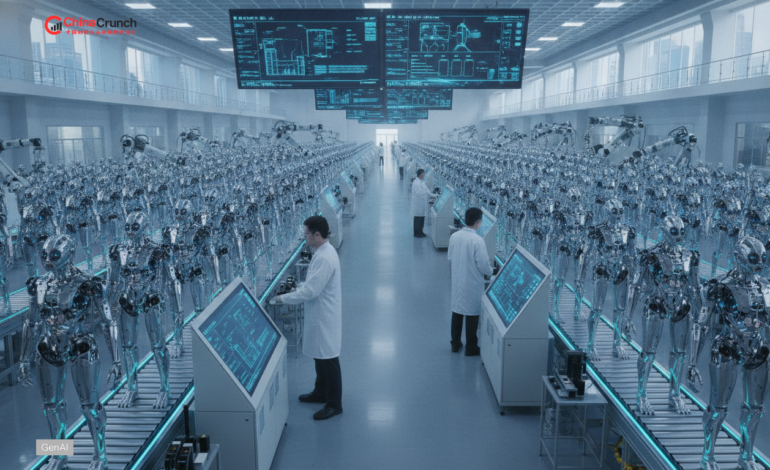
Humanoid robotics in China is moving from headline demos to early commercialization, and, according to Morgan Stanley, shipments could potentially scale faster than previously modeled. In a note cited by the South China Morning Post, the bank raised its China forecast to 50,000 units, a change that shifts attention toward production readiness, supply chain depth, and measurable deployment. This revision indicates shorter iteration cycles and improving component economics, with investors watching whether factories and service operators convert pilots into repeatable orders. Analysts are cautiously monitoring how quickly vendors can deliver China humanoid robots that meet uptime, safety, and maintenance expectations in real environments. If execution holds, these humanoid systems might become a more regular procurement line item rather than an experimental purchase.
What Morgan Stanley’s 50,000-Unit Call Signals
The higher number could imply a major change in manufacturing scale, not just incremental lab progress. Morgan Stanley’s updated view, as reported by the South China Morning Post, points to potentially clearer timelines for commercialization and earlier volume ramps than many models assume. For the full summary of the revision and the firm’s rationale, see Morgan Stanley lifts outlook for China humanoid robots, and the underlying report cited is Morgan Stanley raises China humanoid robot shipment forecast to 50,000 units. A 50,000-unit outlook may also influence how suppliers plan capacity for actuators, gearboxes, sensors, and compute modules, potentially pulling forward tooling decisions and encouraging more standardized orders.
Drivers Behind Humanoid Robot Adoption in China
Several practical drivers might help explain why shipment models for China humanoid robots are being revised upward. Progress in motion control, perception sensors, and battery systems can reduce unit costs while potentially improving reliability, supporting deployments beyond controlled demos. At the same time, automation demand is linked to labor constraints and productivity targets in manufacturing and logistics, making human-form platforms more relevant where tasks are variable and workplaces are designed for people. Software also plays a role, since faster retraining and better simulation can shorten deployment cycles and improve performance after installation. Broader supply chain and policy context can affect scaling dynamics as well, including inputs and trade frictions discussed in China trade criticism: Beijing rebuts and yuan debate grows.
Market Impact: Components, Contracts, and Scaling
A higher shipment path could change near term expectations for component demand, integration services, and factory capacity planning. If vendors target larger volumes, suppliers may accelerate qualification cycles and move toward longer-run contracts that can reshape pricing and availability for critical parts such as actuators and perception modules. Competition is likely to intensify around enterprise trials, safety validation, and documented uptime metrics that buyers can audit. Scaling also interacts with compute access and domestic toolchains, since training, simulation, and fleet management require reliable infrastructure. Supply chain constraints in advanced chips remain a watch item, and related risks are covered in China Black Market for Banned Nvidia AI Chips Soars, with buyers increasingly evaluating deliverable schedules and support plans, not concept videos.
What to Watch Next for China Humanoid Robots
The revised outlook sets a benchmark that will be tested by quarterly delivery disclosures, pilot-to-contract conversion rates, and the pace of safety and regulatory standardization. Morgan Stanley’s framing, as cited by the South China Morning Post, suggests adoption is entering a phase where deployment economics matter alongside engineering ambition, including maintenance cycles, financing, and after-sales support. The next signals will come from repeat orders, service-level performance, and evidence that systems can operate safely in mixed human environments. Manufacturers still face execution risk around component bottlenecks, quality consistency, and integration complexity as volumes rise. If shipments approach the 50,000-unit level highlighted in the South China Morning Post report, ecosystems for training, repair, and compliance could expand quickly, reinforcing commercialization.