China tech startups watch Kingboard PCB capacity boost
Why China tech startups track Kingboard and PCBs
China tech startups building AI servers, inference boxes, edge appliances, and robotics increasingly live or die by hardware lead times. Many hardware teams therefore track upstream suppliers like Kingboard Holdings because PCB laminates, copper clad, and multilayer board capacity can become bottlenecks well before final assembly. As AI hardware orders rise across Asia, higher layer counts and advanced materials can tighten supply and push delivery windows out. For founders and operators, this is less a market sentiment story than a procurement and launch schedule issue. When materials and PCB output expand together, product teams can reduce redesign risk, stabilize unit economics, and keep enterprise delivery commitments.
Kingboard’s US$1.5B stake sale and what it signals
Kingboard’s subsidiary is selling a stake valued at about US$1.5 billion to fund expansion tied to AI-driven PCB demand, as indicated by reports from the South China Morning Post. The disclosure frames the fundraising as growth capital for PCB-related capacity rather than balance sheet repair, signaling management expects sustained orders for server and accelerator boards. Investors also read the move through a policy lens because tariffs and export controls can affect equipment deliveries and customer qualification cycles. Related context on market frictions is covered in US-China trade tensions rise as China hits US tariffs. For China tech startups, the key question is whether expanded upstream capacity will shorten lead times over the next few quarters.
How added capacity can change startup lead times
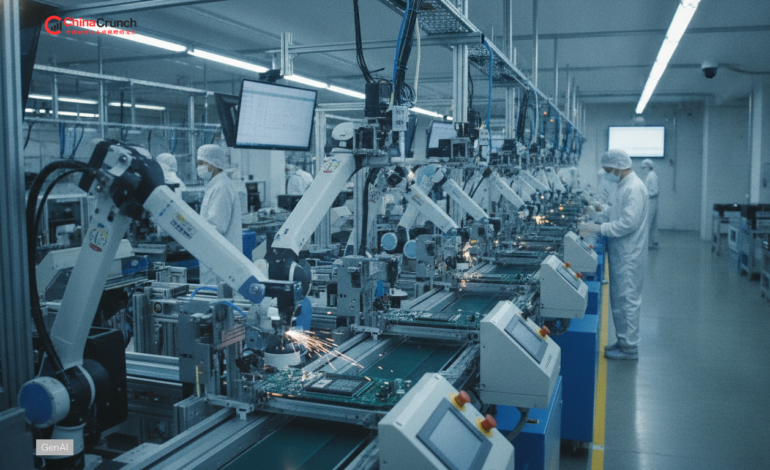
PCB capacity additions ripple through the supply chain because schedules are often set by the slowest node, including laminates, drilling, and high-layer-count yields. When a major supplier like Kingboard expands, downstream PCB fabricators and EMS partners may be able to contract for steadier volumes, reducing allocation risk that can derail AI server programs. AI demand differs from phones because it pulls more high-speed materials, thicker copper, and tighter tolerances, increasing the value of predictable inputs. For early-stage hardware companies, steadier supply can mean fewer component substitutions, less requalification work, and clearer ship dates to customers.
Production constraints to watch in PCB scale-ups
Scaling PCB production is constrained by yield learning, environmental permitting, and specialized equipment availability, especially for high-layer-count boards used in accelerators and networking. The business case improves when suppliers can run high utilization and justify automation, but execution risk remains if customer qualification timelines stretch. The SCMP report frames the stake sale as a way to accelerate ramping, which reportedly assumes orders stay elevated long enough to absorb new lines. Another signal is capital formation elsewhere in the tool chain, including Chinese chip-equipment maker CFMEE targets US$410 million in Hong Kong IPO. On the demand side, compliance and data controls also shape procurement planning, as discussed in Hong Kong Data Privacy Academy Launch Builds Talent.
What the AI hardware cycle means for China tech startups
The near-term outlook is that AI server buildouts will keep pulling more complex boards, benefiting firms that can fund expansion quickly and qualify new capacity with top-tier customers. Kingboard’s financing approach, highlighted in AI boom sparks Kingboard subsidiary’s US$1.5 billion stake sale to ramp up PCB capacity, suggests it expects the cycle to persist long enough to absorb added output. For China tech startups shipping hardware, the practical impact is whether board supply becomes more predictable, enabling tighter certification loops and more reliable delivery schedules. Broader AI strategy and risk considerations also matter for planning, including AI strategy: leaders earn doctorates to guide shifts and AI-driven cyberfraud: Interpol warns Asia of scams.