Chinese EV market rebounds in May as price wars bite
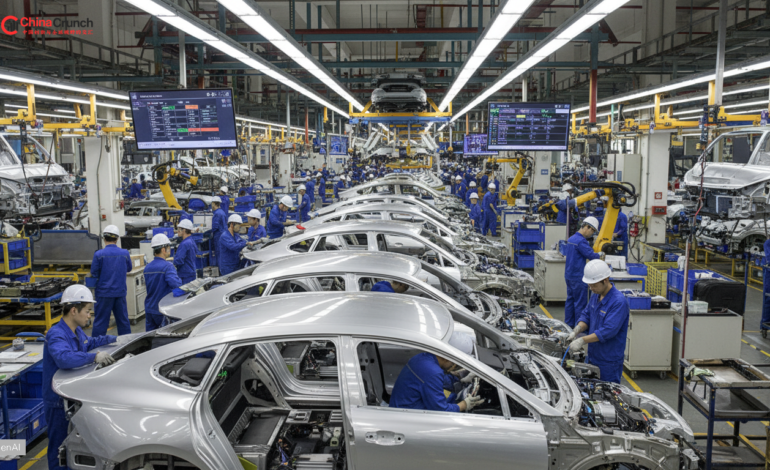
Chinese EV market rebounds in May deliveries
In May 2024, delivery updates signaled that major automakers regained traction after a softer spring, with month end promotions helping clear dealer stock. As indicated by reports, multiple manufacturers posted higher May deliveries month on month, indicating a volume rebound even as pricing stayed tight. The Chinese EV market also saw stronger showroom traffic linked to expanded financing and insurance bundles offered by brands and dealers. Analysts at S&P Global Mobility said demand was being pulled forward by discounts rather than a clear improvement in profitability. The near term boost in shipments still sets up tougher comparisons for the summer quarter as incentives cycle.
New models and features reshape the Chinese EV market
Product cadence stayed central to the May pickup, with brands leaning on refreshed trims and faster update cycles to keep attention on new launches. The Chinese EV market benefited from broader availability of assisted driving options, cabin software updates, and better infotainment, which can differentiate vehicles that share similar battery sizes. The Ministry of Industry and Information Technology maintains a public database of new energy vehicle model filings, and recent entries show how quickly lineups are changing across price tiers. A parallel push in advanced manufacturing is reshaping suppliers and computing demand, as described in Encyclopedia of China shifts to AI-led publishing, while for investor context on the broader tech cycle, the South China Morning Post covered automation momentum in Unitree Shanghai IPO hurdle.
Overcapacity and price wars pressure margins
Even with stronger May numbers, pricing pressure remains the defining constraint because factories can build more vehicles than the domestic market can absorb at acceptable margins. Reports have repeatedly linked the latest round of discounts to aggressive EV competition and dealer inventory, pushing brands to chase share at the expense of profitability. This situation is being reflected in overseas strategy discussions, including the chinese ev canadian market survey conversations among importers and regulators monitoring product mix, parts availability, and after sales readiness. Export growth is often framed as a release valve, but trade scrutiny can raise compliance costs and slow expansion. The Chinese EV market is therefore seeing a recovery in volumes paired with continued margin stress and uneven dealer health.
Policy and supply chain forces shaping demand
Policy settings continue to influence where demand lands and which technologies scale fastest, especially as local governments balance growth targets with fiscal limits. In 2024, the State Council has highlighted support for consumption and equipment upgrades, while regulators have tightened expectations around marketing claims, software updates, and safety compliance. For the China auto industry, these rules matter because they shape homologation timelines and the cost of meeting battery, cybersecurity, and data requirements. Supply chain security is also a live issue for motors and magnets, and China export grip tightens on rare earth magnets explains why export controls can ripple into component pricing, while related capacity planning for power and computing is covered in AI Boom Drives Asia-Pacific Data Center Spending.
Outlook: what comes next for the Chinese EV market
Near term momentum hinges on whether automakers can convert May shipment gains into healthier order books without restarting a damaging price spiral. In the Chinese EV market, management teams are increasingly judged on cash discipline, dealer relations, and the ability to keep residual values stable for buyers who compare total cost of ownership. Data from CAAM is likely to remain a key reference through 2024 as it tracks production, sales, and exports, helping investors separate sustainable demand from incentive driven spikes. Internationally, makers face a dual task of proving compliance readiness while maintaining competitive cost structures. The next phase of recovery in the Chinese EV market will likely favor firms that can grow volumes with tighter incentives, backed by credible technology roadmaps and resilient supply chains.