China mineral dominance claims test supply chains
China Claims Largest Reserves of Essential Minerals
Beijing is amplifying its critical minerals narrative as foreign leaders weigh trade and security talks. Officials framed the message around reserve scale, processing depth and logistics readiness, with a new focus on how mineral inputs underpin chipmaking and advanced manufacturing. In a Live media briefing, the Ministry of Natural Resources highlighted policy moves to protect strategic deposits and stabilize domestic supply for industry, positioning China mineral dominance as a national capability that supports electrification and defense production while limiting exposure to foreign restrictions. Today, planners are also tying mineral policy to industrial targets in batteries, robotics and high performance computing. Update language from regulators stresses better supervision of licenses and stricter enforcement against illegal mining.
Strategies for Expanding Exploration Efforts
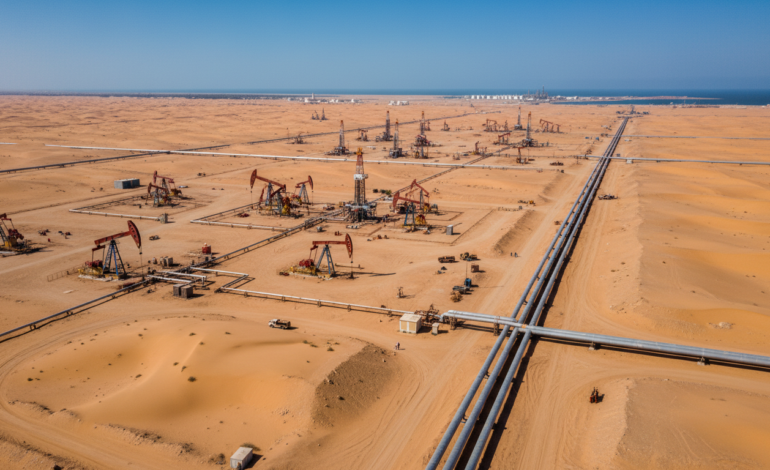
Central agencies are pushing faster exploration approvals and more data sharing between provinces, aiming to shorten the time from discovery to production. The Ministry of Natural Resources said in an Update notice that it will expand geological surveys and improve digital mapping to raise prospecting efficiency and reduce duplication. Today, officials also want private and state firms to co invest in higher risk frontier work while consolidating fragmented operators. The push is framed as resource security, with stress tests for transport routes and stockpiles to cushion price swings, and for related trade momentum, see China export surge keeps trade momentum in 2025. A parallel industrial angle is that exploration supports higher value processing that feeds domestic tech supply. A Live market response has been increased attention to long term offtake contracts for rare earths.
Impact of Mineral Dominance on Global Supply Chains
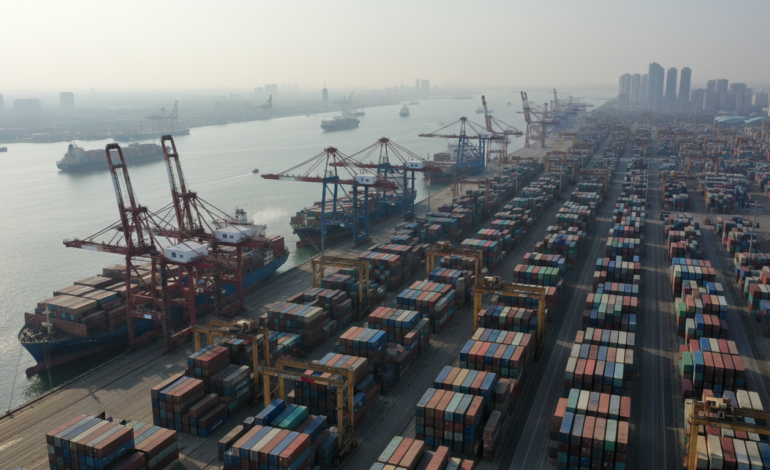
China’s tighter control over strategic minerals is changing procurement decisions for manufacturers that rely on stable inputs. Companies are redesigning bill of materials and contracting terms to reduce exposure to sudden licensing changes, while still needing consistent quality and processing capacity. In an Update on Hong Kong financing conditions, the South China Morning Post reported government measures including HK$450 billion in loans for SMEs, a signal of how liquidity support can cushion supply chain shocks for smaller firms, and for context on how advanced tools are being deployed in infrastructure, see AR tools speed Chinas Northern Link station build. Today, sourcing teams are watching inventory and delivery lead times as closely as price. China mineral dominance also affects how partners negotiate technology transfer, processing partnerships and recycling projects. Live tracking of freight and customs data is now standard for compliance teams.
Challenges in Securing Long-term Resource Security
Even with strong processing capacity, officials face structural hurdles in keeping long run supply dependable. Environmental compliance is tightening, and regulators are under pressure to balance output with land restoration and community safeguards. The Ministry of Ecology and Environment has repeatedly emphasized stricter enforcement for heavy industry pollutants, and provincial governments are applying those rules to mining and refining corridors. Today, one challenge is that rare earths processing can create concentrated waste streams that require costly treatment, raising the risk of plant closures during inspections, including in Inner Mongolia refining corridors. Another is competition for water and power in inland regions that host refineries, which can constrain expansion during peak demand. Update briefings from industry associations also cite the need for better pricing discipline to deter smuggling and stabilize legal operators. Live monitoring systems are being expanded, but implementation gaps remain.
Comparison with Other Global Mineral Powers
Other mineral powers are responding with industrial policy, financing packages and new permitting models, aiming to diversify the global supply chain without fully decoupling. Governments in Australia, Canada and parts of Europe are pairing mine approvals with downstream processing incentives, while also pursuing recycling to reduce reliance on primary extraction. Today, Beijing is highlighting its integrated advantages across mining, separation, magnet production and manufacturing, and contrasting that with projects abroad that struggle to scale. China mineral dominance messaging also seeks to reassure domestic manufacturers that inputs will remain available even if export rules tighten. Update cycles in commodity markets show that substitution is possible for some uses, but many high performance applications still require specific grades and processing know how. Live competition will likely center on who can deliver consistent quality at scale while meeting tougher environmental standards.